
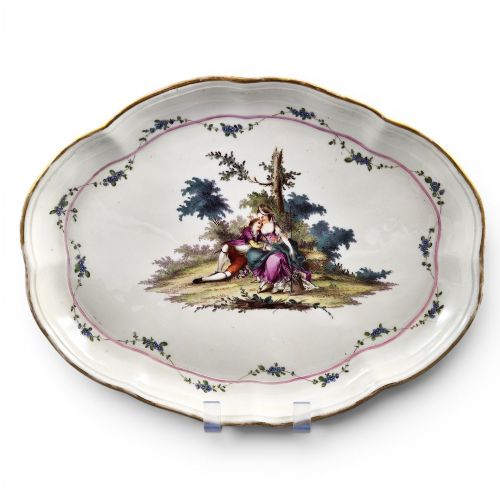


Gilt Porcelain Serving Tray
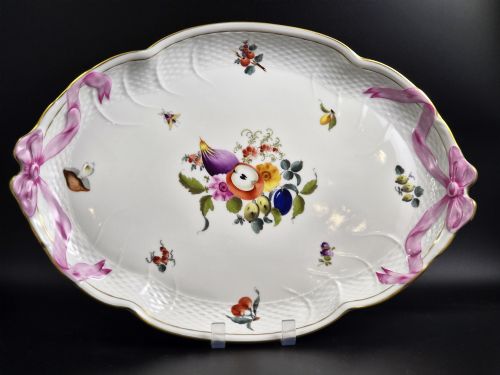
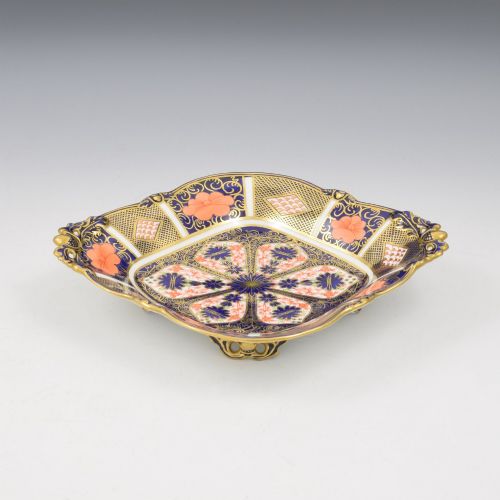
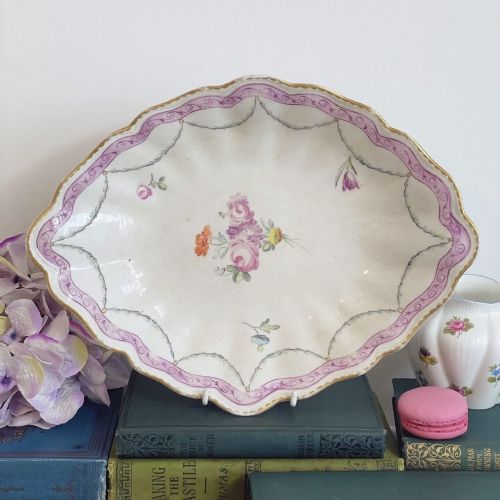
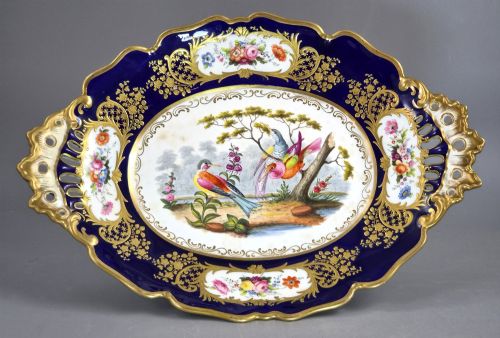
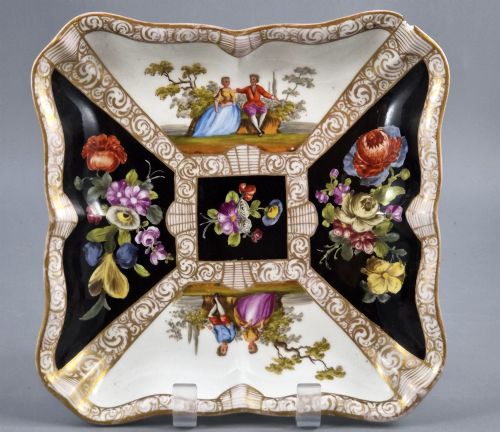
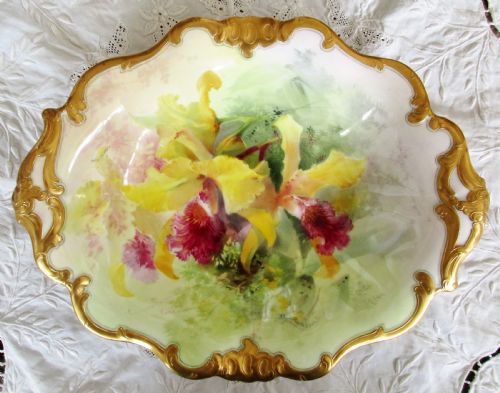
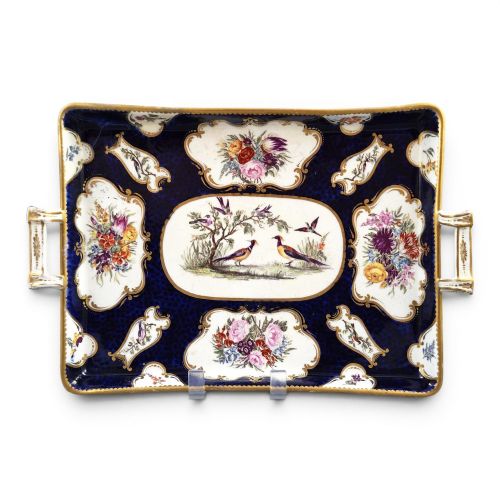
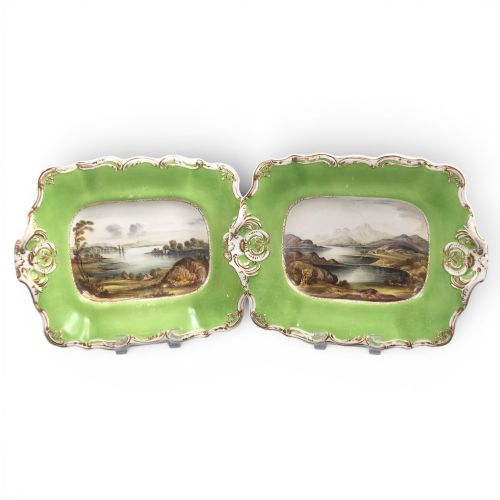
A gilt porcelain serving tray brings hand-painted floral panels, cobalt grounds and heavy gilding to the table from periods spanning the eighteenth century to the twentieth.
Gilt Porcelain Serving Tray
A gilt porcelain serving tray encompasses serving dishes, platters, and cabinet trays originating from English, French, German, and Chinese kilns. The pieces on this page emerge primarily from nineteenth-century workshops, alongside eighteenth-century examples and early twentieth-century creations.
Forms vary from oval and rectangular platters to fan shapes and shamrock-edged dishes, often featuring pierced rims or painted reserves. Makers utilised traditional motifs including Watteau scenes, exotic birds, Imari patterns, and botanical studies.
Buyers encounter these items functioning as decorative dishes and serving trays, reflecting the diverse output of factories such as Derby, Meissen, Coalport, and Worcester.
What varies in quality
Quality rests upon the precision of the hand-painted brushwork, seen in the rendering of botanical specimens, avian plumage, and figurative scenes. Superior examples display crisp detail in the enamel work and sophisticated integration of the gilt borders.
The integrity of the porcelain body and the preservation of the original gilding determine the status of a piece. Finer items exhibit careful control during the high-temperature firing process, resulting in unblemished glazes and stable metallic decoration.
Listings feature porcelain, bone china, and earthenware spanning the Georgian, Victorian, and Edwardian eras alongside eighteenth-century productions.
Royal Crown Derby·Coalport·Meissen·Royal Doulton·Copeland and Garrett·Minton·Carlton Ware·Paul Muller Selb·Sevres·Samson Paris·Royal Worcester·Spode·Vienna·Wedgwood·Louis Pierre Malpass
The Gilt Porcelain Serving Tray Glossary
- Porcelain
- A vitrified ceramic material made by heating raw components, chiefly clay in the form of kaolin, to high temperatures. It yields a hard, non-porous body that rings when struck.
- Gilding
- The decorative application of gold leaf or powdered gold to the surface of ceramics. It accentuates rims and handles.
- Imari
- A decorative style originating in Japan and widely emulated by European factories, characterised by underglaze blue, iron red, and abundant gold highlights.
- Enamel
- Vitreous coloured glass fused to the surface of porcelain during secondary kiln firings. It provides the vivid hues seen in floral and figurative panels.
Gilt Porcelain Serving Tray: Frequently Asked Questions
Were these trays used for food?
Many examples functioned as serving dishes, dessert platters, and fish dishes on formal dining tables. They held sweetmeats, fruit, or small courses during nineteenth-century dining rituals.
Others served primarily as cabinet dishes or decorative trays meant for display on sideboards rather than practical table service.
How do I distinguish eighteenth-century pieces?
Eighteenth-century examples often exhibit soft-paste porcelain bodies with hand-painted polychrome floral arrangements and characteristic underglaze blue factory marks. The glaze texture and weight differ noticeably from later Victorian mass production.
Look for the characteristic potting flaws and hand-mixed pigments typical of early European and Chinese export kilns before industrial standardisation took hold.
What does attribution to a factory mean?
Attribution indicates that a piece bears stylistic, decorative, or physical characteristics matching a known workshop without carrying an explicit factory stamp. Dealers study paste composition, pattern numbers, and painting techniques to assign these origins.
Unmarked trays often reflect the widespread traditions of decorators like James Giles or regional houses that supplied blanks to independent studios.