





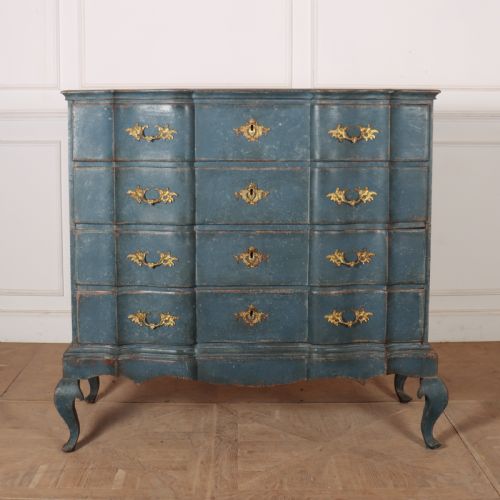

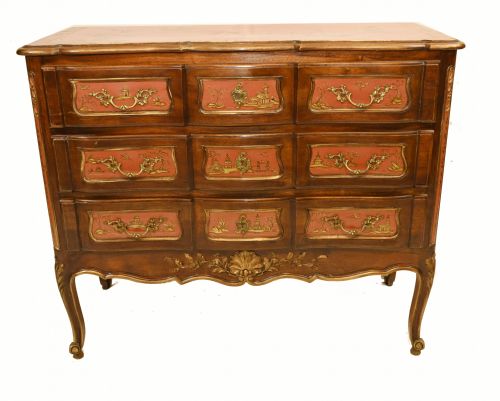
Gilt Painted Chest Drawers
These gilt painted chest drawers bring continental elegance and rich surface detail to an interior, combining practical storage with ornamental presence.
Gilt Painted Chest Drawers
When you search for gilt painted chest drawers, you encounter decorative storage furniture spanning the eighteenth, nineteenth, and early twentieth centuries. These pieces encompass commodes, bedside chests, and cabinets originating from French, Spanish, German, Danish, and English workshops.
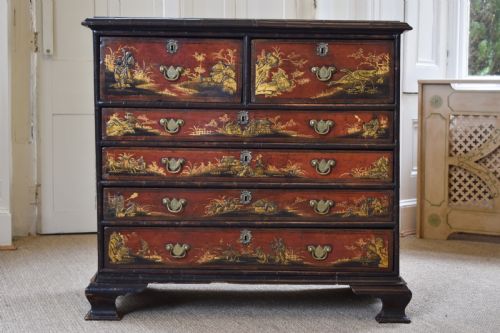
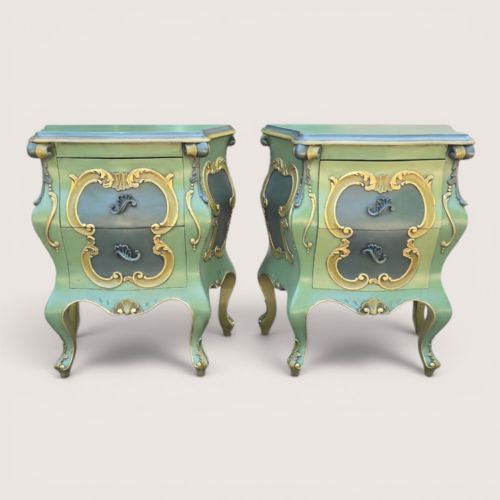
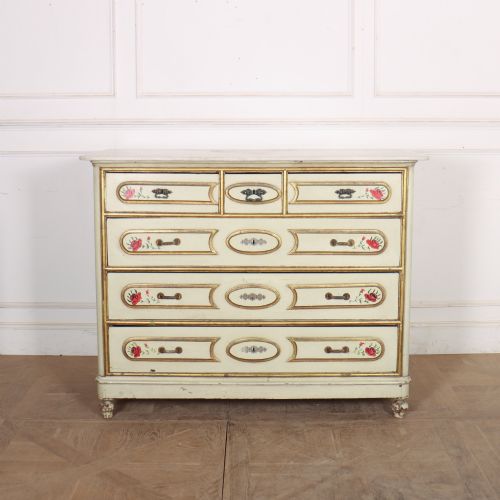
The version most commonly met on this page is the continental commode or painted bedside chest, often finished with gilt highlights or classical motifs. Such forms draw upon Louis styles, Chinoiserie lacquer, and Rococo design traditions.
Makers and cabinetmakers adapted these formats for elite domestic interiors, utilising painted wood surfaces embellished with metallic leaf and detailed ornamentation.
How they were made
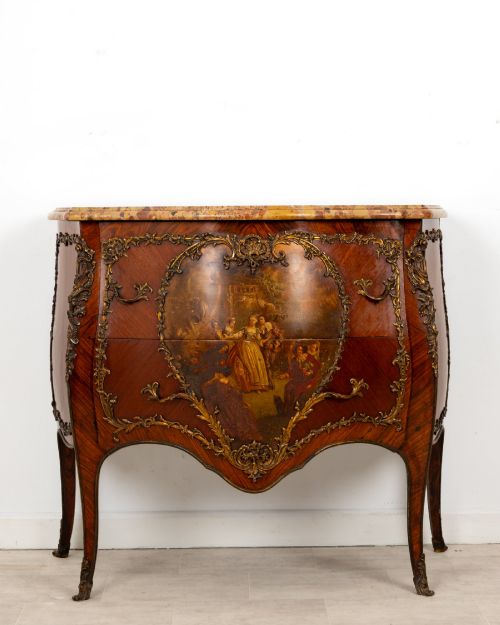
Construction relies on timber carcasses shaped into traditional chests of drawers and commodes, frequently paired with marble tops and brass or gilt-bronze hardware. Artisans applied base coats of paint and lacquer before detailing the surface with gold leaf, gesso, and hand-painted scenes.
Specialised techniques such as Chinoiserie lacquerwork and penwork required meticulous layering and curing processes. Gilders applied fine leaf to carved details, mouldings, and raised gesso decoration to catch the light.
Gilt Painted Chest Drawers Retail Price Guide 2026
Typical asking prices for gilt painted chest drawers among the pieces listed under this phrase on Sellingantiques today, from the lower quarter to the upper quarter. They describe what is for sale here now, not the wider market.
Listings feature pieces spanning the 18th, 19th, and early 20th centuries, utilising painted wood, marble, brass, and gold leaf.
What varies in quality
Quality depends upon the execution of the surface decoration and the crispness of the carved details on the wood and gesso. Superior examples display refined hand-painted motifs, integrated marble tops, and original gilt-bronze or brass mounts that fit the carcass precisely.
The integrity of the timber framework and the preservation of the original paint and gold leaf dictate the desirability of a piece. Earlier examples from the eighteenth century demonstrate complex bombe shaping and deeper structural artistry compared to later revival pieces.
The Gilt Painted Chest Drawers Glossary
- Commode
- A decorative chest of drawers or low cabinet, typically originating from French tradition. It functions as both a functional storage unit and a prominent decorative feature in a room.
- Gesso
- A plaster-like mixture applied to wood surfaces as a base for painting or gilding. It provides a smooth ground that can be moulded into relief ornamentation.
- Vernis Martin
- A type of simulated Japanese lacquer developed in France during the eighteenth century. It uses multiple layers of varnish to create a luminous, polished surface finish.
- Bombe
- A bulging, outward-curving contour found on the sides and fronts of certain commodes and cabinets. This swelling shape requires advanced woodworking skill to execute.
Gilt Painted Chest Drawers: Frequently Asked Questions
Where should I place a painted commode?
These pieces suit reception rooms, bedrooms, or hallways where their decorative surfaces can function as a focal point. They provide practical surface area and drawer storage while introducing distinct historical character to a scheme.
Ensure the room humidity remains stable to protect the painted wood, gesso, and gilt leaf from deterioration over time.
How do I clean a gilt painted surface?
Dust the exterior gently with a soft, dry cloth without applying chemical polishes or modern cleaning agents. Moisture and harsh solvents can damage fragile layers of paint, lacquer, and gold leaf.
Consult a professional restorer if the surface requires deeper cleaning or stabilisation to prevent flaking.
How do I distinguish eighteenth-century pieces from later revivals?
Examine the timber construction, hand-cut joinery, and the natural ageing of the paint and gesso layers. Eighteenth-century examples often exhibit heavier patination and structural construction specific to their regional origin.
Nineteenth-century revival pieces, such as those from the Louis XV revival period, frequently employ machine-prepared elements and different secondary woods.
What is the difference between a commode and a standard chest?
A commode generally refers to a decorative, low chest of drawers or cabinet with continental European origins, often featuring ornate mounts and shaped fronts. Standard chests of drawers tend to follow more utilitarian British or regional formats.
Many commodes on this market feature marble tops and sophisticated painted or gilt decoration.