

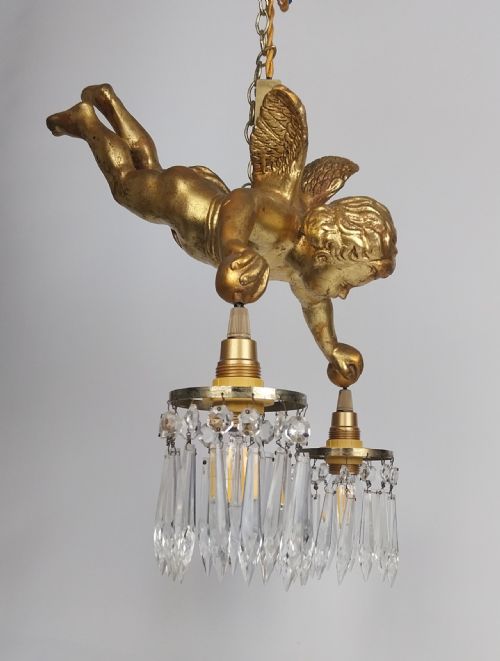
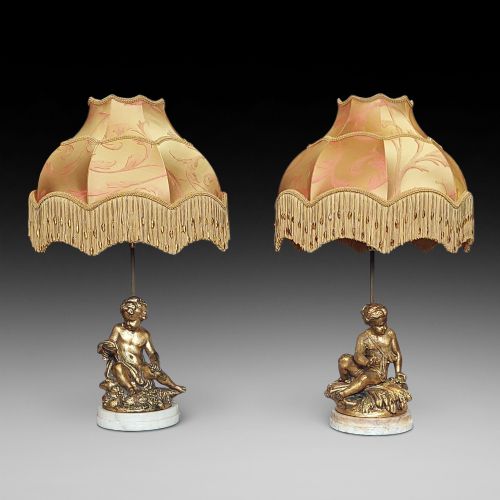


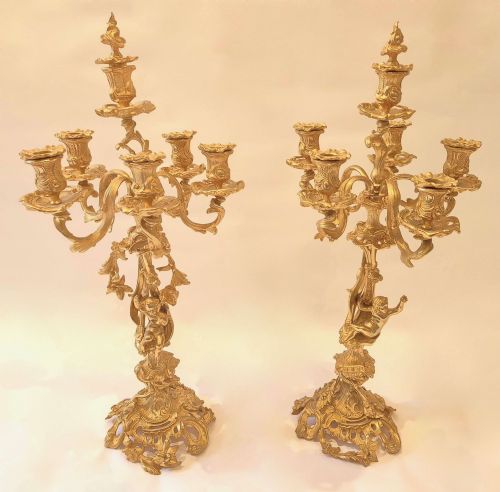


Gilt Metal Cherub Light
A gilt metal cherub light brings character and illumination to a room through sculpted figures and bright metal work.
Gilt Metal Cherub Light
A gilt metal cherub light covers a range of decorative illumination items featuring winged figures and metallic finishes. When buyers search for a gilt metal cherub light, they encounter table lamps, wall sconces, chandeliers, and candelabra.
The pieces on this page span several periods, including the Victorian era, the nineteenth century, and the early twentieth century around 1900, 1920, and 1930. French and Italian influences dominate the designs, often drawing on Rococo revival and Empire styles.
Table lamps and wall sconces appear frequently alongside larger ceiling lights and chandeliers. Many incorporate figures of cherubs, cupids, or putti cast in metal and paired with crystals, glass spikes, or fabric shades.
How they were made
Foundries utilised metals such as gilt metal, brass, bronze, and ormolu to shape the bodies of these light fittings. Figures were cast and subsequently gilded, sometimes combining with painted toleware or carved alabaster mounts.
Lighting elements incorporated cut glass crystals, beaded shades, and fabric elements to diffuse the illumination. Multi-arm chandeliers and wall sconces required precise assembly of the metal frames and electrical or candle components.
Gilt Metal Cherub Light Retail Price Guide 2026
Typical asking prices for gilt metal cherub light among the pieces listed under this phrase on Sellingantiques today, from the lower quarter to the upper quarter. They describe what is for sale here now, not the wider market.
Listings feature items from the Victorian era, the nineteenth century, and the 1900s to 1930s, utilising gilt metal, ormolu, brass, glass, and crystal.
What varies in quality
The refinement of the metal casting and the depth of the gilding set individual pieces apart. Finer examples display crisp detail in the wings and facial expressions of the cherub figures, alongside heavier, more stable bases.
The integration of secondary materials like cut glass crystals, porcelain, and alabaster determines the overall finish. Superior items maintain original patination on the ormolu or gilt surfaces rather than showing heavy wear or clumsy repairs.
The Gilt Metal Cherub Light Glossary
- Ormolu
- A gold-coloured alloy of copper, zinc, and sometimes nickel used to simulate gold on decorative metalwork. It provides a warm, reflective surface on nineteenth-century mounts and lamp bases.
- Toleware
- Lacquered or enamelled metalware, typically painted with floral or decorative motifs. It appears on lamp bodies and shades within French lighting.
- Rococo Revival
- A nineteenth-century design movement favouring ornate scrolls, asymmetry, and naturalistic motifs. This style heavily influences the curves and ornamentation of many cherub light fittings.
- Candelabra
- A branched candlestick holder designed to hold multiple tapers. Many examples from this period were later adapted for electrical use.
- Alabaster
- A fine-grained, translucent stone used for carving lamp bases and mounts. It adds weight and a smooth texture to Italian pieces.
Gilt Metal Cherub Light: Frequently Asked Questions
What periods do these lights come from?
The pieces span the Victorian era, the nineteenth century, and the early twentieth century, specifically around 1900, 1920, and 1930.
Design influences draw heavily from French Rococo revival and Empire styles, reflecting the decorative tastes of those periods.
Were these lights originally electric?
Many earlier pieces started life holding candles before being converted to electricity during later twentieth-century updates.
Candelabra and chandeliers frequently show adaptations to accommodate modern wiring while retaining their original form.
How do I clean gilt metal?
Dust gilt metal gently with a soft, dry cloth to avoid damaging the delicate metallic surface layer.
Water and chemical cleaning agents can strip the gilding or harm painted toleware and crystal elements.
What materials are used besides metal?
Makers combined gilt metal and brass with cut glass crystals, fabric shades, and beaded glass.
Some Italian and French examples incorporate carved alabaster mounts or painted porcelain bodies alongside the metal figures.