



Gilt Metal Base Lamps
Gilt metal base lamps bring rich metallic warmth and classical presence to a room, offering functional illumination through finely cast and patinated frames.
Gilt Metal Base Lamps
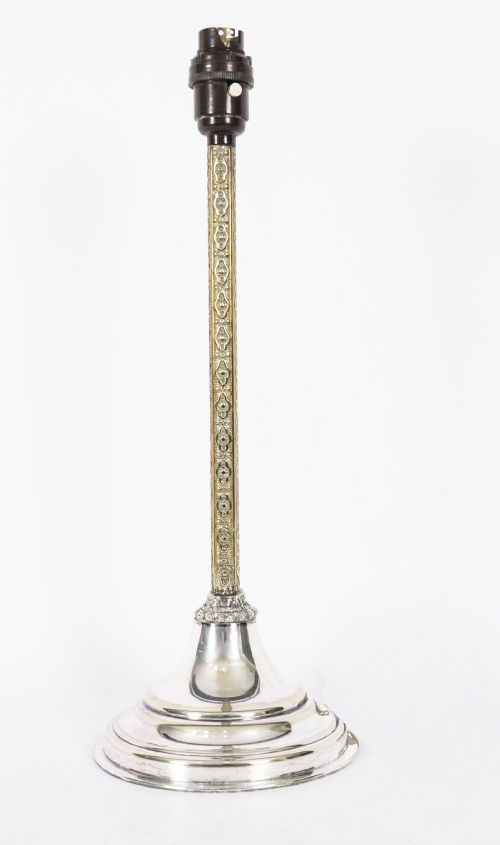
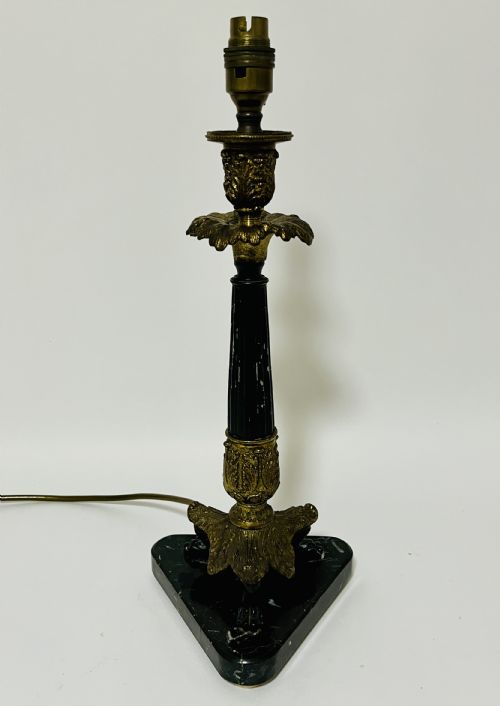
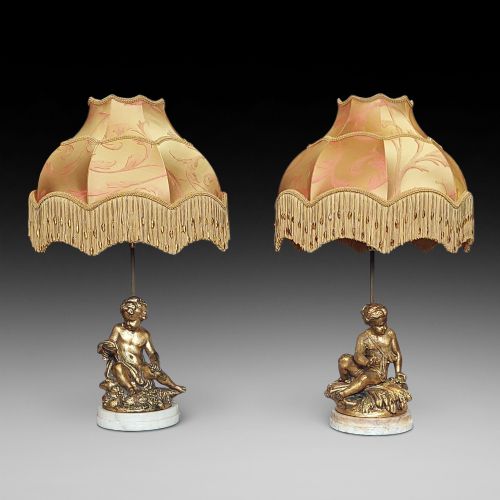
Gilt metal base lamps are domestic lighting fixtures built upon gilded metal foundations, appearing frequently across this selection in French Empire and Victorian styles. Buyers searching for gilt metal base lamps encounter table lamps and lamp bases originating from the nineteenth century, the Edwardian era, and around nineteen twenty. These pieces take the form of classical urns, cherubic mounts, and architectural columns, often paired with marble or alabaster plinths.
The most common examples on this page are French designs reflecting Neoclassical, Louis Seize, and Rococo Revival tastes. Alongside standard table lighting, the selection includes converted cloisonné vases and tole peinte cylinders, demonstrating how period vessels found a second life as wired lamps. Such variety ensures that whether the requirement is a pair of heavy bronze bases or a single slender side light, the core material remains anchored in gilt metal.
How they were made
The construction of these lamps relies on cast metals such as ormolu, gilt bronze, brass, and copper, frequently combined with carved marble bases or alabaster mounts. Founders shaped the metal through casting and chased the surface details by hand to achieve crisp acanthus leaves, rams heads, and laurel wreaths. Gilding was then applied to the metal surfaces, imparting the golden finish that defines the category.
Secondary materials like painted toleware and cloisonné enamel introduced colour and pattern to the metal framework, while fabric shades completed the assembly. Artisans of the nineteenth and early twentieth centuries balanced heavy stone plinths with hollow metal castings to keep the table lamps stable and well-proportioned.
Gilt Metal Base Lamps Retail Price Guide 2026
Typical asking prices for gilt metal base lamps among the pieces listed under this phrase on Sellingantiques today, from the lower quarter to the upper quarter. They describe what is for sale here now, not the wider market.
Materials recorded across the inventory include gilt bronze, ormolu, marble, alabaster, copper, brass, and enamel.
What varies in quality
Quality in these lamps rests primarily on the depth and crispness of the metal casting and the quality of the original gilding. Finer pieces display sharp hand-chasing on the foliage and figural mounts, whereas simpler examples rely on softer, unadorned castings.
The integration of contrasting materials also separates standard production from superior work, particularly where veined marble, carved alabaster, or cloisonné sections meet the gilt metal framework with precision and structural balance.
Mappin & Webb
The Gilt Metal Base Lamps Glossary
- Ormolu
- Gilded bronze produced by applying a mercury and gold amalgam to a bronze casting and heating it. This historic technique creates a durable, deep golden surface characteristic of fine French decorative arts.
- Tole Peinte
- Painted sheet metal, typically iron or steel, used in the nineteenth century to form decorative lamp bodies. It provides a smooth surface for enamel colours and hand-painted motifs.
- Cloisonné
- An ancient enamelwork technique where thin metal wires are soldered to a metal base to form compartments filled with vitreous paste. These decorated vessels were often later adapted into table lamps.
- Alabaster
- A fine-grained translucent stone used for carving lamp bases and plinths. Its natural veining allows it to catch the light softly beneath metal mounts.
- Empire Style
- A nineteenth-century design movement drawing inspiration from the classical antiquity of Greece and Rome. It is recognised in these lamps through motifs like rams heads, laurel wreaths, and monumental urns.
Gilt Metal Base Lamps: Frequently Asked Questions
What periods do these lamps come from?
The listings span the nineteenth century, the Victorian period, the Edwardian era, and around nineteen twenty. This encompasses both mid-nineteenth-century manufacturing and early twentieth-century interpretations of classical design.
Buyers will find that Victorian and Edwardian examples sit alongside French pieces from nineteen hundred and nineteen twenty, reflecting a broad continuity of traditional lighting forms.
How were these lamps originally used?
These pieces served as functional table lighting in principal rooms such as drawing rooms, libraries, and boudoirs. They provided localized illumination before the widespread adoption of overhead electric lighting.
Many started life as oil lamps or decorative vases before being converted to electricity at a later date, adapting to changing domestic habits while retaining their decorative presence.
How do I live with a gilt metal lamp?
Gilt metal lamps suit traditional and eclectic interiors alike, adding metallic texture and height to side tables, desks, and sideboards. Their neutral golden tones integrate easily with varied colour schemes.
Maintenance involves gentle dusting with a soft cloth to protect the gilt surface and delicate stone components from abrasive cleaning agents.
How do I tell French Empire style apart from Rococo Revival?
French Empire style relies on strict symmetry, classical architecture, and motifs derived from ancient Rome, such as columns, laurel wreaths, and urns. It presents a disciplined and monumental appearance.
In contrast, Rococo Revival embraces asymmetry, flowing curves, C-scrolls, and naturalistic shell or floral ornamentation, creating a more exuberant and fluid silhouette.