





Gilt Leg Sofa
These gilt leg sofa examples bring gilded frames and classic seating together, offering substantial presence and period character for a traditional room.
Gilt Leg Sofa
A gilt leg sofa combines upholstered seating with gilded supports, drawing on periods from the eighteenth century through to the mid-twentieth century. Buyers encounter forms ranging from painted frames to ebonised wood and walnut structures with distinct stylistic revivals.
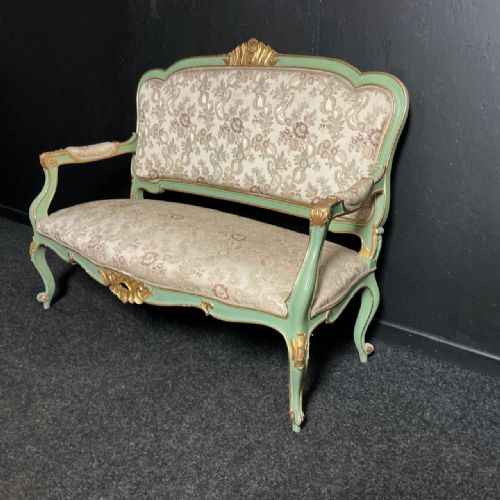
The selections span distinct historical eras, including Regency, Victorian, and various revival movements such as Louis XV and Louis XVI. These pieces function as statement items in drawing rooms and reception spaces, showing diverse regional influences from French and Italian workshops.
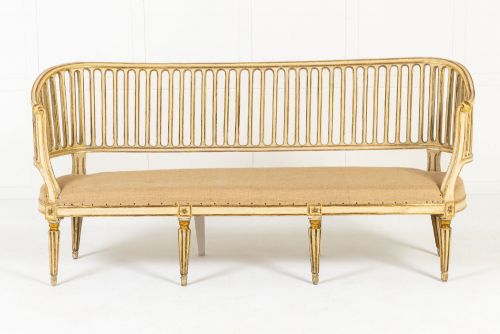
Seating formats vary from two-seat settees to larger three-seater configurations and open wing settees. The frames incorporate carved wood details, parcel gilt highlights, and upholstered surfaces designed for functional use.
Factors influencing quality
Quality depends on the crispness of the wood carving and the precision applied during the gilding process. Superior examples display refined joinery and well-preserved metallic leaf rather than flat, uniform paint substitutes.
The integrity of the underlying hardwood frame and the authenticity of period details dictate the standing of an individual piece. Finer items retain their original structural rigidity and balanced proportions across the arms, backrest, and legs.
Gilt Leg Sofa Retail Price Guide 2026
Typical asking prices for gilt leg sofa among the pieces listed under this phrase on Sellingantiques today, from the lower quarter to the upper quarter. They describe what is for sale here now, not the wider market.
Listings feature periods spanning the eighteenth, nineteenth, and twentieth centuries, utilising materials such as walnut, ormolu, and gold leaf.
The Gilt Leg Sofa Glossary
- Gilt
- A thin layer of gold leaf or gold paint applied to the surface of wood or metal. This technique creates a bright metallic finish that highlights carved details on furniture frames.
- Ormolu
- Finely chased and gilt bronze used for decorative mounts and furniture embellishments. It appears frequently on nineteenth-century pieces to accent structural corners and legs.
- Bergere
- An enclosed upholstered armchair or sofa with wooden frames and exposed woodwork. The sides are typically filled with cane or upholstery.
- Japanned
- European imitation of East Asian lacquer work created through layered varnishes and painted designs. This finish gives wooden frames a dark, glossy appearance with metallic detailing.
- Parcel Gilt
- A decoration method where only specific portions of an object are gilded while other areas show painted or polished wood. This creates contrast between the natural timber and the gold highlights.
Gilt Leg Sofa: Frequently Asked Questions
How do I clean a gilt frame?
Dust the gilded wooden surfaces gently using a soft, dry brush to prevent scratching the delicate gold leaf layer. Avoid liquid cleaners and harsh chemicals, which can strip the metallic finish from the wood.
Test any maintenance approach on a hidden corner before proceeding across the entire carved area. Professional conservators should handle repairs to damaged gilding.
What periods do these sofas cover?
The pieces span from the eighteenth century through the nineteenth and twentieth centuries, encompassing Regency and Victorian eras. Revival movements such as Louis XV and Louis XVI heavily influence the decorative vocabulary.
Each period brings distinct carving styles and wood choices, allowing buyers to match specific historical interiors. Examining the joinery and finish helps confirm the era of manufacture.
Are these settees suitable for daily use?
These seating options function well in domestic settings when treated with reasonable care and placed away from direct sunlight. The sturdy wooden frames support regular sitting, though vintage upholstery may require occasional reupholstery.
Positioning the furniture away from moisture sources protects the delicate gilding on the legs and frame. Regular inspection of the joints ensures long-term structural stability.
How do I identify French revival styles?
French revival pieces typically feature curved cabriole legs, floral carvings, and symmetrical frames inspired by royal court furniture. Louis XV and Louis XVI designs emphasise fluid lines and restrained ornamentation respectively.
Look for specific wood types such as walnut and ebonised finishes paired with gilt accents. The presence of traditional joinery techniques further confirms the stylistic origins.