
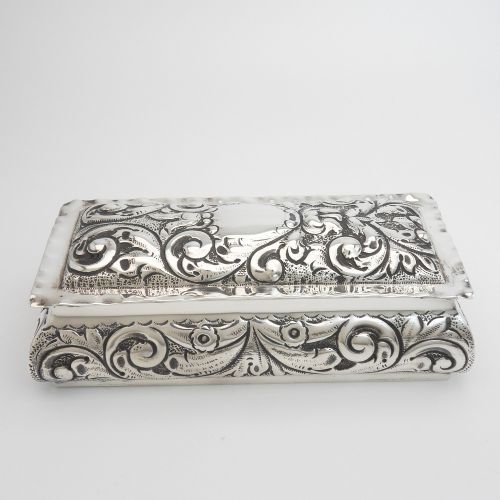


Gilt Interior Box
A gilt interior box brings a flash of hidden gold to small silver containers designed for snuff, pills, and trinkets.
Gilt Interior Box
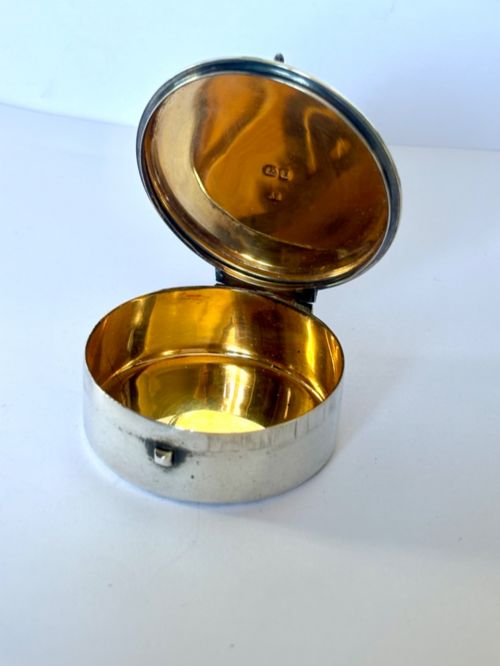
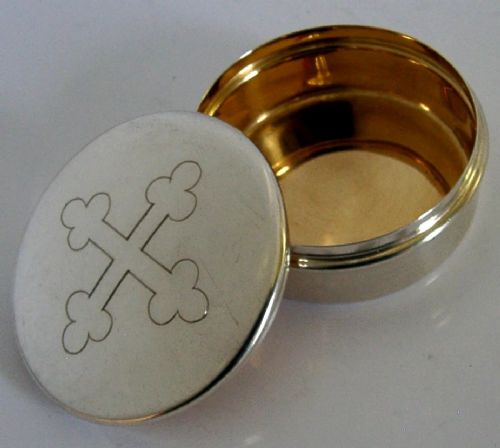
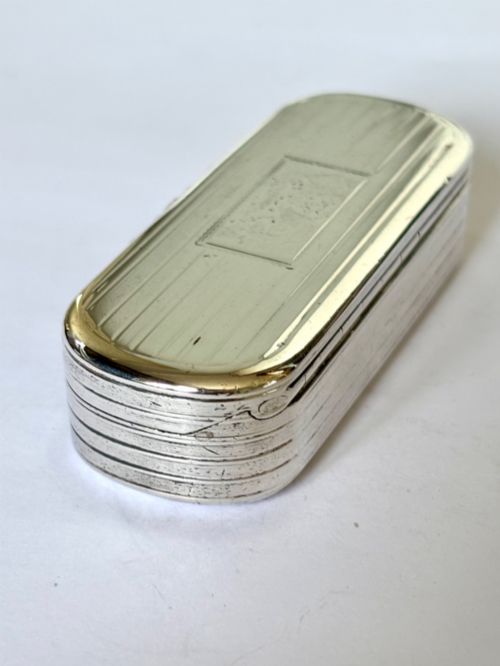
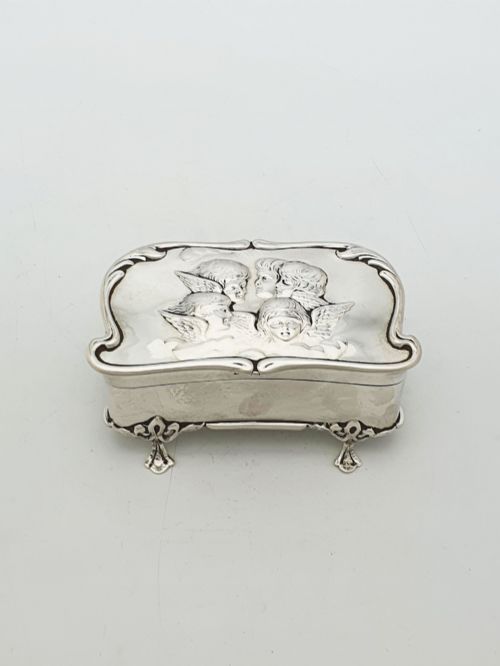
A gilt interior box is a small silver vessel with a contrasting gold lining, created to protect the metal from the corrosive contents of snuff, pills, or tobacco. When you search for a gilt interior box, you encounter everything from pocket snuff boxes and pill cases to larger trinket containers and ecclesiastical pyx boxes.
The pieces on this page span the nineteenth and twentieth centuries, taking in Victorian, Edwardian, and mid-century ecclesiastical forms. You will find rectangular snuff boxes, heart-shaped pill boxes, and hinged trinket containers, each finished with a brilliant gold wash to the inside.
How They Were Made
These pieces are constructed from solid sterling silver or silver gilt, shaped into boxes with hinged lids and decorated with cast acanthus borders or engraved scrolls and foliage. Makers applied gold via gilding or a gilt wash to the interior surfaces, leaving the exterior to show the polished sterling silver.
Some examples incorporate velvet linings alongside the gilded metal, or feature specialised ecclesiastical forms like the pyx box intended for communion wafers. Birmingham and London punch marks appear frequently, alongside Sheffield assay offices, recording the origin and silver standard.
Some Victorian cigarette cases are specifically designated as six-finger models, accommodating a very particular pocket capacity.
What Varies In Quality
Quality rests in the crispness of the exterior decoration, whether it is hand-engraved scrollwork, floral scenes, or cast acanthus borders. The depth and evenness of the gilt interior wash also distinguish standard work from finer pieces.
Weight and structural integrity matter greatly, from heavy solid silver snuff boxes to lighter pill containers. The tightness of the hinged lid and the clarity of the maker marks and hallmarked dates complete the picture.
BURNS, OATS & WASHBOURNE·ROBERT THORNTON·A & J Zimmerman Ltd·THE SAMPSON MORDAN·Edward Edwards·Walker & Hall·HENRY DUMENIL·GEORGE WILKINSON & EDWARD HOLLINS·Henry Matthews
The Gilt Interior Box Glossary
- Gilt wash
- A thin layer of gold applied to the interior surface of a silver box. This technique protects the silver from tarnishing when holding substances like snuff or tobacco.
- Pyx box
- A small round container used in Christian churches to carry communion wafers. These pieces often feature specific ecclesiastical designs.
- Sterling silver
- An alloy of silver containing ninety-two point five percent pure silver and seven point five percent other metals, usually copper. It forms the primary structural material for these boxes.
- Hallmark
- A series of official marks stamped onto silver items in the United Kingdom. These symbols indicate the maker, assay office, and year of manufacture.
- Vermeil
- Sterling silver that has been plated with a thick layer of gold. It provides the rich golden interior finish seen in many antique trinket and snuff boxes.
Gilt Interior Box: Frequently Asked Questions
What is a gilt interior box used for?
These boxes were historically carried in pockets or kept on dressing tables to hold snuff, pills, tobacco, or small trinkets. The gold lining prevented the corrosive nature of the contents from damaging the silver underneath.
Over time, collectors have repurposed them for modern storage of small items, rings, or simply as decorative desk objects.
How do I know if the gold is real?
The gold interior on these pieces is typically created through gilding or a gilt wash applied over solid sterling silver. The presence of clear British hallmarks usually confirms the silver standard beneath the gold layer.
Genuine period gilding has a soft, warm tone that differs from bright modern electroplating. Examining the interior under magnification reveals the characteristic texture of historic application methods.
How do I date a silver box?
Dating relies heavily on the stamped hallmarks found on the body or lid of the box. A specific date letter stamp corresponds to the year the piece was assayed in cities like London, Birmingham, or Chester.
Stylistic clues such as Victorian cast acanthus borders or Edwardian plain bodies also help narrow down the decade of manufacture.
Are these boxes made of solid silver?
The pieces listed are formed from solid sterling silver rather than plated base metal. British examples carry standard marks including the lion passant to prove the silver content.
Inside, the gold is applied as a surface treatment to the silver base, creating the signature two-tone contrast.