


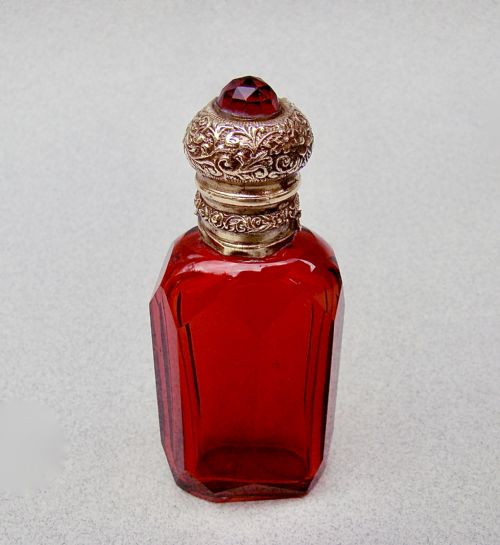
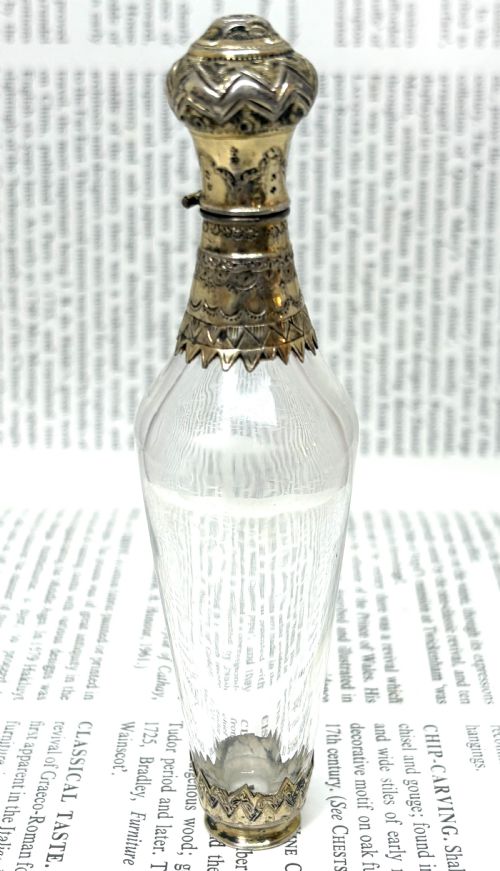


Gilt Glass Perfume Bottle
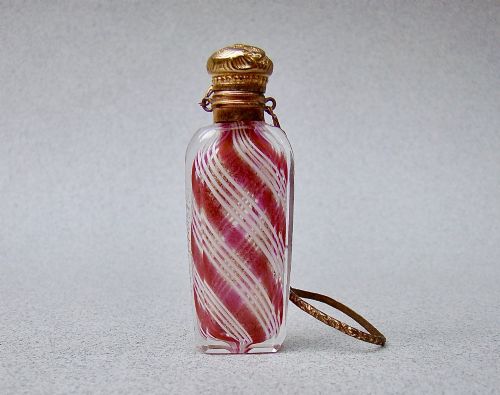
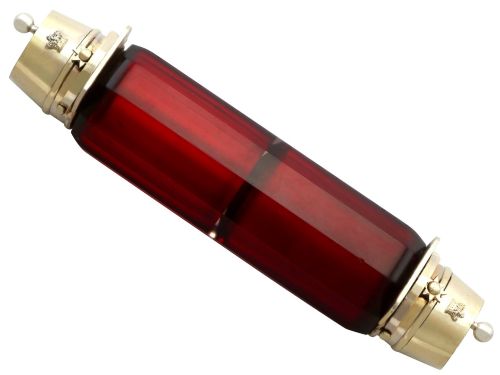
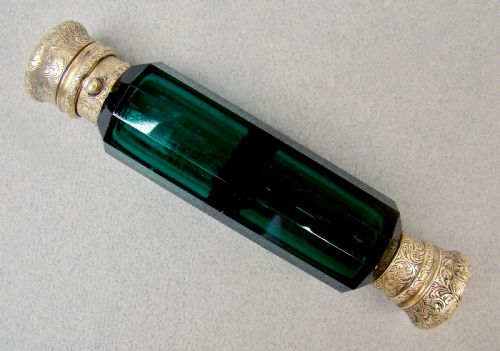
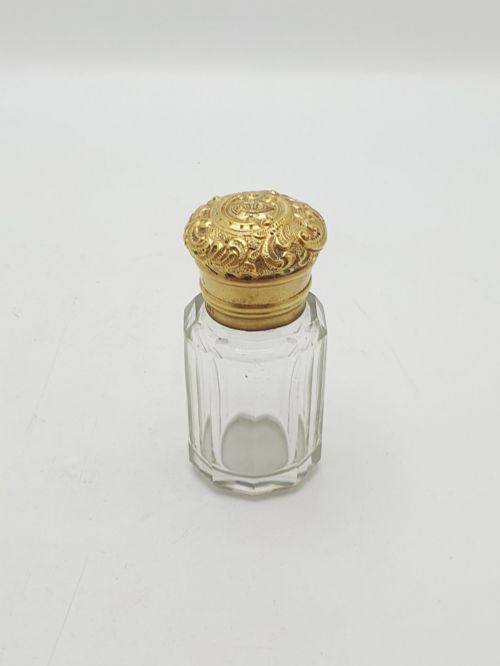
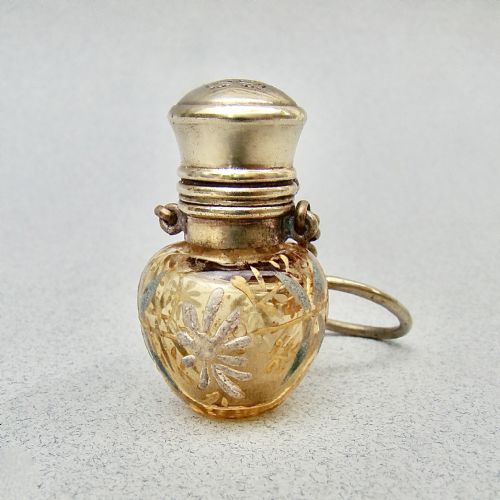
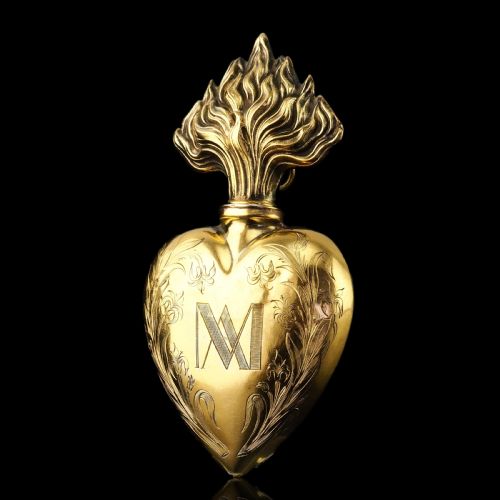
These gilt glass perfume bottle examples combine decorative glass vessels with precious or gilt metal mounts for the dressing table.
Gilt Glass Perfume Bottle
A gilt glass perfume bottle brings together coloured or cut glass vessels and gilt mounts, ranging from Victorian double-ended flasks to French chatelaine pieces and atomisers. You are most likely to encounter 19th-century English and French examples featuring silver-gilt, brass, or ormolu mounts alongside ruby, green, or amethyst glass.
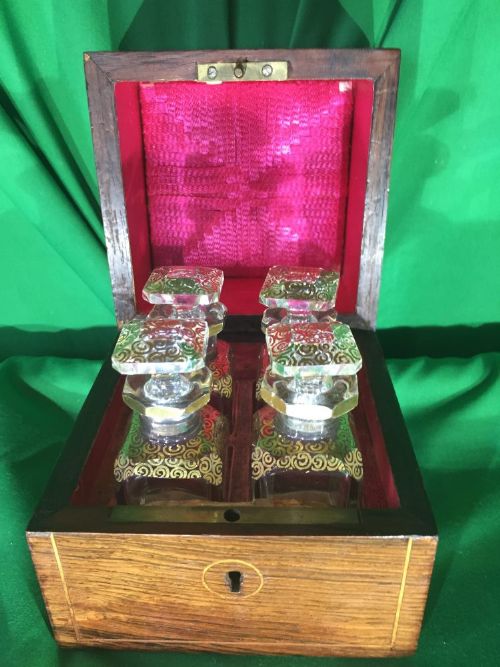
The forms extend beyond single flasks into scent bottle caskets, dressing cases, and fitted boxes containing multiple bottles. Many of these survive from the Victorian era and the Belle Epoque, reflecting the dressing table customs of the nineteenth and early twentieth centuries.
Materials and methods
Glassmakers utilised techniques such as cutting, overlay, and murrine work to shape the bodies, producing ruby glass, Bristol green glass, and amethyst glass. Metalworkers formed the caps, hinges, and collars in silver gilt, sterling silver, or ormolu, frequently applying embossing or guilloche enamel.
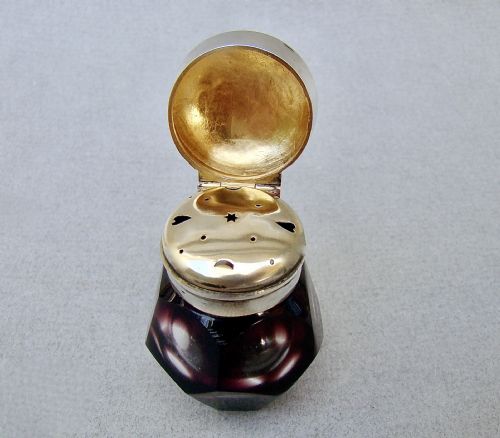
Mounts were fitted securely to the glass necks and bodies, sometimes incorporating hinged caps for scent or vinaigrette compartments. Makers also housed these bottles in rosewood cased boxes and embossed leather caskets lined for travel or display.
Gilt Glass Perfume Bottle Retail Price Guide 2026
Typical asking prices for gilt glass perfume bottle among the pieces listed under this phrase on Sellingantiques today, from the lower quarter to the upper quarter. They describe what is for sale here now, not the wider market.
Gentlemen carried locking cologne bottles to prevent theft of their preferred scent while travelling by coach.
Distinguishing quality in these items
Quality rests in the weight and clarity of the glass, whether cut crystal or coloured murrine, paired with the crispness of metal chasing on the silver gilt or ormolu mounts. Finer pieces demonstrate precise fitting between the glass body and the metal cap, ensuring a secure closure.
Makers known for high standards, such as Sampson Mordan or René Lalique, integrated structural integrity with decorative elements like guilloche enamel or intricate glass canes. The presence of fully intact inner stoppers and robust hinges further separates standard utility pieces from high-grade examples.
Sampson Mordan·René Lalique·Franchini And Bigaglia
The Gilt Glass Perfume Bottle Glossary
- Silver-gilt
- Silver that has been coated with a thin layer of gold. This finish provides the bright appearance of gold while utilising a silver base for the mounts.
- Chatelaine
- A decorative belt hook worn with suspended chains carrying utility items such as a scent bottle. These allowed the wearer to keep small personal accessories close at hand.
- Vinaigrette
- A small ornamental box or bottle containing a sponge soaked in aromatic vinegar. They feature pierced inner grilles to release the scent.
- Murrine
- Coloured patterns made in glass by stretching molten glass canes and slicing them crosswise. This technique creates complex mosaic designs within the body of the bottle.
- Guilloche
- A decorative engraving technique where a precise, intricate pattern is mechanically cut into a metal surface. It is frequently seen beneath translucent enamel on vanity items.
Gilt Glass Perfume Bottle: Frequently Asked Questions
How were these bottles used?
Owners filled them with liquid perfumes, colognes, or aromatic vinegars for personal freshening during travel or social outings.
They sat upon dressing tables in fitted sets or hung from chatelaines as part of an ensemble.
How do I identify French pieces?
French pieces often incorporate ormolu mounts, guilloche enamel, or specialised glass styles such as Moser or Murrine work from the nineteenth century.
Assay marks on the silver mounts can also indicate French origin.
What is an atomiser?
An atomiser is a perfume vessel fitted with a squeeze bulb and spray mechanism to distribute fragrance in a fine mist.
Twentieth-century examples, such as those by René Lalique, integrated this function into decorative moulded glass bodies.