

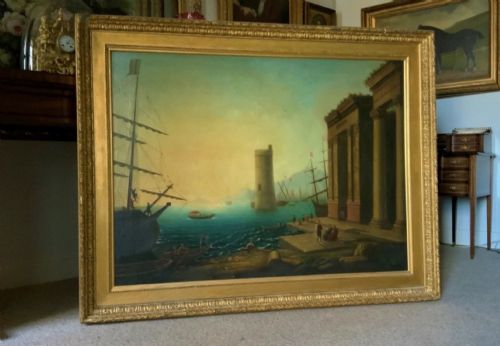
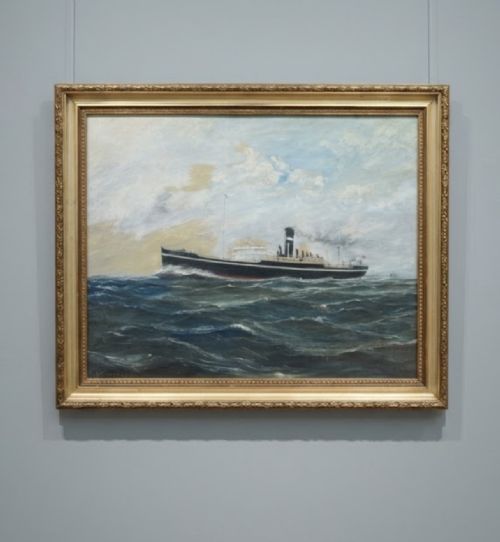
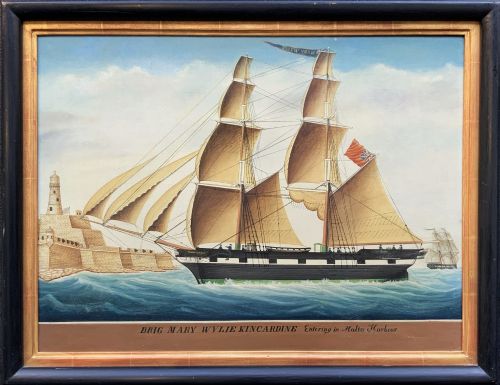
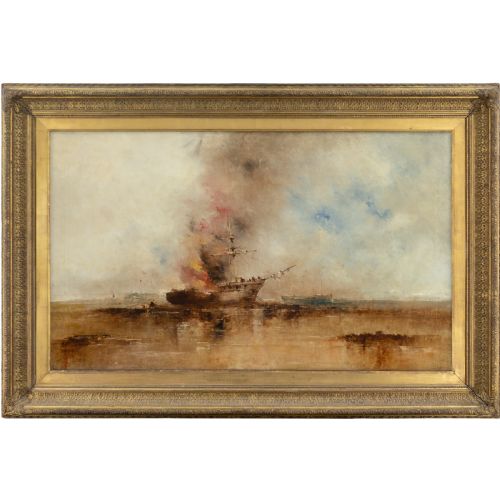
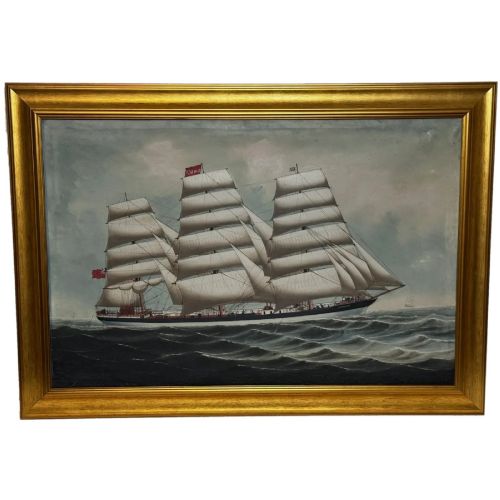
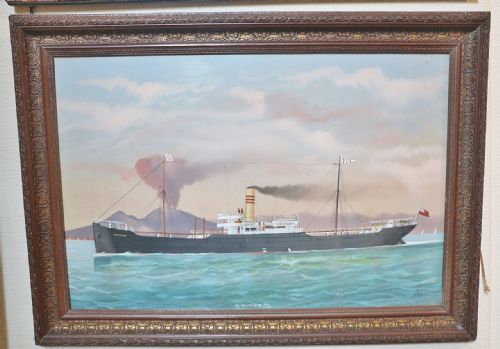
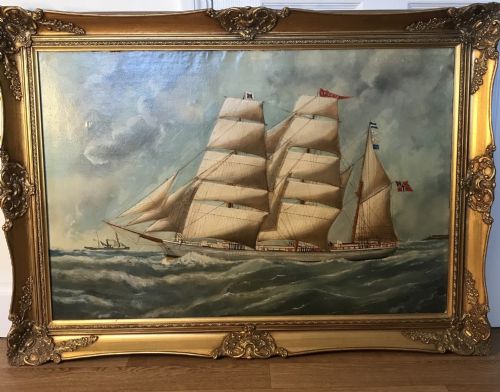
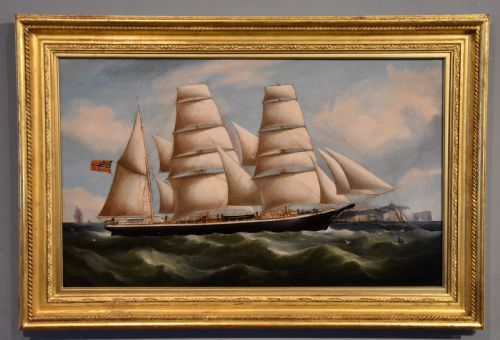


Gilt Framed Ship Portrait
These gilt framed ship portrait works capture centuries of maritime history in oil and watercolour, offering a direct window into the age of sail and steam.
Gilt Framed Ship Portrait
A gilt framed ship portrait records specific vessels, from nineteenth-century barques and schooners to Edwardian steamships, often rendered with precise attention to rigging and national flags. Buyers seek these maritime works to anchor a room with narrative history and nautical tradition.
The pieces appearing on this page span several periods, drawing heavily on nineteenth century, Victorian, and Edwardian styles. The selection ranges from oil paintings on canvas and panel to watercolours, depicting named ships like the clipper Thermopylae and HMS Swift in coastal waters or international harbours.
How They Were Made
Artists relied primarily on oil on canvas, oil on panel, and watercolour on paper to capture the surface of the sea and the structural details of vessels. These pigments were applied by hand to achieve realistic effects in depicting rough waters, coastal lights, and maritime scenes.
The frames themselves utilise wood finished with gold leaf or giltwood techniques to enclose and protect the paintings. This traditional framing provides the characteristic metallic gleam that surrounds the historical subject matter.
Gilt Framed Ship Portrait Retail Price Guide 2026
Typical asking prices for gilt framed ship portrait among the pieces listed under this phrase on Sellingantiques today, from the lower quarter to the upper quarter. They describe what is for sale here now, not the wider market.
Several vessels captured in these quiet waters sailed directly through rough seas and past Hong Kong before finding their way onto canvas.
What Varies in Quality
Quality rests in the precision of the vessel's architecture and the artist's ability to render the movement of water. Stronger works portray rigging, hull construction, and atmospheric conditions with rigorous maritime accuracy.
The depth of the framing material and the preservation of the painted surface dictate the visual impact of the piece. Superior examples maintain clear provenance, legible ship names, and harmonious gilding that complements the canvas.
James Hardy·Reginald Arthur Borstel·F Corpuz·Richard B. Spencer·WF Mitchell·Samuel John Milton Brown
The Gilt Framed Ship Portrait Glossary
- Barque
- A sailing vessel with three or more masts having the fore- and mainmasts square-rigged and the mizzenmast fore-and-aft rigged. These ships formed the backbone of commercial trade routes in the nineteenth century.
- Giltwood
- Wood carved and prepared to receive a very thin application of gold leaf or other metallic leaf. It provides the characteristic bright border seen on traditional maritime art frames.
- Maritime art
- Painting or other works that depict or draw inspiration from the sea, ships, and coastal views. This genre includes historical battle scenes as well as commercial ship portraits.
- Panel
- A rigid flat surface, often wood, used as a support for painting instead of stretched canvas. Artists working on panel often achieved high levels of fine detail.
- Watercolour
- A painting method in which the paints are made of pigments suspended in a water-based solution. These works on paper require protection behind glass.
Gilt Framed Ship Portrait: Frequently Asked Questions
How do I identify the ship in a portrait?
Look for painted inscriptions on the canvas, often found in the lower corners or along the bottom margin, which frequently state the vessel's name, port, or registry date.
Historical records, signal flags, and specific riggings also help researchers match the depicted hull to maritime archives and Lloyd's registers.
Where should I hang a ship portrait?
These works suit studies, libraries, or living rooms where traditional decor allows the gilt frame and dark maritime palette to stand out against neutral walls.
Keep paintings away from direct sunlight and excessive humidity to protect both the oil pigments and the delicate gold leaf on the wooden frames.
What is the difference between an oil and watercolour?
Oil paintings use slow-drying pigments bound in medium oils on canvas or panel, yielding rich textures and deep tones that tolerate open display.
Watercolours use water-soluble pigments on paper and must be framed behind glass to prevent moisture and environmental damage to the surface.
How do I date a maritime painting?
Examine the vessel type, as three-masted schooners, clipper ships, and steamships each dominated different decades of the nineteenth and twentieth centuries.
Framing styles, construction materials like wooden panels versus stretched canvas, and artist signatures provide further clues to the period of creation.