



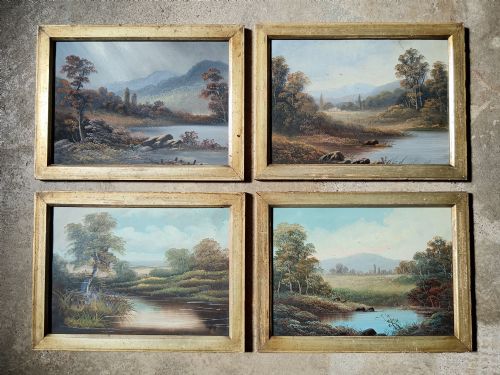


Gilt Framed Gouache Painting
These gilt framed gouache painting selections capture vibrant opaque water-based pigments preserved behind glass in period surrounds.
Gilt Framed Gouache Painting
A gilt framed gouache painting unites opaque water-based pigment on paper or silk with decorative gold leaf or gilt wood surrounds. When you search for a gilt framed gouache painting, you encounter works spanning landscape, portraiture, and still life across multiple centuries.
The selections on this page encompass various origins and formats, from miniature portraits to expansive landscapes. Examples range from 17th-century interpretations to 20th-century poster designs and traditional European views.
Many pieces incorporate mixed media elements alongside gouache, pairing the medium with pastel, watercolour, ink, or oil. Subjects stretch from Italian scenes and Dutch golden age studies to depictions of British flora and fauna.
How they were made
Gouache relies on water-soluble pigments mixed with a binding agent and white filler, producing an opaque matte finish upon paper, silk, or card. Artists apply these water-based colours to build dense coverage and fine detail.
The resulting works require protection behind glass to prevent surface disruption to the delicate pigment. Carved and gilded wood frames provide structural support while enhancing the visual depth of the artwork.
Gilt Framed Gouache Painting Retail Price Guide 2026
Typical asking prices for gilt framed gouache painting among the pieces listed under this phrase on Sellingantiques today, from the lower quarter to the upper quarter. They describe what is for sale here now, not the wider market.
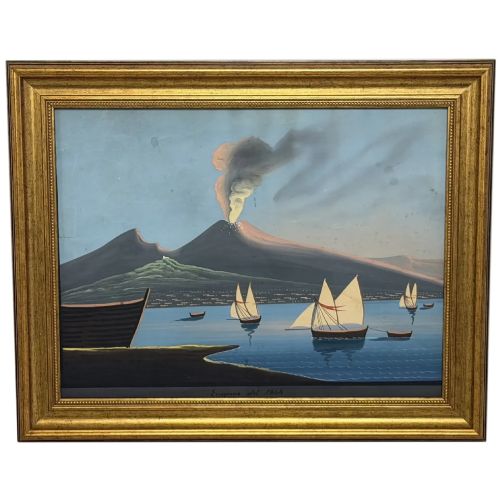
Several artists captured Mount Vesuvius erupting in vivid gouache, proving that historical interior decorators loved a dramatic volcano.
What varies in quality
The nuance of hand-mixed pigments and the precision of brushwork dictate the visual impact of an individual painting. Works executed by accomplished artists display superior tonal graduation and confident line work within the opaque medium.
The craftsmanship of the surrounding gilt frame contributes significantly to the overall integrity of the piece. Ornate period mouldings and original gold leaf gilding elevate the presentation compared to later or simpler replacement mounts.
Karel Dujardin·Joseph Knight·Gaston Cornil·Alice Anne Renshaw·Emma Kendrick
The Gilt Framed Gouache Painting Glossary
- Gouache
- An opaque water-based paint consisting of pigment, water, and an inert white material like chalk. It yields a heavier, flatter finish than transparent watercolour.
- Gilt
- A thin layer of gold leaf, gold dust, or gold paint applied to wood, plaster, or metal surfaces. This technique adds metallic brilliance to picture frames.
- Pastel
- A dry drawing medium composed of powdered pigment and a binder, frequently combined with gouache in historical works on paper. It offers soft blending capabilities.
- Neapolitan
- A style or subject originating from Naples, commonly referencing 19th-century topographical views of Vesuvius and the surrounding coastline. These were popular with European travellers.
- Miniature
- A small-scale portrait or painting executed with meticulous detail. They often feature delicate watercolour and gouache applications on ivory, vellum, or paper.
Gilt Framed Gouache Painting: Frequently Asked Questions
How should I clean a gilt frame?
Dust the gilded wooden surface gently with a dry, soft feather duster or a clean, dry artist brush. Avoid using any liquids, commercial polishes, or damp cloths, as moisture damages the delicate gold leaf.
Keep the artwork away from direct sunlight and areas of high humidity to protect both the frame and the gouache pigments behind the glass.
What is the difference between gouache and watercolour?
Watercolour is transparent, allowing the white of the underlying paper to shine through the thin washes of pigment. Gouache contains added white chalk or pigment particles, making the paint opaque.
This opacity permits artists to paint light colours over dark backgrounds, creating solid blocks of flat, matte colour and crisp details.
Are these paintings executed on paper?
Most of the pieces utilise paper or card as the primary support for the water-based pigments. Some specific examples employ alternative organic supports such as silk.
Regardless of the support material, the finished works are housed behind glass to safeguard the vulnerable paint surface from atmospheric dust and physical contact.
How do I identify a 19th-century piece?
Nineteenth-century works often display specific thematic subjects such as Grand Tour Italian landscapes, Vesuvius eruptions, or romantic pastoral scenes. The materials, paper types, and framing styles align with historical manufacturing standards of that era.
Examining the reverse of the frame or backing board frequently reveals historical inscriptions, artist signatures, or period labels that confirm the date.