


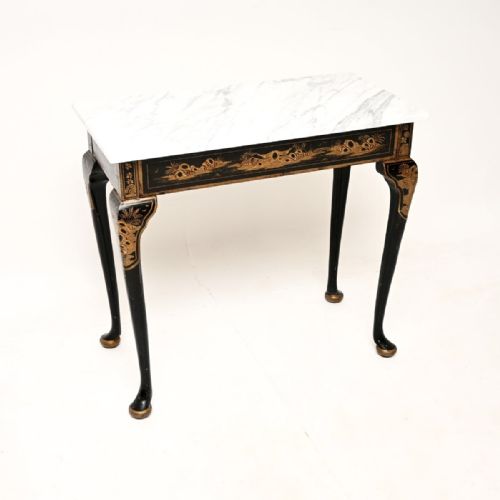
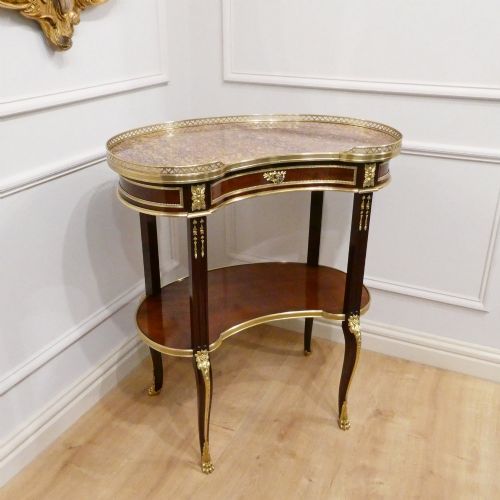
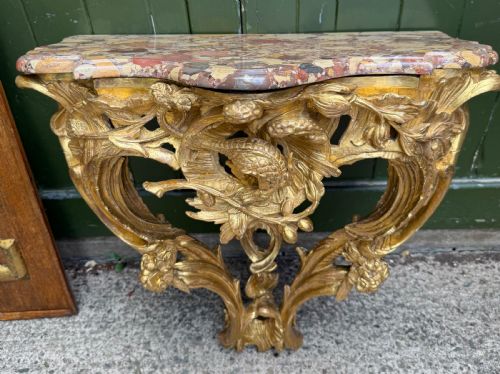
Gilt Console with Marble
A gilt console with marble brings architectural gravity and reflective warmth to a room, pairing cold stone with carved and gilded timber.
Gilt Console with Marble
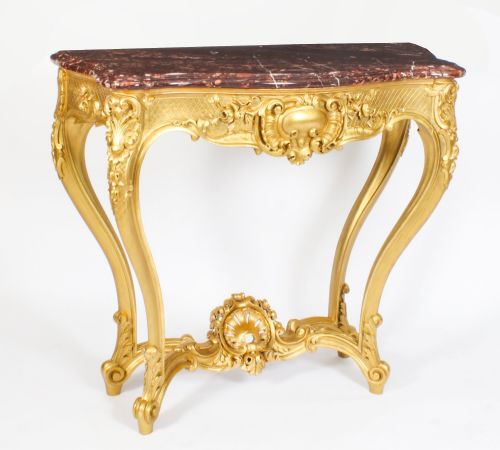
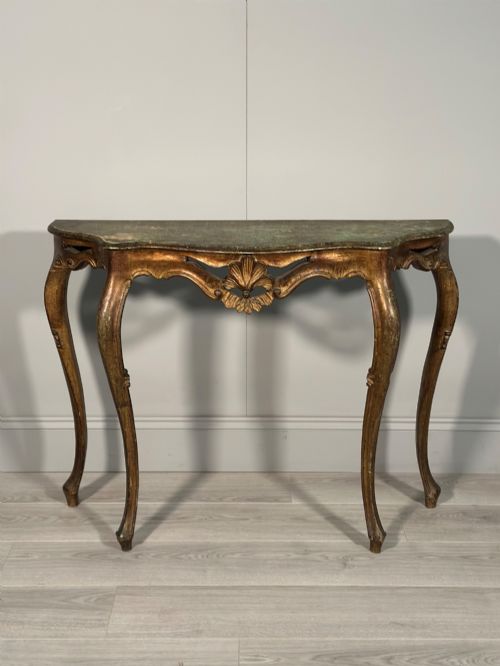
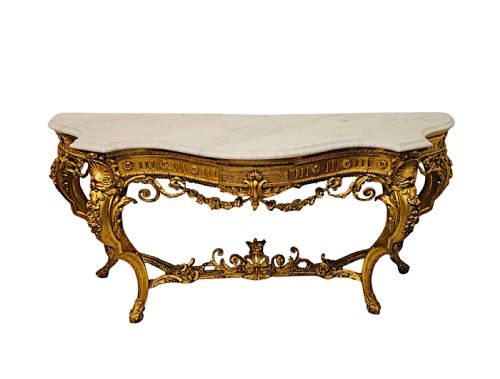
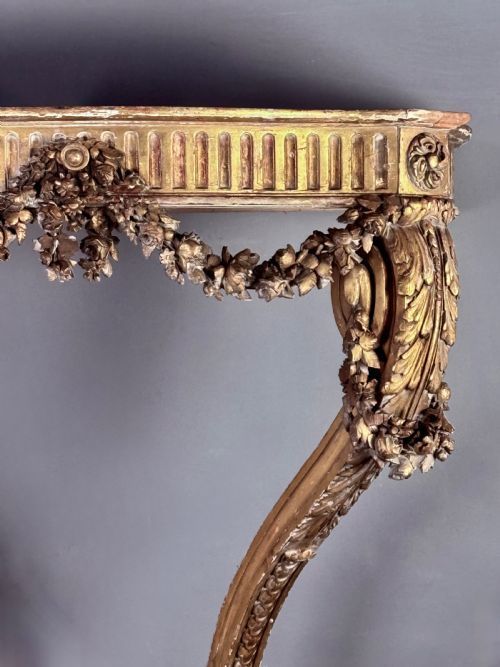
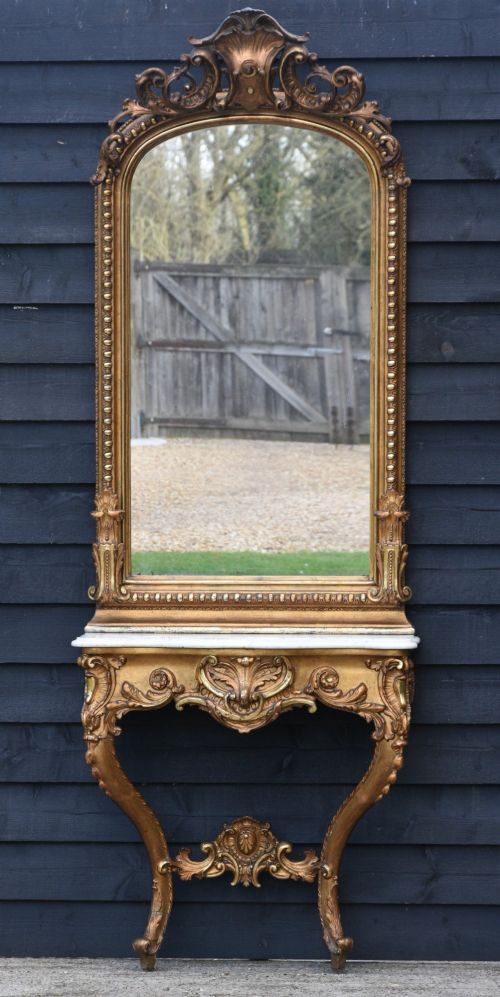
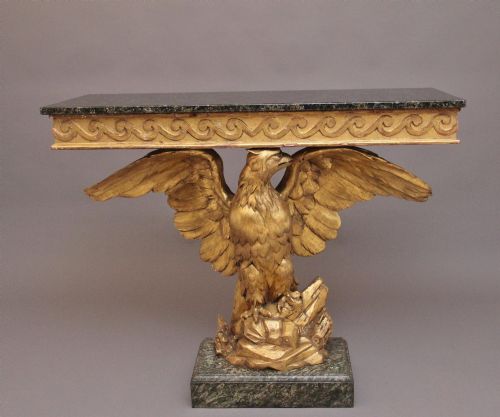
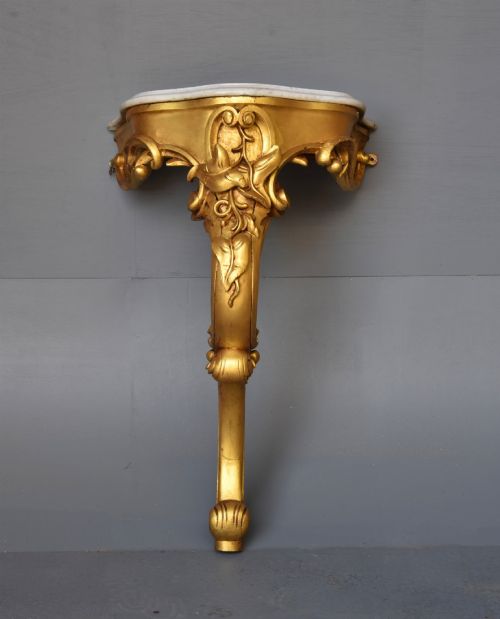
A gilt console with marble typically takes the form of a pier or side table designed to stand against a wall, frequently accompanied by a matching mirror. These pieces emerge in styles ranging from Regency and Victorian iterations to French Rococo and Louis XVI revivals.
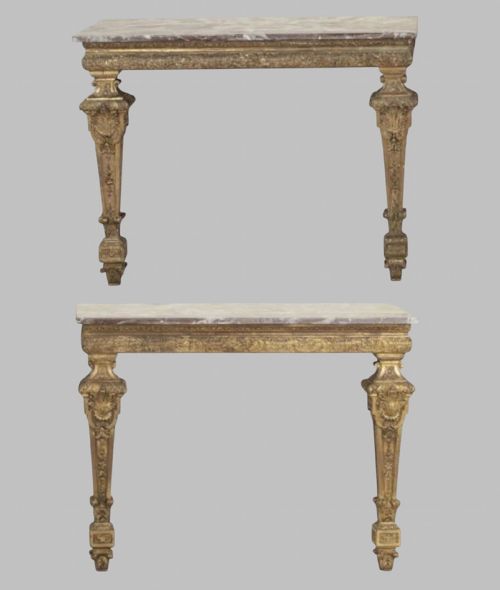
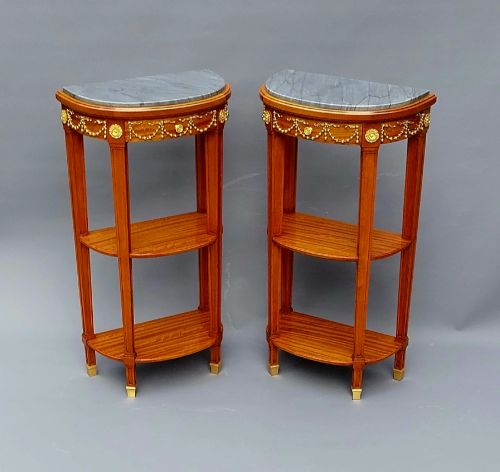
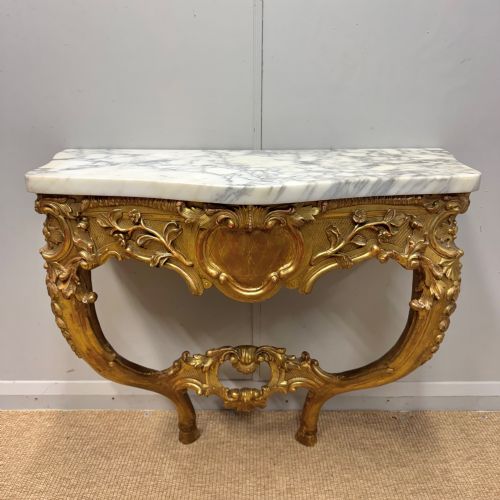
The version most commonly encountered on this page is a nineteenth-century giltwood table featuring a shaped marble top, often supported by carved legs and mounted with decorative details such as putti or lion paws. Demilune shapes and pairs also appear across the selection.
How they were made
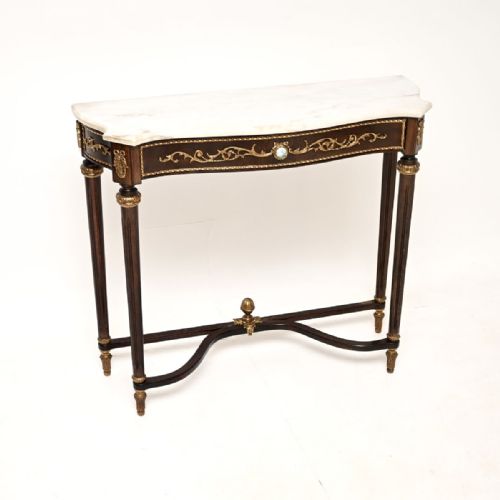
Makers shaped the structural carcass from timbers such as mahogany, walnut, and rosewood, applying gesso to prepare surfaces for water or oil gilding. Ormolu mounts and gilt bronze details were cast and applied to enhance the neoclassical or baroque ornament.
Heavy slabs of marble, including rouge and breccia varieties, were cut and polished to fit the upper surface, resting directly upon the timber frame or supported by inset mirror-backs and carved consoles.
Gilt Console with Marble Retail Price Guide 2026
Typical asking prices for gilt console with marble among the pieces listed under this phrase on Sellingantiques today, from the lower quarter to the upper quarter. They describe what is for sale here now, not the wider market.
Listings feature periods spanning the eighteenth, nineteenth, and early twentieth centuries, including Regency, Victorian, and Louis XVI styles.
What varies in quality
The depth and crispness of the hand-carved gesso and giltwood ornamentation separate standard production from finer cabinetmaking, particularly in the rendering of figures like putti or lion paws. Greater refinement shows in the articulation of the timber carving beneath the gold leaf.
The selection and figure of the marble top, whether breche d'alep, rouge, or breccia, dictate the visual weight of the piece, alongside the integration of stamped brass mounts or gilt bronze work by established makers.
Krieger Paris
The Gilt Console with Marble Glossary
- Giltwood
- Timber carved and coated with gold leaf or powder. This finish reflects light and provides the characteristic metallic sheen on nineteenth-century frames.
- Demilune
- Half-moon shape. Tables with this profile fit flat against a wall while projecting outward in a semicircle.
- Breccia
- A type of marble composed of broken fragments cemented together by a fine-grained matrix. It yields a variegated, highly figured surface pattern.
- Trumeau
- An overmantel mirror paired with a console table. The mirror and table often share decorative motifs and form a unified architectural ensemble.
- Ormolu
- Gilt bronze ornamentation applied to furniture. This technique involves coating bronze elements with a mercury and gold amalgam.
Gilt Console with Marble: Frequently Asked Questions
Where should I place a gilt console table?
These tables suit hallways, drawing rooms, or entrance spaces where their shallow depth allows them to sit flat against a wall without obstructing movement. Pairing them beneath a matching mirror creates a balanced focal point.
Because many examples feature finished backs or are designed as pier tables, positioning them centrally beneath a window or in a reception room highlights the carved giltwood and marble top from multiple angles.
How do I care for the marble top?
Marble requires gentle cleaning with a soft, damp cloth and neutral soap, avoiding acidic liquids that can etch the polished surface. Regular dusting preserves the natural stone.
Heavier maintenance is rarely needed if the stone is treated with care, though placing felt pads beneath objects set upon the marble prevents scratching.
What distinguishes Louis XVI style tables?
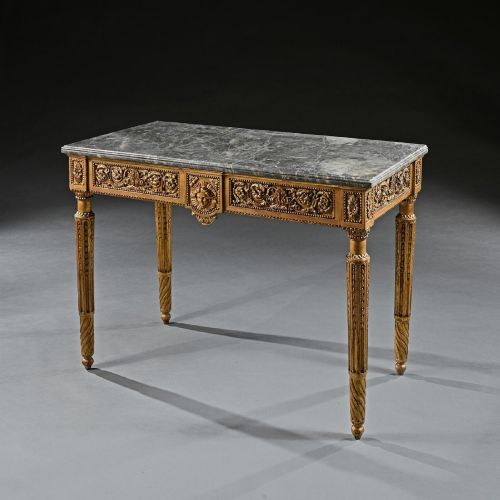
Louis XVI pieces favour straight tapered legs, geometric symmetry, and restrained neoclassical carving rather than the exuberant curves found in earlier Rococo designs. The giltwood frames often incorporate classical motifs like fluting and bead reels.
This aesthetic reflects an eighteenth-century return to classical antiquity, which nineteenth-century revivalists later reinterpreted in their own workshops.
How can I identify a nineteenth-century piece?
Nineteenth-century construction often reveals machine-cut elements alongside hand-carved gesso, set upon timbers like mahogany or walnut characteristic of Victorian and Regency production. Stylistic revivals of Rococo, Empire, and Louis XVI dominate this era.
Examining the underside of the marble and the joining methods of the giltwood frame provides further clues to the period of manufacture.