

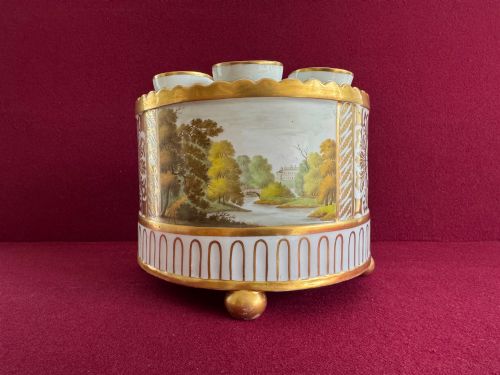
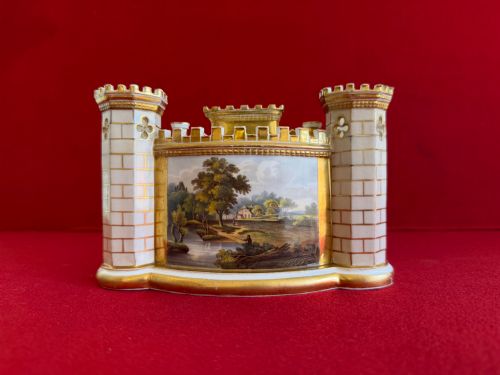
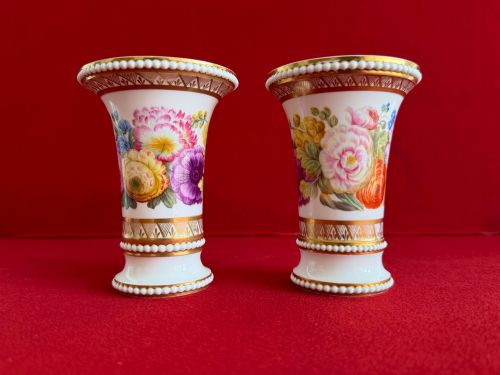


Gilt Ceramic Mantel Ornament
A gilt ceramic mantel ornament brings character to a room, and these pieces offer the traditional figures and vases collectors seek.
Gilt Ceramic Mantel Ornament
A gilt ceramic mantel ornament encompasses decorative figures, pairs of dogs, and sculptural vases designed to sit upon a fireplace shelf. The selection here leans heavily towards Staffordshire pottery figures, alongside continental porcelain busts and pastoral groups.
Most examples date from the nineteenth century, capturing Victorian taste through paired animals and hand-painted subjects. Buyers frequently encounter white and gilt spaniels, pugs, and classical figures from this period.
How they were made
These items rely on earthenware and porcelain bodies shaped through moulding and casting techniques. Makers then applied glazes, enamel paint, and gold leaf or gilt highlights before firing.
Bisque porcelain appears in unglazed sculptural works like busts, while earthenware forms receive a smooth glaze foundation to hold the painted details and metallic touches.
Gilt Ceramic Mantel Ornament Retail Price Guide 2026
Typical asking prices for gilt ceramic mantel ornament among the pieces listed under this phrase on Sellingantiques today, from the lower quarter to the upper quarter. They describe what is for sale here now, not the wider market.
Listings show items spanning the nineteenth and twentieth centuries, utilising earthenware, porcelain, bisque, and gold leaf.
What varies in quality
The preservation of the original gilt and enamel layers dictates the visual strength of the piece. Crisp, intact gilding elevates a figure above examples where the metallic finish has worn thin.
Royal Doulton·Beswick·Chelsea-Derby·Sevres
The Gilt Ceramic Mantel Ornament Glossary
- Bisque porcelain
- Unglured ceramic material fired once to create a matte, marble-like surface suitable for detailed busts and figures. This texture was favoured for classical subjects.
- Gilt
- A thin layer of gold or gold leaf applied to the ceramic surface for decoration. It catches the lamplight on a mantel.
- Earthenware
- Porous pottery fired at lower temperatures than porcelain. It forms the sturdy body of traditional Staffordshire dogs.
- Enamel
- Opaque glass-like paint fused to the ceramic body during firing. It provides the vibrant colours on figures and vases.
- Staffordshire
- Pottery produced in the English region known for ceramic manufacturing. Figures from this area are staples of nineteenth-century mantel decoration.
Gilt Ceramic Mantel Ornament: Frequently Asked Questions
What is a gilt ceramic mantel ornament?
It is a decorative object made from earthenware or porcelain, embellished with gold leaf or metallic paint, designed to sit on a mantelpiece.
These items range from pairs of Staffordshire dogs to continental porcelain busts and decorative vases.
How were these ornaments displayed?
They were traditionally placed on the mantelpiece above a fireplace as a decorative centrepiece in nineteenth-century homes.
Pairs of dogs or figures were often arranged symmetrically at either end of the shelf.
How do I identify nineteenth-century pieces?
Look for the specific combination of earthenware bodies, hand-painted enamel details, and characteristic Victorian subject matter.
Mould styles and the character of the crackle in the glaze also help date the object.
How do I care for gilt ceramics?
Keep them out of direct sunlight and clean them gently with a dry, soft brush to protect the delicate surface.
Avoid using liquid cleaners, as moisture can damage fragile enamel paint and worn gilding.