

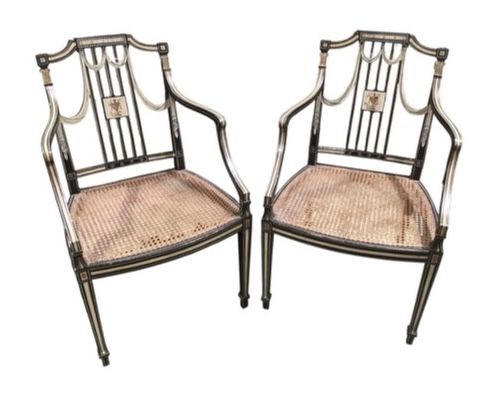


Gilt Cane Chairs
Gilt cane chairs combine gilded wooden frames with woven seats, offering both elegance and structural lightness.
Gilt Cane Chairs
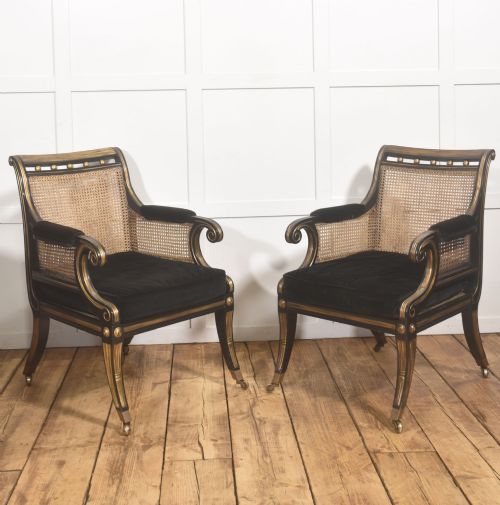
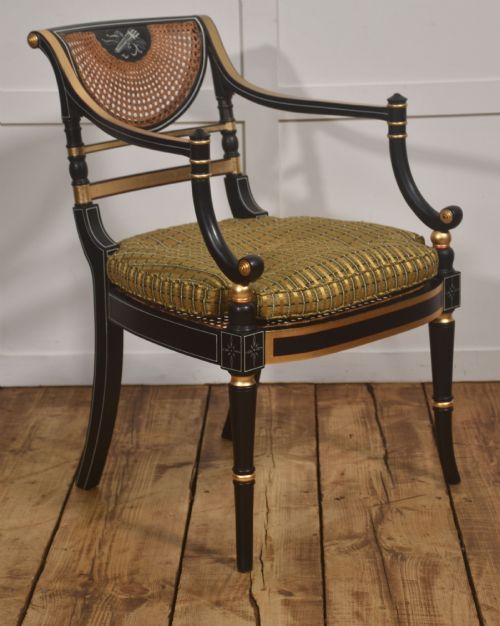
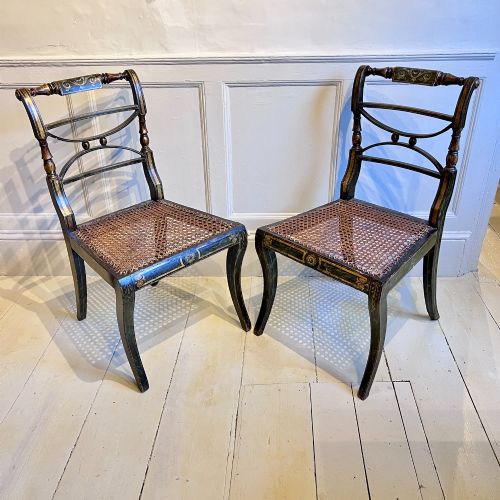
Gilt cane chairs encompass seating options ranging from Georgian and Regency models to Victorian and later revival pieces. Buyers exploring gilt cane chairs will encounter side chairs, armchairs, dining chairs, hall chairs, and bedroom chairs.
Forms vary from pairs of painted side chairs to sets of dining chairs and individual bergere armchairs. The selection includes specific historical examples alongside decorative seating from later centuries.
How they were made
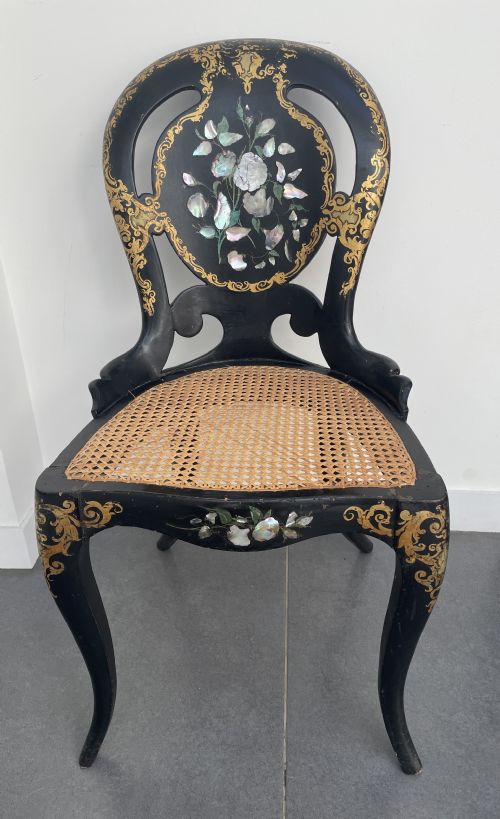
Frames are constructed from woods such as walnut and ebonised timber, often finished with paint, lacquer, or papier mache. Artisans applied gilt and gold leaf to highlight carved details and structural lines.
Seats and backs incorporate woven cane panels, providing a flexible and resilient surface. Certain models incorporate fabric upholstery alongside the cane work, while others feature inlaid mother of pearl.
Gilt Cane Chairs Retail Price Guide 2026
Typical asking prices for gilt cane chairs among the pieces listed under this phrase on Sellingantiques today, from the lower quarter to the upper quarter. They describe what is for sale here now, not the wider market.
Children get their own miniature seats in the form of small papier mache chairs.
What varies in quality
The refinement of the carving and the application of the gilt or gold leaf differentiate standard examples from finer pieces. Details such as parcel-gilt highlights and hand-painted decoration require greater skill.
The tightness and regularity of the cane weave indicate the standard of craftsmanship. The choice of underlying wood, whether solid walnut or ebonised timber, affects the durability and weight of the frame.
The Gilt Cane Chairs Glossary
- Cane
- Woven material made from rattan plants, utilised to create light and flexible seats and backs. It provides a breathable surface.
- Gilt
- A thin layer of gold or gold-like material applied to wood surfaces. It enhances decorative impact.
- Bergere
- An enclosed upholstered armchair featuring wooden frames, often incorporating cane panels on the sides or back. These chairs date across various French revival periods.
- Parcel-gilt
- A finish where only specific carved portions of a wooden object are gilded. This technique contrasts the gold leaf with painted or dark wood surfaces.
- Japanned
- European work imitating Japanese and Chinese lacquer finishes. It involves layered varnish applied to wood bases.
Gilt Cane Chairs: Frequently Asked Questions
Where were gilt cane chairs placed in historic homes?
These chairs served primarily in formal reception rooms, drawing rooms, and bedrooms where light and decorative seating was preferred.
Smaller side chairs and hall chairs were easily moved around rooms as required for entertaining or daily use.
How do I care for cane seats?
Maintain cane by keeping it lightly dusted and occasionally dampening the underside with a warm sponge to preserve its flexibility.
Avoid placing these chairs near direct heat sources or excessive moisture, which can dry out or snap the plant fibres.
Can I use these chairs for daily dining?
Dining chairs built with cane seats handle regular seating well if the weave remains taut and undamaged.
Period armchairs and bedroom chairs, however, suit lighter daily use or decorative placement rather than heavy family dining.
What is the difference between Regency and Regency revival pieces?
Original Regency pieces date from the early nineteenth century and exhibit period-specific construction methods and material ageing.
Regency revival pieces are later productions, such as those from the early twentieth century, which replicate the classical style of the earlier era.