







Gilt Bronze Writing Accessories
These gilt bronze writing accessories bring tactile weight and refined metalwork to the desk, offering functional nineteenth-century craftsmanship for the modern workspace.
Gilt Bronze Writing Accessories
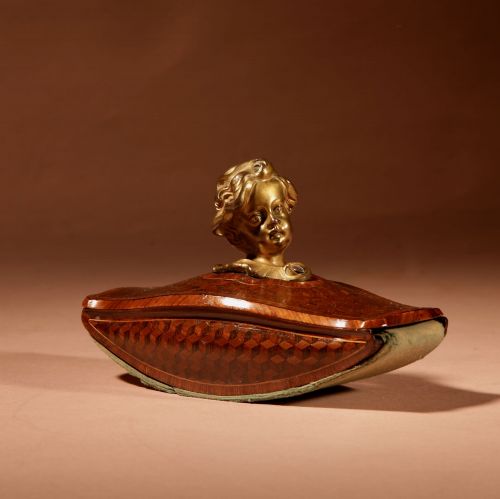
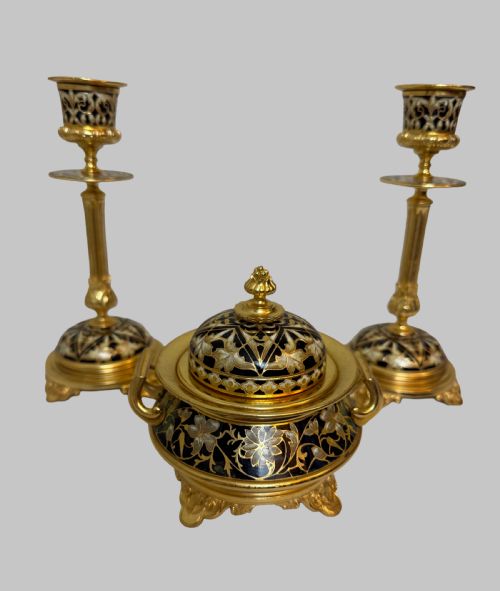
Gilt bronze writing accessories encompass desk sets, inkstands, inkwells, and desk blotters designed to organise correspondence and writing materials. These pieces range from compact single inkwells to substantial sets complete with candlestands and matching bases.
The objects appearing here date predominantly from the nineteenth century, including specific decades such as the eighteen-fifties, sixties, seventies, and nineties, alongside Edwardian examples. French workshops heavily influence the selection, displaying stylistic roots in the French Empire, Napoleon III, Second Empire, and Art Nouveau periods.
Buyers will most frequently encounter combinations of cast metal and heavy stone bases, often taking the form of inkstands mounted on marble. These items serve both a decorative and a utilitarian purpose, anchoring a traditional desk scheme with period presence.
Materials and construction methods
The primary material foundation relies on cast bronze, often finished with fire gilding or referred to as ormolu, which yields a durable metallic lustre. This is frequently paired with natural stone elements including Sienna marble, vert marble, and onyx marble.
Secondary materials introduce variety through walnut, coromandel-wood, and mahogany bases, alongside ceramic inserts and glass components for the inkwell reservoirs. Champlevé enamelling and brass detailing appear on select pieces to add chromatic contrast to the metallic surfaces.
Gilt Bronze Writing Accessories Retail Price Guide 2026
Typical asking prices for gilt bronze writing accessories among the pieces listed under this phrase on Sellingantiques today, from the lower quarter to the upper quarter. They describe what is for sale here now, not the wider market.
Playing cats and kittens occasionally scramble across the bronze base, reminding writers that nineteenth-century desks also welcomed household pets.
Judging quality in metalwork and mounts
Quality reveals itself in the crispness of the bronze casting and the depth of the gilding, where sharp chisel work and defined chasing separate superior items from softer, more utilitarian productions. The integration between the metal mounts and the stone or wooden base demonstrates the level of care taken by the maker.
The selection of materials also dictates the grade of the piece, with dense marbles, figured exotic woods, and multi-piece desk sets representing more ambitious commissions. Original glass liners, intact ceramic pots, and balanced proportions ensure the object retains its intended function and visual harmony.
Albert Marionnet·A. Marionnet
The Gilt Bronze Writing Accessories Glossary
- Gilt Bronze
- Metal alloy treated with a gold application to produce a lustrous, durable surface finish. This technique protects the underlying bronze from tarnishing while providing a bright golden appearance.
- Ormolu
- French term denoting finely chopped and cast brass or bronze rendered with a gold wash. It was widely utilised across nineteenth-century desk furnishings for decorative mounts and figures.
- Encrier
- French term for an inkstand or inkwell designed to hold writing fluid and pens. These often incorporate fitted compartments for sanders, seals, and nibs.
- Champlevé
- Enamelling technique where troughs or cells are hollowed out of a metal surface and filled with vitreous paste before firing. This method creates colourful geometric or pictorial patterns across bronze mounts.
- Animalier
- Nineteenth-century artistic style focusing on the realistic depiction of animals. Desk sets in this category frequently feature sculptural cats, kittens, or birds interacting with the bronze base.
Gilt Bronze Writing Accessories: Frequently Asked Questions
What is an encrier?
An encrier is a French term for an inkstand or inkwell designed to hold writing fluid on a desk.
These pieces typically incorporate a heavy base, pen rests, and one or more covered glass or ceramic ink pots.
How do you clean gilt bronze?
Gilt bronze requires gentle dusting with a soft, dry brush to prevent the accumulation of dirt in recessed chasing.
Harsh commercial polishes and abrasive cloths must be avoided, as they will strip the thin layer of gold finish from the metal.
Were these sets used daily?
These accessories were standard fixtures on nineteenth-century writing desks for drafting correspondence with dip pens.
The inclusion of sanders for blotting ink and compartments for wax seals reflects traditional writing habits of the period.
What is the difference between ormolu and brass?
Ormolu refers specifically to gilded bronze or brass mounts finished to resemble solid gold through mercury amalgamation or electrogilding.
Standard brass is a plain copper and zinc alloy without the surface gold treatment found on finer decorative desk items.