
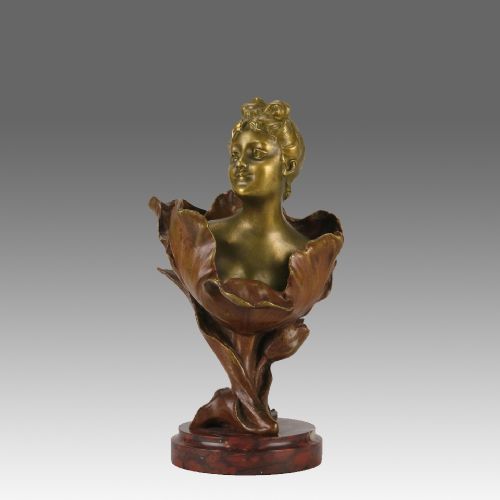


Gilt Bronze Marble Bust
These gilt bronze marble bust pieces combine cast metal and carved stone into striking portrait sculptures and desk accessories.
Gilt Bronze Marble Bust
A gilt bronze marble bust brings together portrait sculpture and classical display, uniting metalwork and carved stone. When you search for a gilt bronze marble bust, you find historical figures, literary subjects and mythological characters rendered in mixed media.
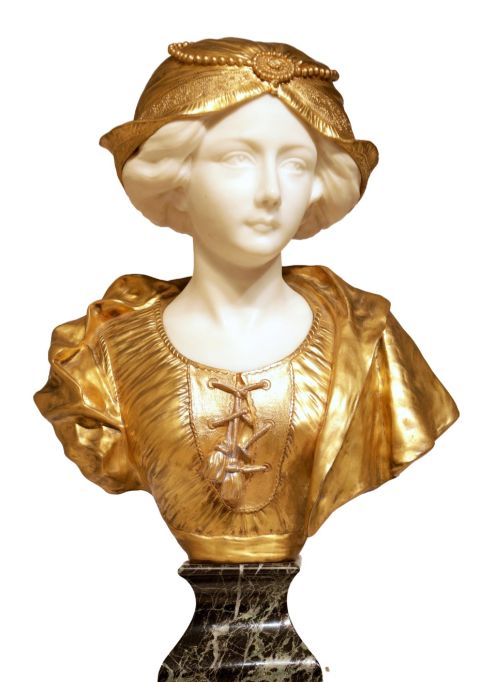
The pieces on this page span the nineteenth century and the Edwardian period, often incorporating pedestals, inkwells and mantel clocks alongside standalone portraits. Neoclassical and French Empire styles predominate, alongside Art Nouveau interpretations.
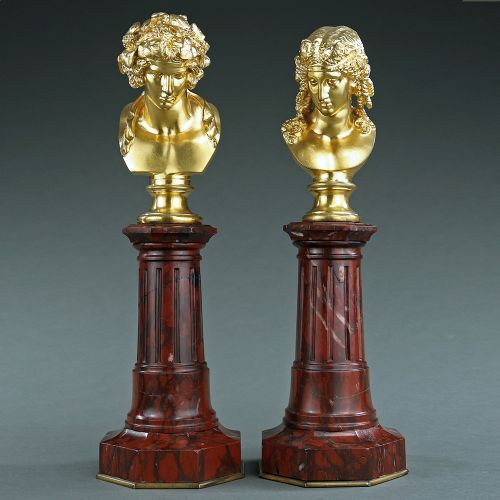
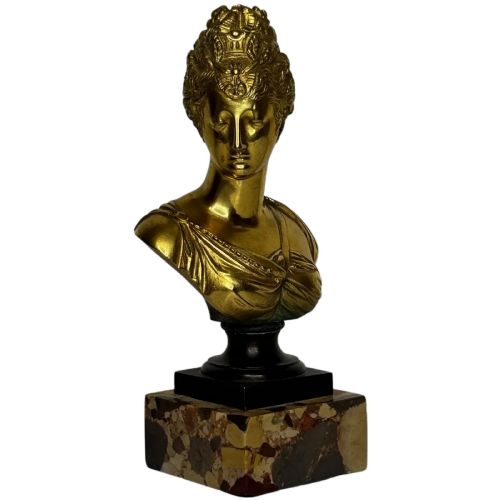
Subjects range from historical figures such as Marie Antoinette and Napoleon to mythological deities like Apollo and Dionysus. Many works rest on contrasting stone bases or columns, creating a substantial visual presence.
Materials and construction
These works rely on the combination of cast metals and quarried stone, utilising gilt bronze and ormolu alongside white, red and portoro marble, onyx and alabaster. Founders cast the metal components before applying mercury gilding or modern electroplating to create the characteristic golden surface.
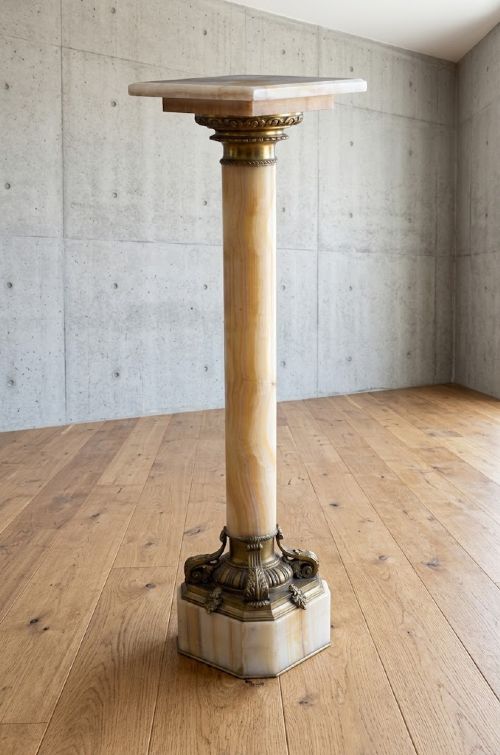
Stone bases and columns are turned on lathes or hand-carved, then fitted with cast bronze collars, mounts and plaques. Artisans integrated these materials through mechanical fixings, threading bolts through the core of the bust to secure the metal portrait to its stone plinth.
William Shakespeare keeps watch from an onyx clock case while literary giants Sir Walter Scott and Robert Burns share a twin study.
Judging quality in mixed-media sculpture
The selection and turning of the marble or onyx base also determine overall merit, particularly the absence of natural flaws in prominent display areas and the snugness of the ormolu mounts against the stone. Signed pieces by recorded sculptors demonstrate a higher level of artistic ambition in both modelling and material selection.
Affortunato Gory·Henri Godet·G.V. Vaerenbergh·E. Laurent
The Gilt Bronze Marble Bust Glossary
- Gilt bronze
- Metal cast in bronze and treated with a gold layer or gold amalgam. This technique protects the underlying alloy and produces a bright golden finish.
- Ormolu
- Finely chased and gilt bronze used extensively for decorative mounts on furniture and stone bases. The term derives from the French for ground gold.
- Portoro
- A black Italian marble featuring prominent gold and yellow veins. It provides a dramatic high-contrast base for bronze and white marble sculptures.
- Grand Tour
- The nineteenth-century practice of collecting cultural artefacts across Europe. Busts from this tradition often depict classical deities or historical literary figures.
- Chasing
- The manual finishing of a bronze casting using small punches and chisels. This process refines surface textures and sharpens details after the foundry work.
Gilt Bronze Marble Bust: Frequently Asked Questions
What periods do these busts come from?
The pieces listed originate primarily in the nineteenth century, extending into the Edwardian era around nineteen hundred. Many reflect earlier neoclassical and Regency revivals.
Maker signatures and material choices help narrow down the production window when documentary evidence is absent.
How were these busts displayed originally?
These works often stood upon dedicated marble columns, onyx pedestals or mahogany plinths to elevate the portrait within a room. Smaller versions served as desk ornaments, such as inkwells and mantel clock components.
Their heavy stone bases provided necessary stability for the combined weight of metal and mineral.
How do I care for gilt bronze and marble?
Dust bronze and marble surfaces gently with a soft, dry cloth to prevent accumulation. Avoid commercial polishes and abrasive cleaners that can strip the delicate gilding.
Keep pieces away from direct sunlight and damp environments to protect the integrity of both the metal finish and the stone.
What subjects are most common?
Portraits frequently feature literary icons like Shakespeare, Burns and Scott alongside mythological subjects including Apollo, Diana and Dionysus. Historical rulers such as Napoleon and Marie Antoinette also appear regularly.
Allegorical figures representing flowers or seasons are typical of the later Art Nouveau period.