


Gilt Brass Spike Lights
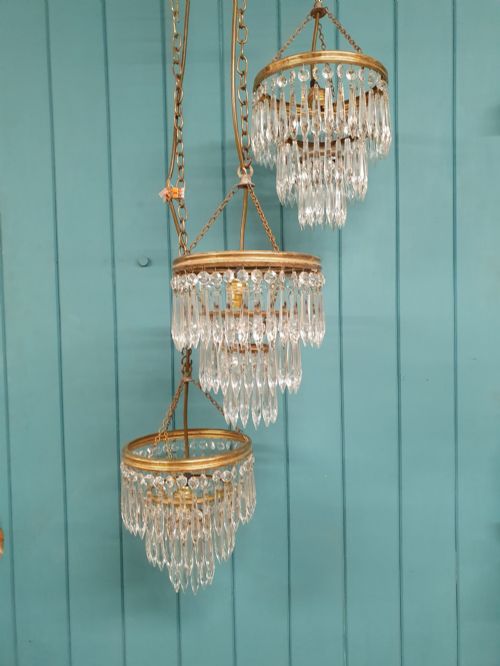
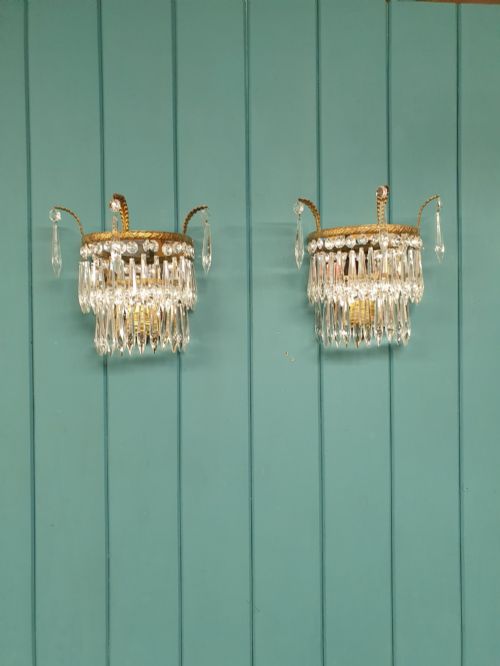
These gilt brass spike lights bring unmistakable presence to a room through their striking metalwork and glittering glass drops.
Gilt Brass Spike Lights
Gilt brass spike lights comprise chandeliers, wall lights, and ceiling lights originating predominantly from the Edwardian era and the nineteen-thirties. These fixtures incorporate distinct downward-pointing metallic spikes alongside decorative elements such as swags, cherubs, and mirror backs.
The selections available here range from compact seven-inch fixtures to large multi-tiered waterfall chandeliers spanning up to thirteen inches. Buyers encounter various configurations, including matched pairs of wall lights and substantial individual chandeliers finished with extensive crystal and cut glass.
Stylistic influences span French Regency, French Rococo Revival, and Mid-Century Modern aesthetics alongside classic Edwardian designs. Each piece reflects the decorative priorities of its period, blending heavy metallic frames with sparkling glass components to manipulate interior light.
How they were made
Maker construction relies on heavy brass and gilt metal frameworks plated or treated to produce a golden surface finish. Artisans assembled these structural components to support substantial hanging arrangements of crystal, cut glass, and mirror glass.
Intricate detailing such as cast cherubs and decorative swags were integrated directly into the metal armature alongside the defining spike motifs. Cut glass and crystal drops were then suspended from the primary frame using traditional wire fixings to create the multi-tiered waterfall effects.
Current listings exclusively feature pieces from the Edwardian period and nineteen-thirties, utilising brass, crystal, cut glass, mirror glass, and gilt metal.
What varies in quality
Quality differences emerge in the crispness of the metal casting and the complexity of the secondary decorative elements. Superior examples incorporate finely modelled cherubs and intricate swags rather than plain or repetitive pressings.
The grade of the suspended glass components dictates the overall brilliance of the fixture, with heavy cut crystal outperforming simpler moulded glass. Additionally, the scale and ambition of the frame construction, such as expansive multi-tiered designs or integrated mirror backs, distinguish more elaborate pieces from standard wall lights.
The Gilt Brass Spike Lights Glossary
- Gilt brass
- A brass base metal treated with a gold-coloured surface finish. This technique provides the rich metallic appearance characteristic of these decorative fixtures.
- Spike
- A pointed metal terminal used structurally or decoratively on the lower portions of the lights. These elements define the silhouette of the chandeliers and wall sconces.
- Swag
- A draped garland of metal, crystal, or glass suspended between fixed points on the fixture. This decorative feature softens the rigid geometry of the main brass frame.
- Waterfall chandelier
- A multi-tiered lighting form where dense cascades of glass or crystal drops mimic falling water. These large configurations maximise refraction from a central light source.
Gilt Brass Spike Lights: Frequently Asked Questions
Where should I hang a spike chandelier?
These fixtures suit hallways, dining spaces, or principal rooms where their vertical drop and reflective glass components can catch natural and artificial light.
Smaller examples fit lower ceilings or intimate spaces, whilst larger multi-tiered versions demand adequate clearance to showcase their full length.
How do I date these light fittings?
Dating relies on stylistic markers associated with Edwardian production and the nineteen-thirties. Edwardian pieces often lean towards traditional proportions, whilst nineteen-thirties examples frequently display bolder French Chateau or mid-century revival influences.
Examining the casting methods and the cut of the glass provides further clues to the manufacturing decade.
Are wall lights and chandeliers matched?
Pairs of wall lights frequently mirror the decorative vocabulary of contemporary chandeliers through shared gilt brass frames and matching spike terminals.
Using matching items across a single interior creates a cohesive decorative scheme without requiring identical fixture types in every location.
What maintenance do glass drops need?
Crystal and cut glass components require periodic cleaning to maintain their light-refracting properties. Gentle dusting prevents grime accumulation on the delicate wire suspensions.
Careful handling during maintenance protects both the glass elements and the underlying gilt brass finishes.