

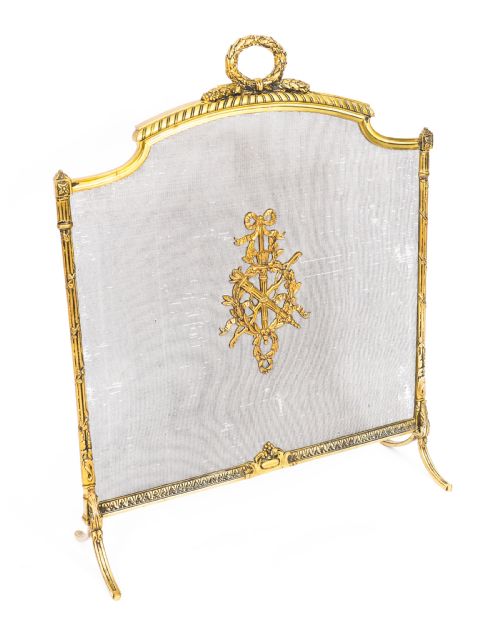


Gilt Brass Hearth Guard
A gilt brass hearth guard protects the room from escaping embers while bringing nineteenth-century French and English metalwork into the fireplace surround.
Gilt Brass Hearth Guard
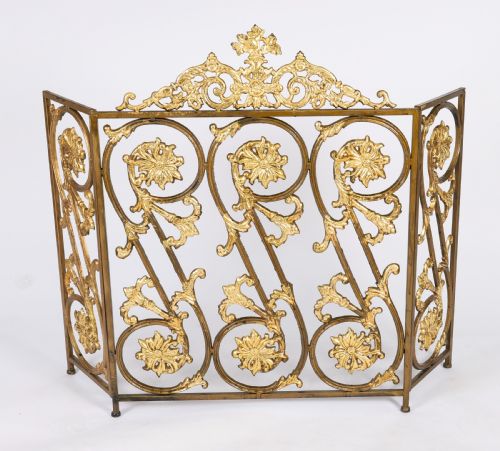
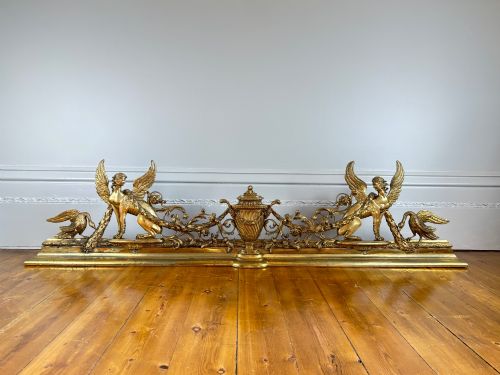
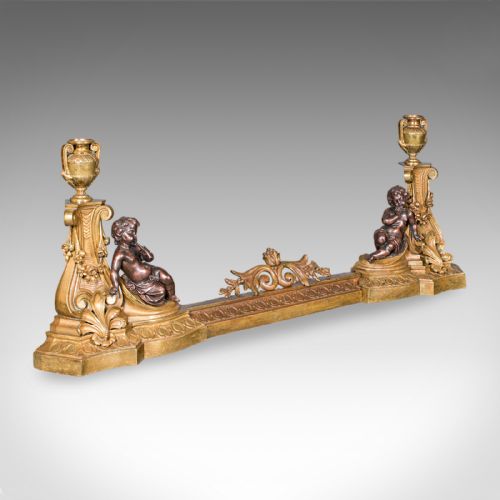
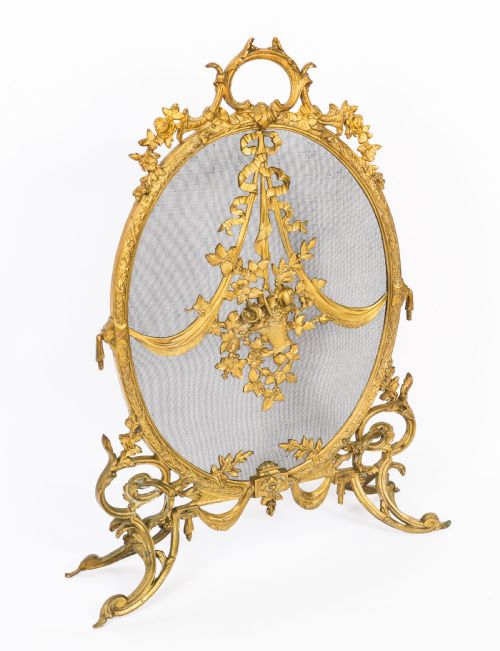
A gilt brass hearth guard takes the form of a fire screen, adjustable fender, or spark screen designed to stand before an active fireplace. These pieces serve to catch sparks and contain ash while framing the hearth with decorative metalwork.
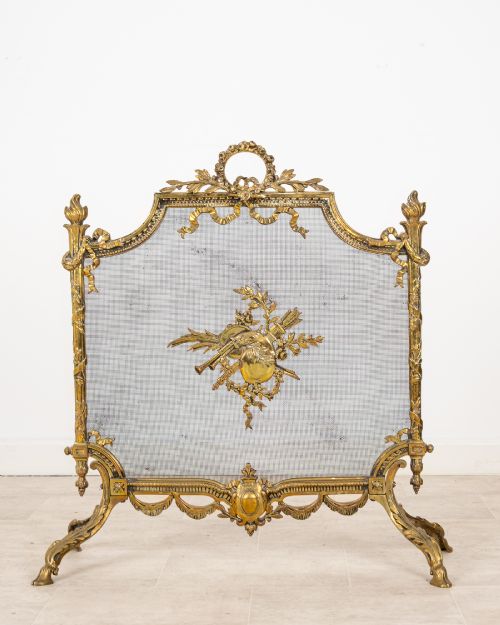
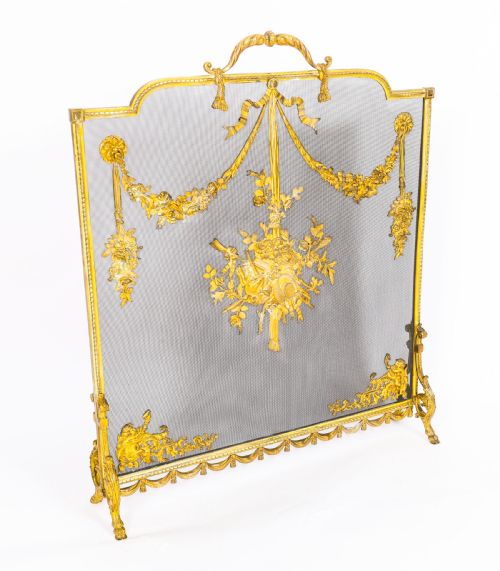
The selections available here lean heavily toward nineteenth-century French production, alongside Victorian English examples. Makers and designers utilised styles ranging from French Rococo and Louis XVI to Empire Revival, incorporating motifs such as musical trophies, flaming torches, and classical garlands.
How they were made
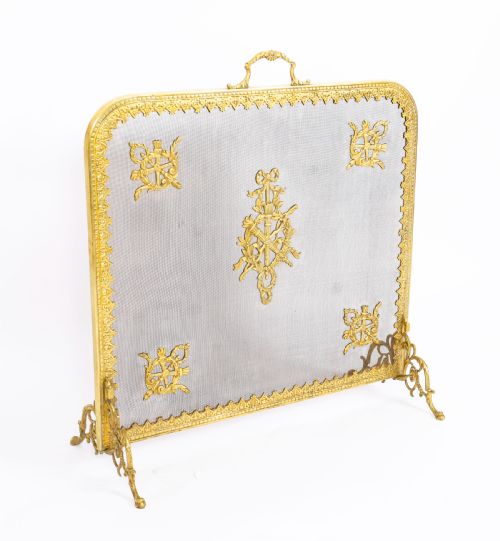
Makers constructed these hearth guards using brass, bronze, and gilt bronze, often referred to as ormolu, applied over a supportive metal armature. Many items integrate wire mesh or steel mesh panels to catch embers safely without blocking the warmth of the fire.
Surface gilding and polishing brought out the intricate casting of floral scrolls and classical details. Adjustable mechanisms allowed certain fenders and fire kerbs to fit various hearth widths securely.
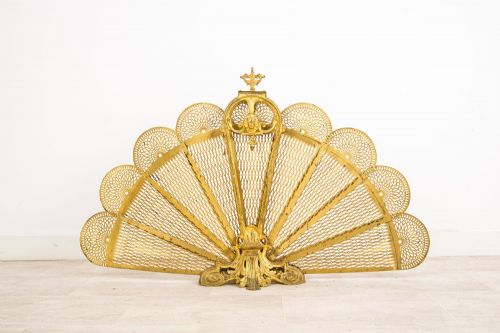
Peacock fan fire screens unfold gracefully across the hearth like metallic plumage.
What varies in quality
Quality rests in the crispness of the bronze casting and the depth of the original gilding. Finer pieces show sharply defined chased details on motifs like musical trophies and floral swags, rather than soft or smoothed surfaces.
The integrity of the structural joints and the weight of the metal distinguish superior examples. Robust frames and well-fitted mesh panels indicate sturdiness beneath the decorative ormolu mounts.
E F Caldwell New York
The Gilt Brass Hearth Guard Glossary
- Ormolu
- Gilded bronze produced by applying a mercury and gold amalgam to a bronze base and heating it. This technique creates a durable golden finish seen on many nineteenth-century fireside pieces.
- Chenets
- Andirons or fire dogs placed on the hearth to support logs. They often match the stylistic vocabulary of associated fire screens and fenders.
- Fire Kerb
- A low metal barrier surrounding the hearth opening to contain rolling embers. Adjustable versions allow adaptation to different fireplace dimensions.
- Spark Screen
- A protective mesh panel designed to stop flying sparks from escaping the firebox. These are frequently mounted within decorative gilt brass frames.
Gilt Brass Hearth Guard: Frequently Asked Questions
How do I clean a gilt brass hearth guard?
Dust the metal gently with a soft dry cloth to remove surface soot and debris. Avoid abrasive cleaners or harsh chemical polishes that can wear away the thin layer of gilding.
Regular gentle maintenance preserves the historic finish of the bronze and brass surfaces. Take care around any integrated mesh panels so the wire does not snag or distort.
Can these screens be used with a real fire?
Many of these pieces were built for active hearths, incorporating wire or steel mesh to stop sparks. Check that the frame remains stable and that the mesh is secure before placing it near an open flame.
Historic pieces may require careful handling during use due to their age. Position the guard at a safe distance from intense heat to protect the metalwork.
What is the difference between a fender and a screen?
A fender sits low on the floor around the hearth perimeter to keep logs and embers from rolling onto the room's flooring. Some versions include adjustable lengths to fit specific hearth openings.
A screen stands upright to shield the room from direct radiant heat and flying sparks. Screens often feature folding panels or intricate ormolu mounts rather than low horizontal boundaries.
How do I identify a nineteenth-century piece?
Nineteenth-century examples frequently display revival styles such as French Rococo, Louis XVI, or Empire motifs. Look at the construction methods, casting quality, and the wear patterns on the brass and bronze.
Signatures or stamps from makers and foundries occasionally appear on the metal frame. Comparing the decorative vocabulary to known period pieces helps confirm the date of manufacture.