



Gilt Brass Credenza
A gilt brass credenza brings architectural presence and rich metallic detail to a room, drawing the eye with polished mounts and dark timber.
Gilt Brass Credenza
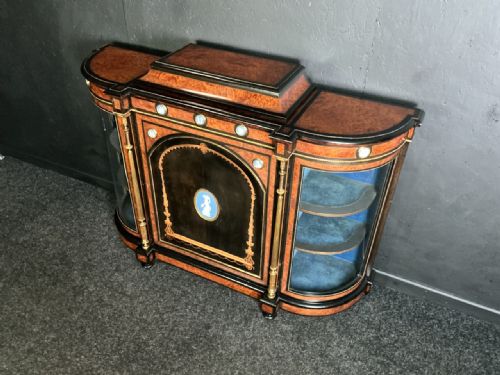
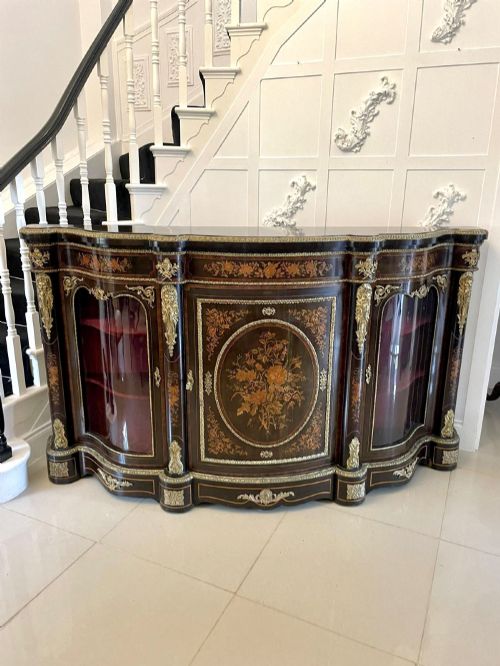
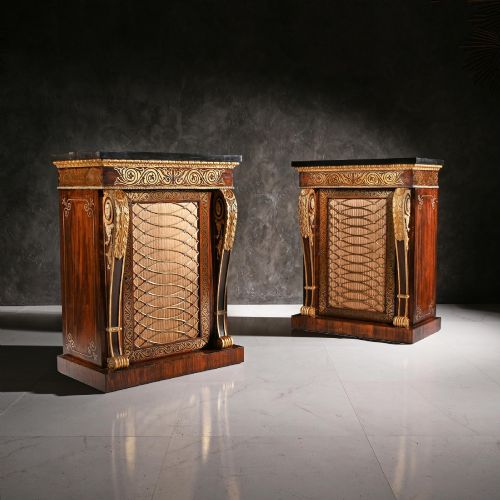
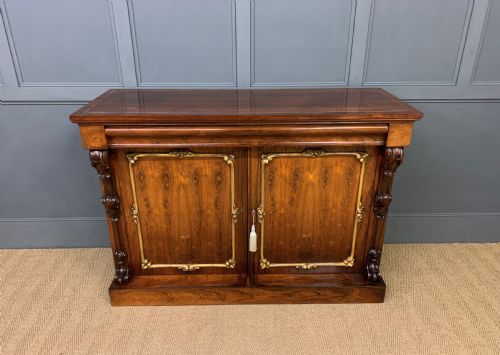
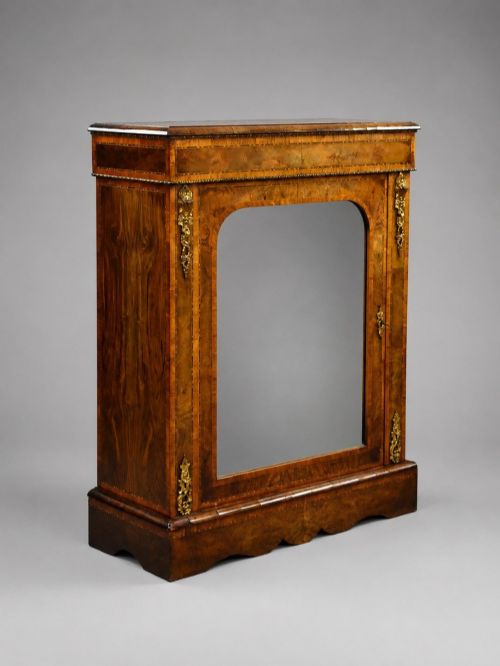
When you search for a gilt brass credenza, you encounter low display furniture designed to anchor a principal room, most frequently represented here by Victorian and nineteenth-century side cabinets, breakfronts, and pier cabinets.
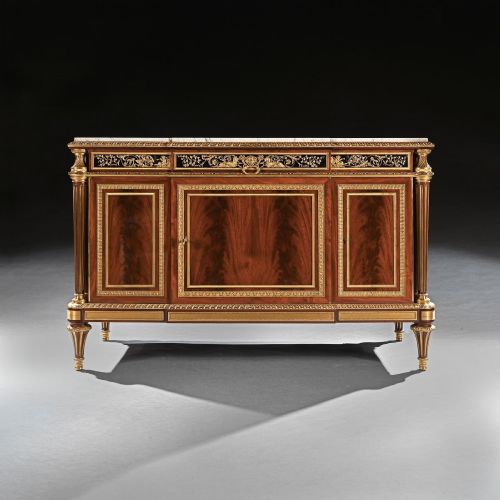
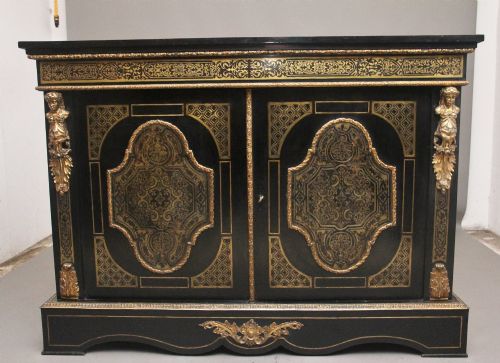
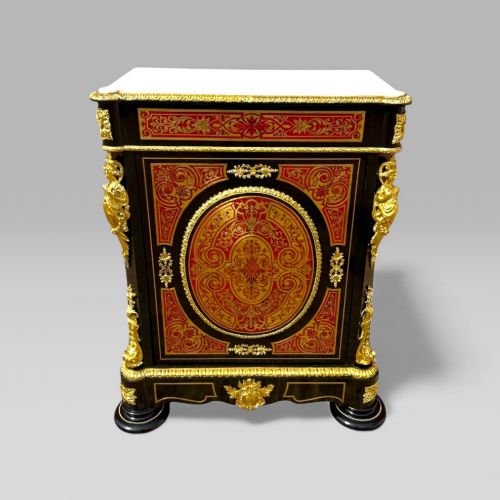
The pieces on this page span the Regency era through to the late nineteenth century, taking forms such as serpentine credenzas, boulle cabinets, and marble-topped sideboards.
Makers drew on French Napoleon III, Louis XVI, and Aesthetic Movement design vocabularies, applying gilt brass and ormolu mounts to dense timbers like rosewood, burr walnut, and ebonised wood.
How they were made
Craftsmen built carcases from timbers including rosewood, burr walnut, mahogany, and ebonised wood, frequently laying down intricate marquetry or parquetry patterns.
Metal ornamentation relied on cast brass and ormolu mounts, alongside tortoiseshell and brass boullework inlay set directly into the wooden surfaces.
Interiors and display areas incorporated glass doors, marble tops, porcelain plaques, and Sevres plaques to complete the decorative scheme.
Gilt Brass Credenza Retail Price Guide 2026
Typical asking prices for gilt brass credenza among the pieces listed under this phrase on Sellingantiques today, from the lower quarter to the upper quarter. They describe what is for sale here now, not the wider market.
Some Regency side cabinets cleverly hide leather-bound dummy books behind their doors.
What varies in quality
Quality rests on the crispness of the brass and ormolu chasing, where sharp, deeply defined casting separates standard production from finer workshop output.
The selection of timber veneers and the precision of marquetry inlay dictate the visual depth of the cabinet body.
Integration of secondary materials, such as heavy marble tops and detailed porcelain plaques, marks the distinction between simpler side cabinets and major salon pieces.
Henry Dasson·Louis Constantin Le Gaigneur·Gillows
The Gilt Brass Credenza Glossary
- Ormolu
- Gilded bronze or brass mounts applied to furniture to highlight corners, panels, and friezes. This technique provided rich golden highlights against dark wood.
- Boulle
- Marquetry of tortoiseshell and brass, named after the cabinetmaker André-Charles Boulle. It creates a contrasting pattern of dark shell and polished metal.
- Marquetry
- Decorative veneer patterns arranged in wooden surfaces to form floral or geometric pictures. Craftsmen cut contrasting wood types together to fit tightly.
- Credenza
- A low cabinet or sideboard used for display and storage, evolving from sixteenth-century side tables. Nineteenth-century examples often feature central glass doors.
- Pier Cabinet
- A narrow display cabinet designed to sit against the wall space between windows. These pieces typically house porcelain plaques or glazed shelving.
Gilt Brass Credenza: Frequently Asked Questions
Where should I place a credenza?
These low cabinets suit principal reception rooms or dining spaces where a strong architectural anchor is needed against a plain wall.
Their proportions allow lamps and decorative objects to sit on top without crowding the wall art above.
How do I care for ebonised wood?
Ebonised surfaces require simple dusting with a dry, soft cloth to prevent particulate buildup on the dark finish.
Avoid commercial polishes containing silicone, which can alter the sheen of nineteenth-century blackened timber over time.
What is the difference between a credenza and a pier cabinet?
Credenzas are typically broader, low-profile cabinets featuring multiple doors, often with a breakfront configuration for storage and display.
Pier cabinets are narrower upright furniture pieces built to fit specific wall spaces between architectural openings.
How can I identify a Regency period piece?
Regency cabinets often employ rosewood veneers, brass inlay lines, and parcel gilding that reflect classical architectural restraint.
They pre-date the heavier ornamentation seen in later Victorian furniture styles.