




Gilt Branch Wall Lights
Gilt branch wall lights bring warmth and sculptural elegance to a room, casting soft illumination through gilded metal and carved wood.
Gilt Branch Wall Lights
When you search for gilt branch wall lights, you encounter wall-mounted lighting fixtures shaped to resemble natural botanical forms or formal candelabra branches. These pieces span the eighteenth century through the early twentieth century, originating primarily from French and Italian workshops.
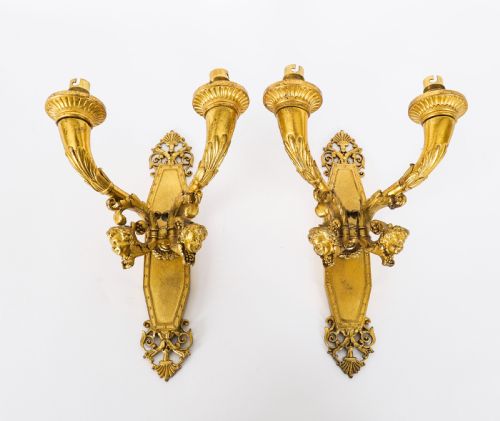
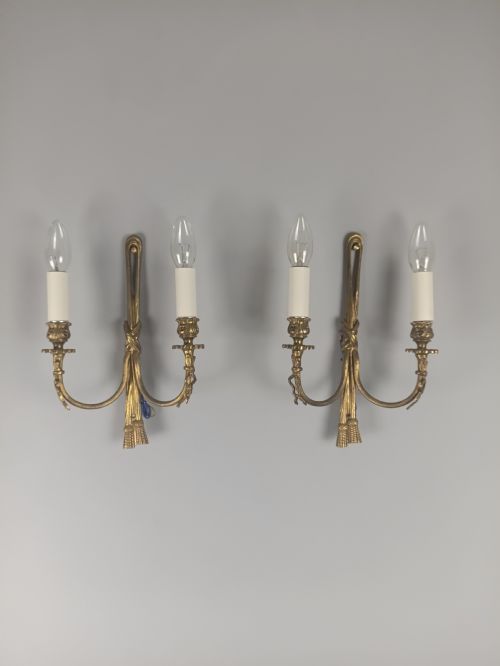
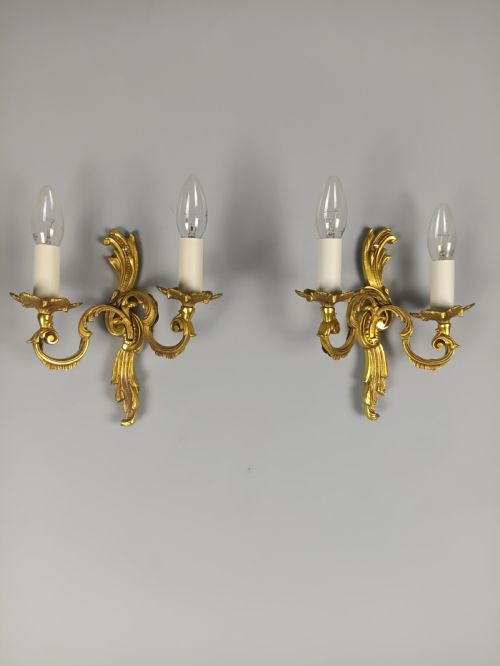
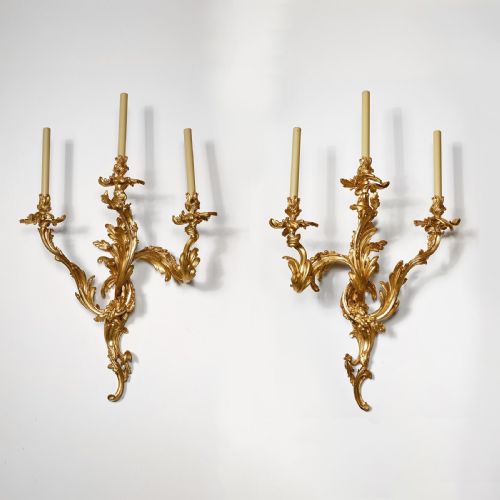
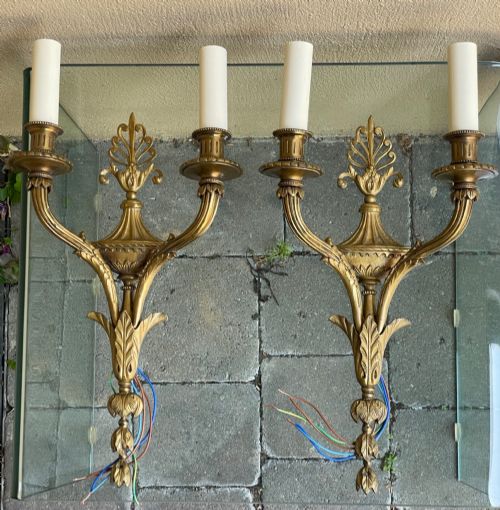
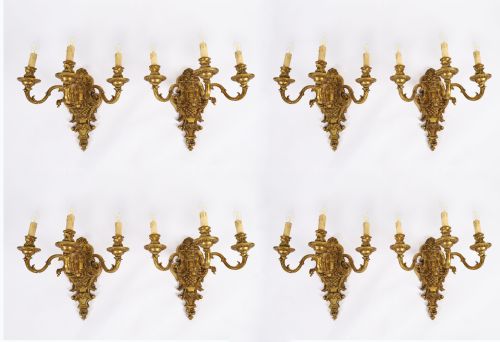
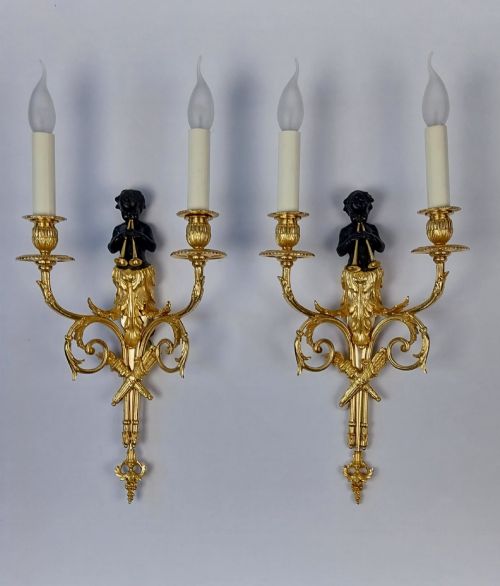
The version you are most likely to meet on this page is the pair of French ormolu or gilt brass wall lights carrying two or three branches. These fixtures frequently incorporate revival styles such as Louis XIV, Louis XVI, and Rococo.
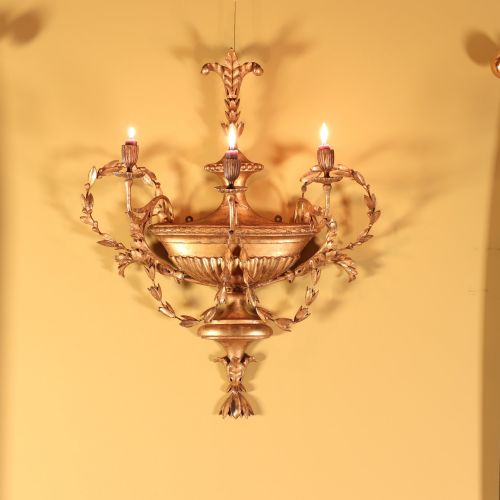
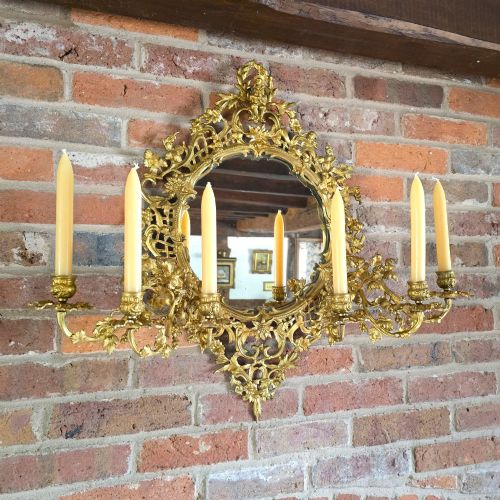
Beyond standard double and triple arm configurations, the selection includes girandole mirrors that integrate candle arms into the glass frame, alongside carved giltwood sconces from English and Florentine makers.
How they were made
The construction of these pieces relies heavily on cast bronze, brass, and ormolu, often meticulously chased and finished with gold leaf or gilding. Metalwork forms the structural backbone for most French branch lights, allowing artisans to shape intricate acanthus leaves and scrolling foliage.
Alternatively, wooden pieces utilise carved giltwood and gesso, building up botanical depth before the application of gold leaf. Italian and English workshops frequently employed this carved wood technique for lighter, more organic wall sconces and girandoles.
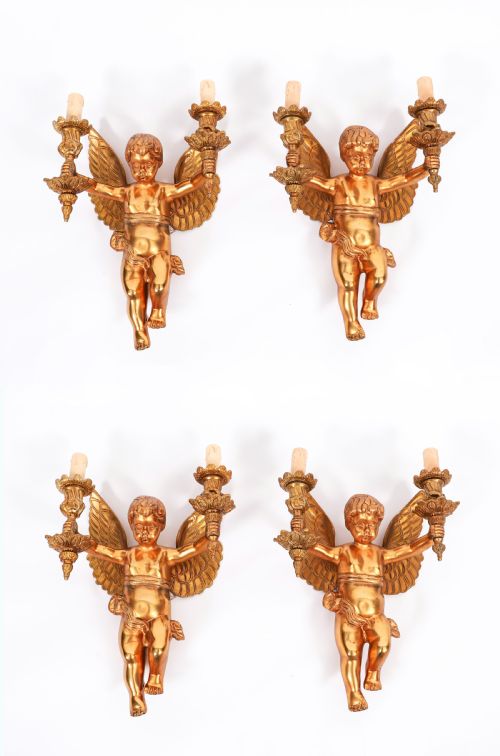
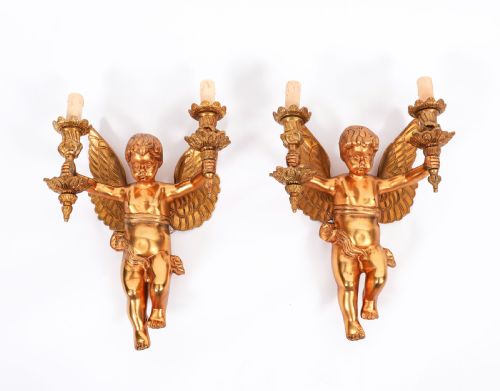
Cherubs occasionally peek out from the gilded bronze foliage of nineteenth-century Italian sconces, holding candle branches with cheerful indifference.
What varies in quality
The standard of the casting dictates the visual depth of the foliage and the crispness of the chased details across the metal surface. Superior examples display sharply defined leaves and smooth transitions where individual branches meet the backplate.
The integrity and depth of the gilding further distinguish the tier of craftsmanship, whether through fire-gilded ormolu, gold leaf on gesso, or later surface treatments. Heavier gauge metal and substantial mounting plates separate grander chateau pieces from smaller domestic variants.
Maison Baques
The Gilt Branch Wall Lights Glossary
- Ormolu
- Gilded bronze produced by applying a mercury and gold amalgam to a bronze base and heating it. This technique creates a durable, warm metallic lustre found on many antique French wall lights.
- Girandole
- A branched wall light or sconce that incorporates a mirror into its backplate. The reflective glass multiplies the candlelight within the room.
- Gesso
- A plaster-like mixture applied to wood surfaces as a preparation for gilding. It allows carvers to achieve fine relief details before laying gold leaf.
- Appliqué
- A wall-mounted decorative fixture or sconce designed to hold candles or electrical fittings. The term often appears interchangeably with wall lights in French inventories.
- Candelabra
- A branched lighting fixture designed to hold multiple candles or bulbs simultaneously. These fixtures form the central arm structure for larger wall lights.
Gilt Branch Wall Lights: Frequently Asked Questions
How were gilt branch wall lights used historically?
These fixtures were mounted in pairs or larger sets along panelled walls to reflect candlelight and brighten dark evening rooms in grand residences.
Positioned above mantelpieces or flanking mirrors, they maximised ambient illumination before the widespread adoption of domestic electricity.
How do I tell Louis XVI style from Rococo?
Louis XVI style wall lights feature symmetrical designs, straight lines, classical urn motifs, and neat architectural proportions.
In contrast, Rococo pieces embrace asymmetry, flowing natural curves, C-scrolls, and exuberant organic foliage without rigid geometry.
Can these antique wall lights be rewired safely?
Most antique wall lights are adapted for modern electrical standards by running discreet wiring through the hollow cast branches or backplates.
Professional rewiring preserves the exterior metalwork and structural integrity while allowing safe integration into contemporary home lighting circuits.