
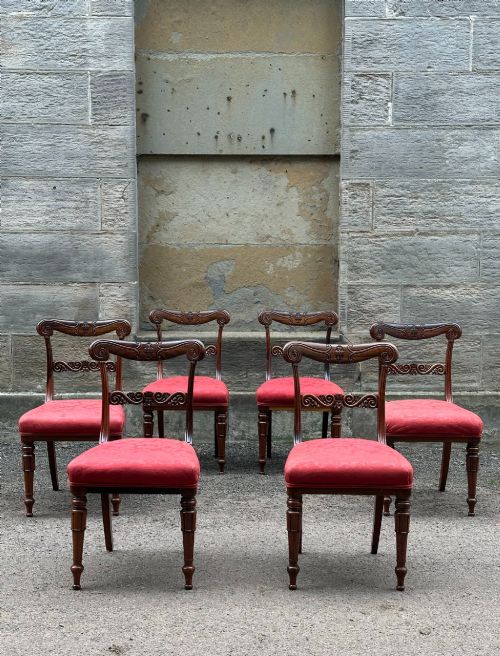
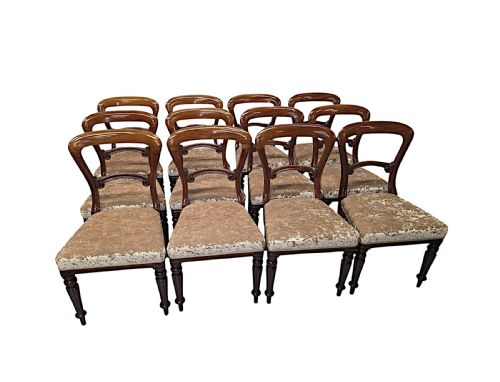
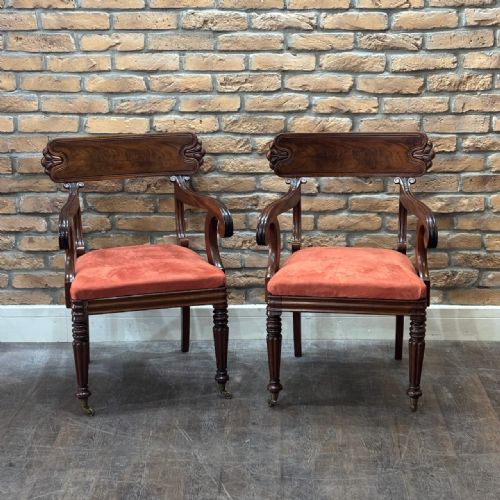
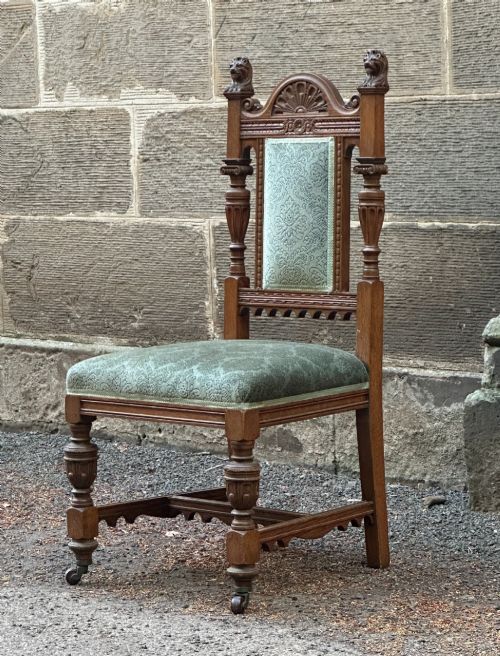


Gillows Style Dining Chairs
Gillows style dining chairs bring substantial presence and historic craftsmanship to a dining room through robust timber construction and classical design.
Gillows Style Dining Chairs
When buyers search for gillows style dining chairs, they encounter seating rooted in Georgian, Regency and Victorian periods, often taking the form of sets or pairs. The most common examples on this page are mahogany dining chairs and side chairs reflecting the workshops associated with Lancaster and London.
The selection spans individual armchairs, hall chairs and larger sets of six or twelve pieces. These items demonstrate stylistic traits ranging from George III and George IV designs to Gothic Revival and William & Mary influences.
Origins vary between direct attribution to the firm, pieces made in the manner of their output, and later twentieth-century interpretations by Waring and Gillow. Buyers typically find sturdy timber frames accompanied by varied seating surfaces such as velvet, cane, red leather, or standard upholstery.
How they were made
Construction relies heavily on dense hardwoods, principally mahogany, rosewood, walnut and oak. These timbers provide the structural integrity required for heavy dining use over centuries.
Surface detailing involves skilled carving and occasional inlay work. Seating integration incorporates cane weaving, drop-in pads, and traditional fabric or leather upholstery secured over supportive framing.
Listings feature mahogany, rosewood, oak, and walnut timbers alongside upholstery in velvet, leather, and cane across multiple centuries.
What varies in quality
The degree of refinement in the timber carving and the integrity of the original frame construction set the finest examples apart. Superior sets maintain uniformity across multiple chairs, whereas lesser pieces show inconsistencies in timber selection or later alterations.
The choice of primary wood also influences the character of the piece, with solid rosewood and finely figured mahogany representing the higher end of the regional output compared to standard oak or utility timbers.
Bruce Talbert·Waring and Gillow·Gillows of Lancaster
The Gillows Style Dining Chairs Glossary
- Mahogany
- A durable hardwood valued for its rich reddish-brown colour and stability in furniture construction. It served as the primary material for high-end seating throughout the Georgian and Regency periods.
- Regency
- An architectural and design style spanning the early nineteenth century defined by classical restraint and archaeological motifs. Pieces from this era often feature clean lines and sabre legs.
- Gothic Revival
- A nineteenth-century movement drawing inspiration from medieval architecture. Chairs in this style incorporate pointed arches, heavy tracery and carved oak.
- Rosewood
- A heavily figured, dense exotic timber offering dark grain patterns. It was utilised for select luxury dining sets.
- Cane
- Plant material woven into open mesh panels for chair seats or backs. It provides a lightweight yet resilient surface.
Gillows Style Dining Chairs: Frequently Asked Questions
How do I identify a Gillows chair?
Authentic pieces or those made in the manner of the firm often display crisp carving, high-grade mahogany or rosewood, and robust proportions typical of Lancashire workshops. Maker stamps or numerical markings can occasionally be found stamped on the wood frames.
Matching the design characteristics to documented Regency or Georgian patterns helps confirm the stylistic lineage of the seating.
Are these chairs suitable for daily use?
Most of these historic chairs are structurally robust enough for regular dining when maintained properly. Solid timber frames provide the necessary strength for everyday seating.
Buyers should ensure joints remain tight and upholstery support is sound before putting antique sets into heavy rotation.
What is the difference between Georgian and Victorian sets?
Georgian and Regency chairs typically exhibit classical restraint, slender proportions, and cleaner geometric lines. Timber selection focuses heavily on polished mahogany.
Victorian iterations often display heavier carving, more ornate detailing, and revivals of earlier styles such as Gothic or William & Mary.
How should I care for antique dining chairs?
Keep wooden frames away from direct heat sources and drastic humidity changes to prevent timber splitting or joint loosening. Regular dusting with a soft cloth maintains the polished surface.
Condition leather or fabric upholstery according to the specific material requirements without using harsh chemical cleaners.