

Gilded Wood Console
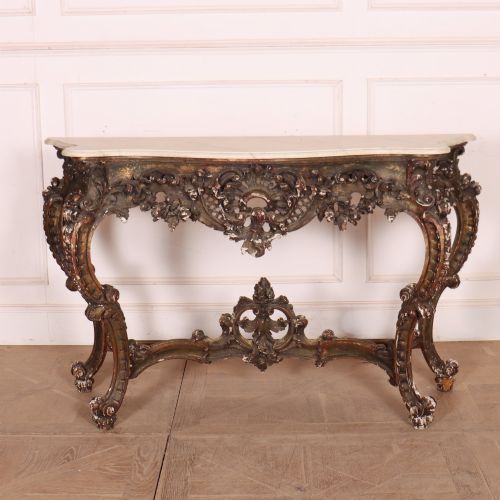
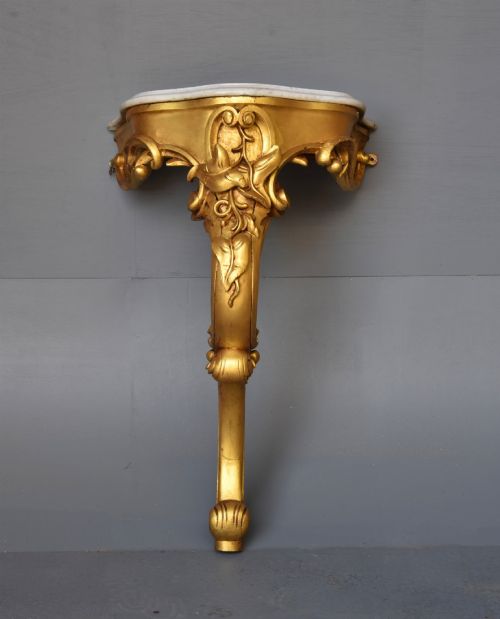
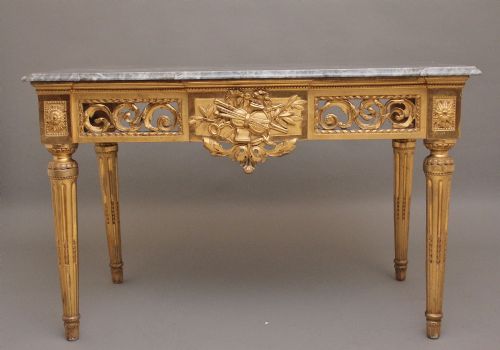
When you search for a gilded wood console, you find ornate tables and wall brackets shaped to sit flush against a room's architecture, finished in gold leaf or gesso.
Gilded Wood Console
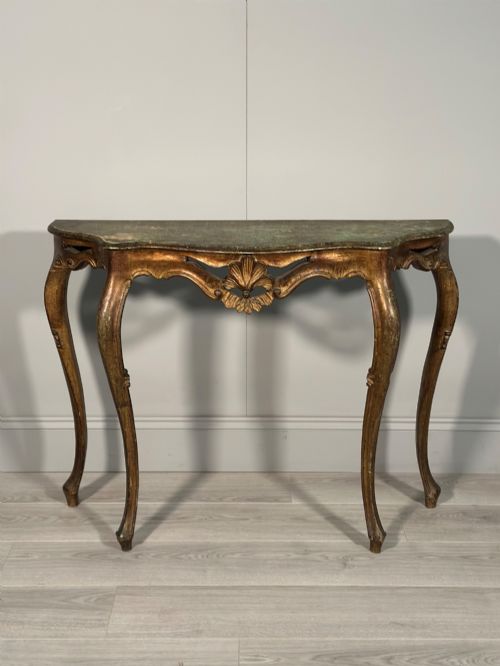
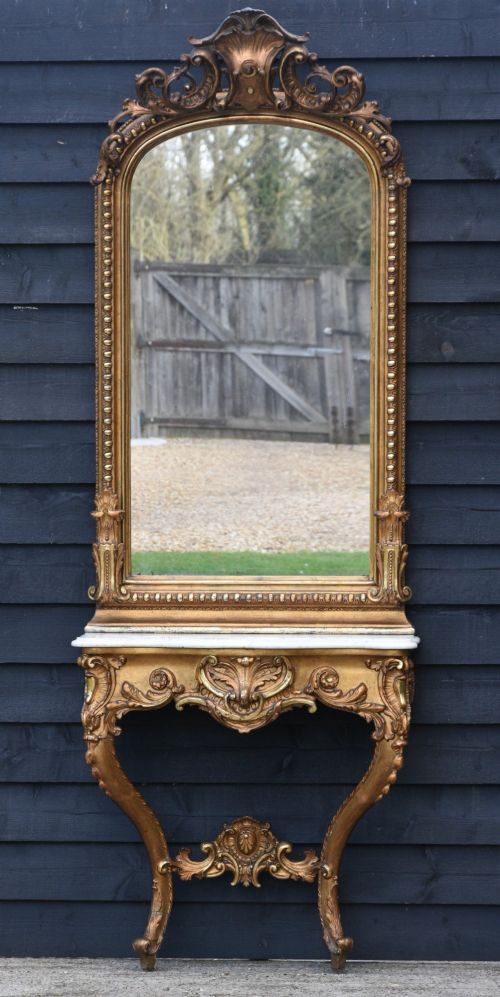
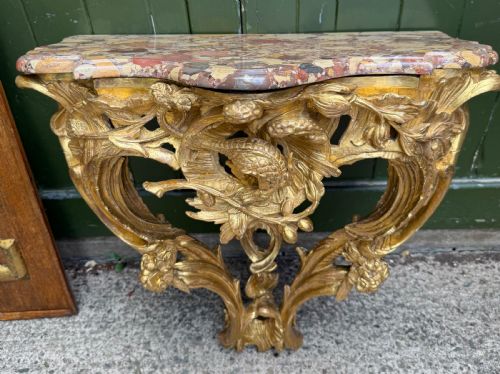
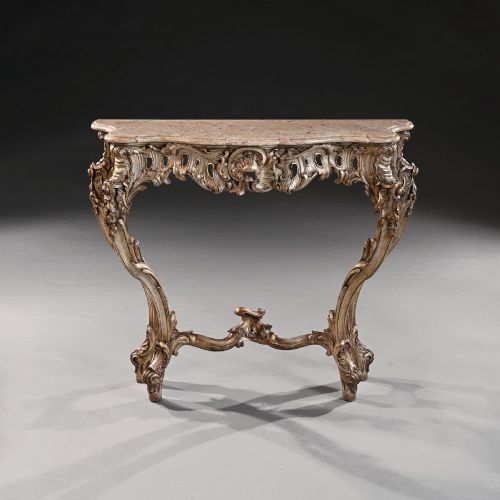
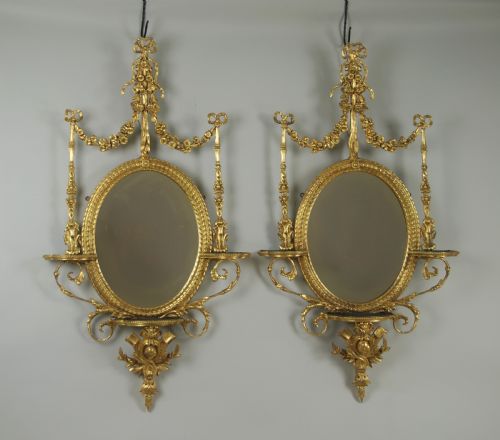
A gilded wood console is a table or bracket designed to fit flat against a wall, frequently paired with a matching pier mirror above it. The form dates across the eighteenth and nineteenth centuries, spanning French Rococo, Italian Baroque, and Regency idioms.
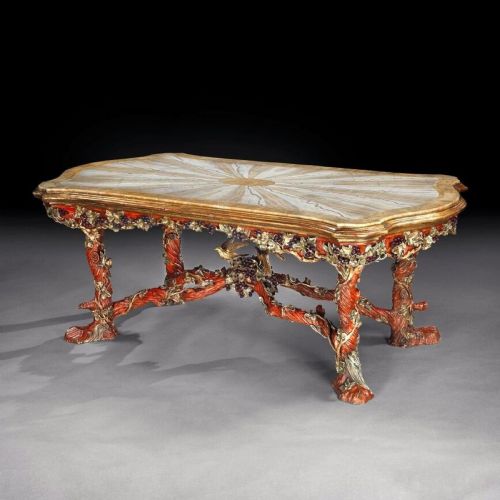
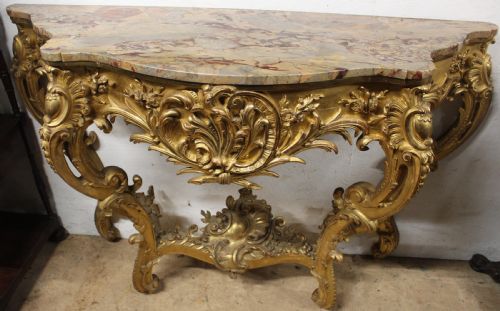
Most examples encountered on this page originate from nineteenth-century France or Italy, though eighteenth-century and early twentieth-century pieces appear regularly. Forms range from serpentine front console tables and side tables to wall brackets and centre tables.
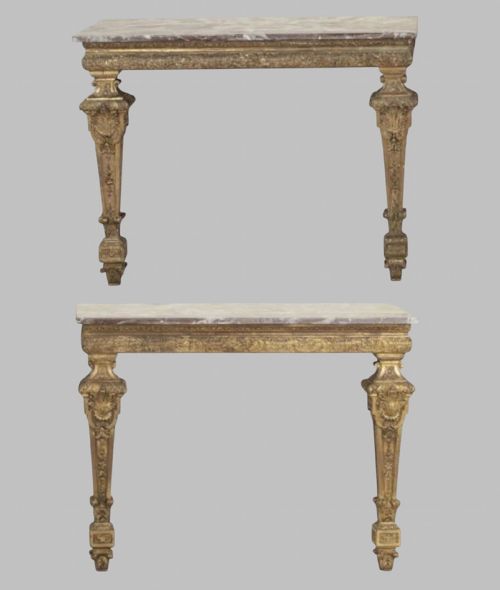
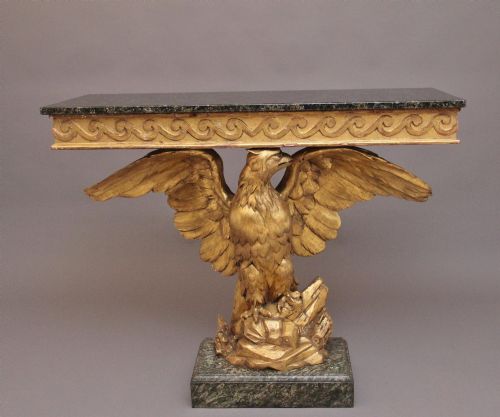
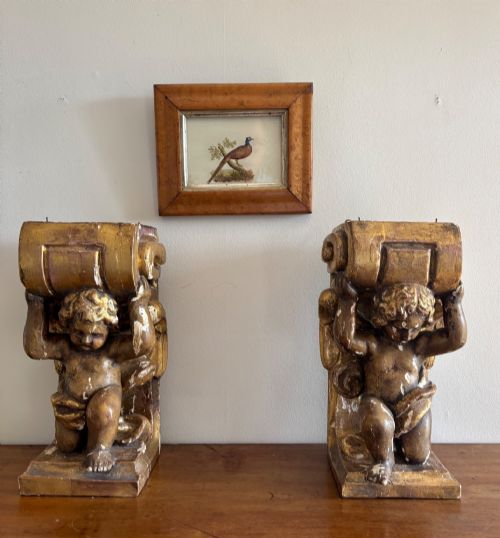
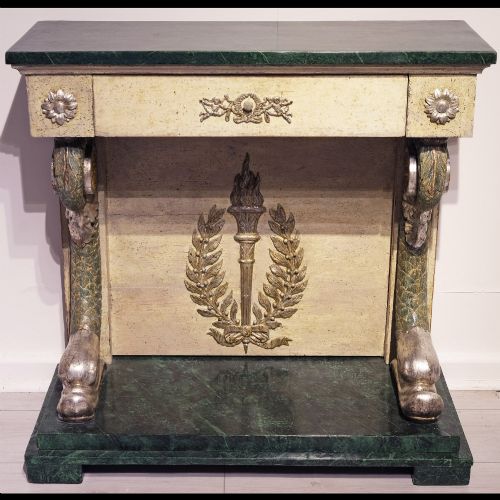
These pieces often feature heavy stone surfaces, utilising shaped marble, onyx, or breccia tops resting on elaborately carved wooden bases. Smaller formats include wall-mounted brackets and display shelves intended for porcelain or small ornaments.
Materials and Construction
Makers constructed the structural frames from solid timbers such as mahogany, walnut, fruitwood, and pine, carving the wood deeply before applying surface decoration. Gesso was frequently laid down as a smooth preparation layer over the carved wood to receive the gilding.
Gold leaf or silver gilt was applied by hand over the prepared surface, sometimes combined with polychrome paint, ormolu mounts, and brass detailing. Heavy decorative tops utilised polished marble, breccia d'alep, or onyx cut to follow the serpentine or demi-lune outlines of the wooden bases below.
Gilded Wood Console Retail Price Guide 2026
Typical asking prices for gilded wood console among the pieces listed under this phrase on Sellingantiques today, from the lower quarter to the upper quarter. They describe what is for sale here now, not the wider market.
Listings feature periods spanning from the eighteenth century through the 1920s, with nineteenth-century French and Italian examples appearing most frequently.
Assessing Quality and Execution
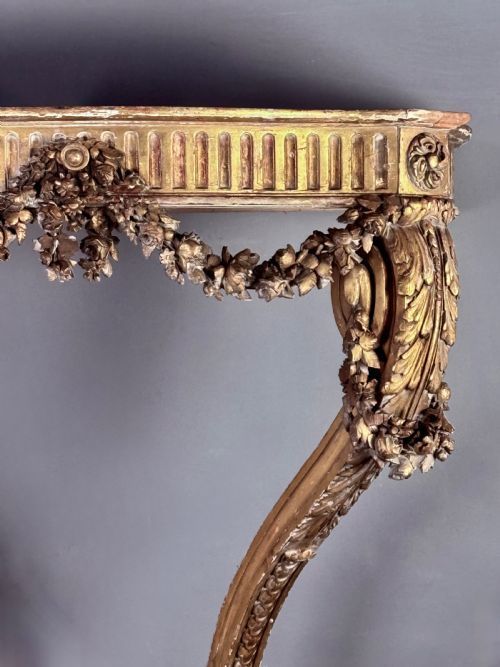
The distinction between ordinary and superior pieces lies in the depth and sharpness of the hand carving on the wooden frames. Crisp undercut foliage, figures, or scrollwork indicate skilled hand labour rather than mechanical mass production.
The quality of the gilding and the preparation of the gesso layer underneath determine the durability and lustre of the finish. Furthermore, thick, figured marble tops fitted precisely to the wooden carcass distinguish high-status furniture from simpler utilitarian items.
FELIX ALFRED TERNISIEN·AMLETO BERTONI·MAISON MOTTHEAU·NOSOTTI
The Gilded Wood Console Glossary
- Giltwood
- Wood that has been coated with gold leaf over a prepared gesso base. This traditional finish gives furniture a bright, metallic lustre that reflects candlelight and daylight.
- Gesso
- A mixture of plaster of Paris, chalk, and size used as a smooth base layer on wood before gilding. It allows craftsmen to carve fine details that hold the gold leaf firmly.
- Console Table
- A table designed to stand against a wall, traditionally supported by two or more front legs with the rear secured to the wall itself. They often feature elaborate underframes and stone tops.
- Pier Mirror
- A tall mirror designed to hang on the pier, the section of wall space between two windows. These mirrors frequently coordinate with a console table placed directly beneath them.
- Breccia Marble
- A decorative marble composed of broken rock fragments embedded in a fine-grained matrix. It provides colourful, patterned surfaces popular on nineteenth-century table tops.
- Serpentine Front
- A furniture front curving inward in the centre and outward at the ends, or vice versa. This undulating shape requires precise carpentry and custom-cut stone tops.
Gilded Wood Console: Frequently Asked Questions
What is a gilded wood console used for?
These tables served as decorative display furniture in formal reception rooms, hallways, and drawing rooms, often holding clocks, vases, or candelabra.
Because they were built to stand flat against a wall, they provided a surface for display without occupying excessive floor space in narrow corridors or beneath tall windows.
How do I secure a wall bracket safely?
Wall brackets require direct fixing to solid masonry or internal wall studs using heavy-duty screws suited to the weight of the carved timber and stone.
Professional installation is strongly advised, as many antique brackets carry substantial weight and project outward from the wall.
How do I tell French and Italian styles apart?
French pieces often follow refined Rococo or Neoclassical lines with restrained curves and precise symmetry, reflecting Parisian taste of the period.
Italian examples tend to display heavier, more theatrical carving, featuring dramatic flourishes such as lion's paw supports and deep polychrome or silver gilt finishes.
Can I place drinks on a marble top?
Polished stone surfaces tolerate accidental spills better than polished wood, but unsealed marble remains porous and vulnerable to acidic liquids.
Using coasters prevents staining, and wiping the stone promptly keeps the mineral surface clean and protected.