
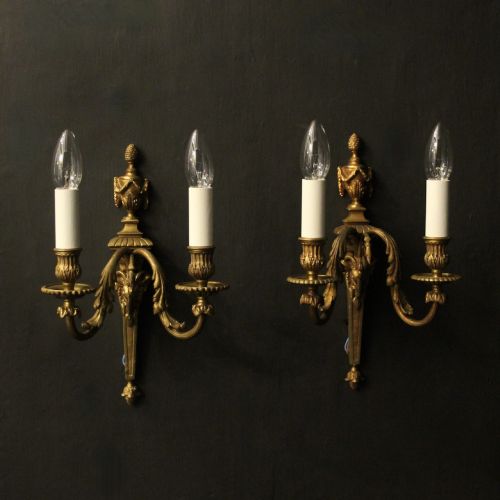
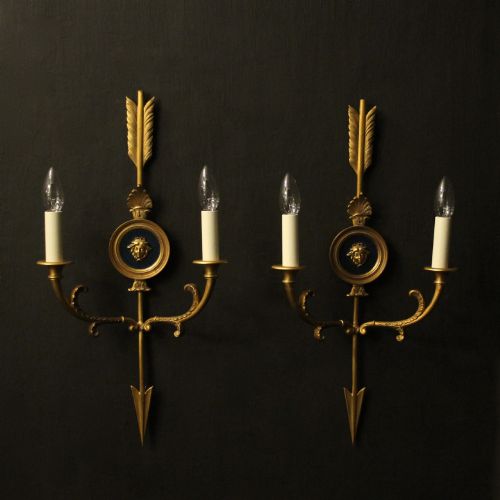
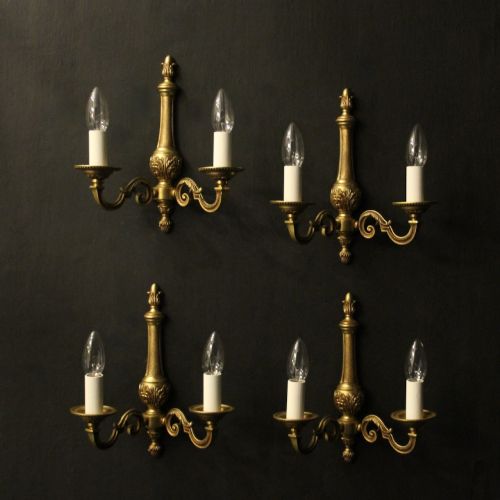

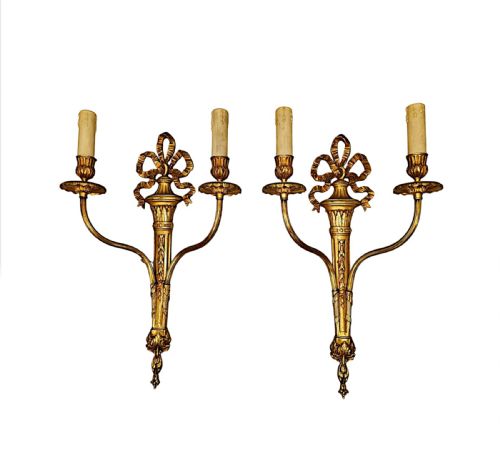
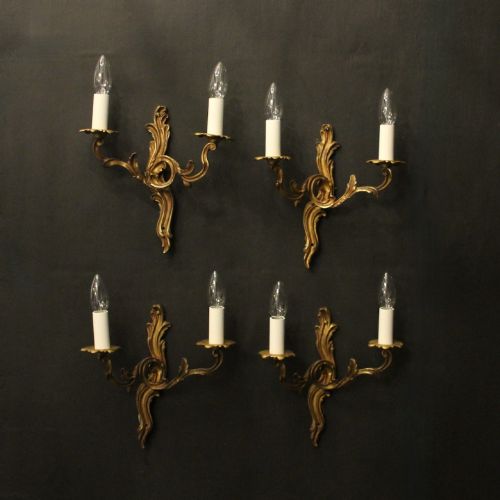
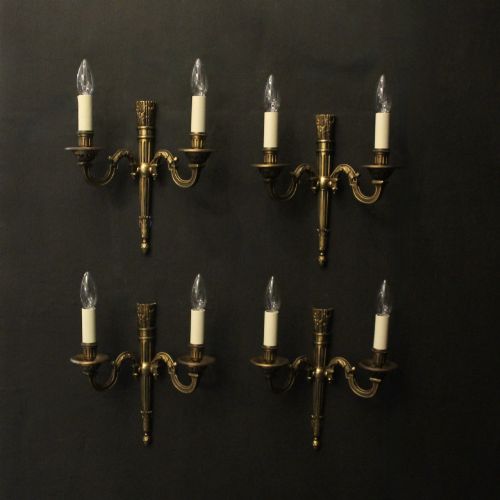
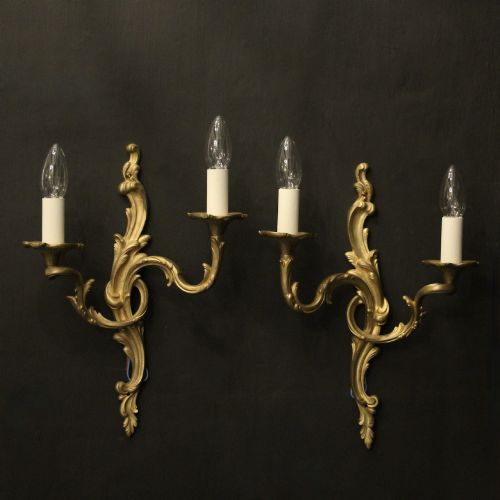
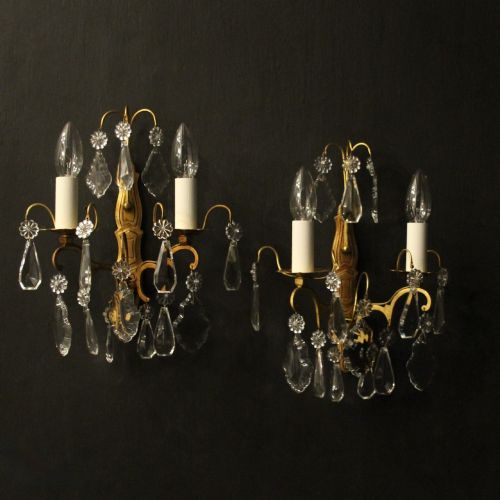
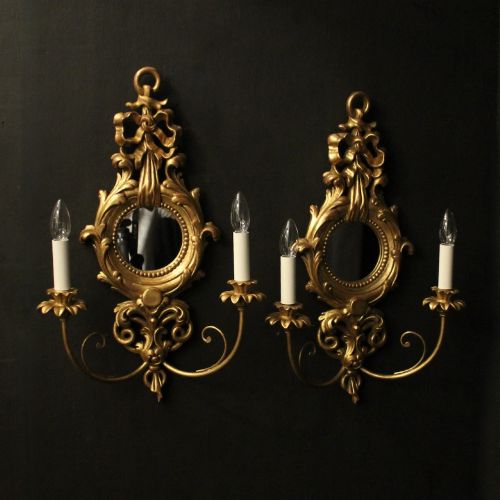
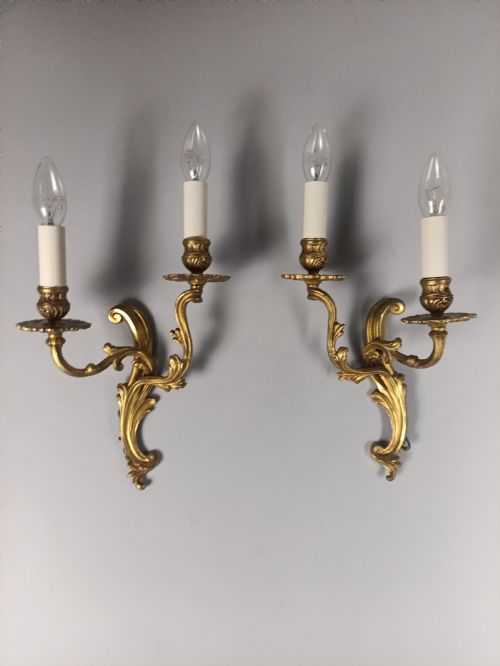
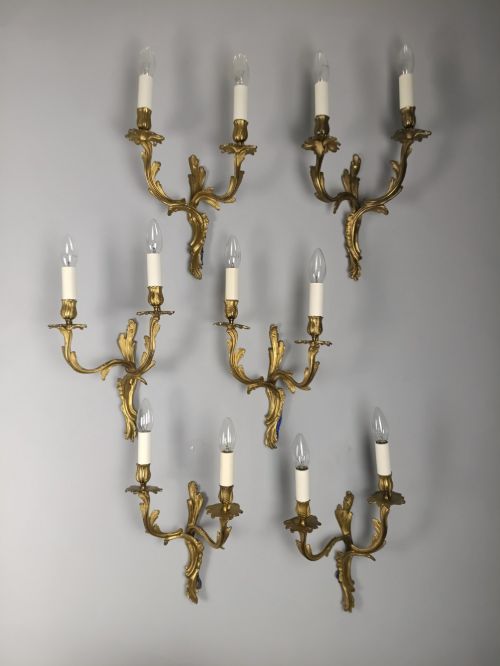
Gilded Twin Sconces
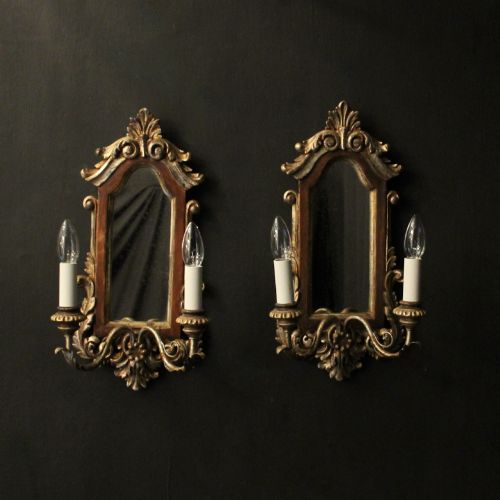
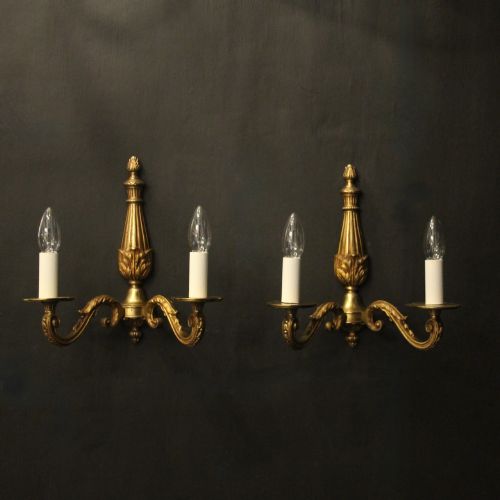
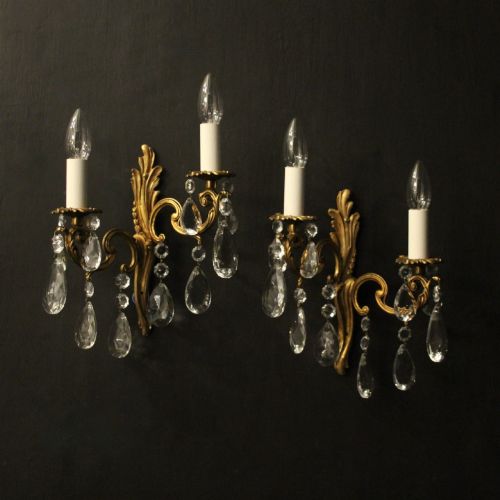
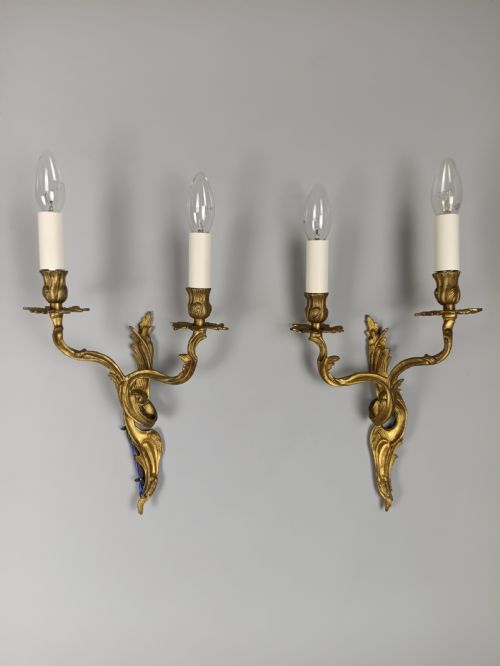
Gilded twin sconces are dual-armed wall lights with gold-toned surfaces that illuminate rooms with reflected candle or electric light.
Gilded Twin Sconces
When you search for gilded twin sconces, you encounter decorative wall-mounted lighting fixtures designed with two arms to hold candles or bulbs. The selection spans the nineteenth century through the mid-twentieth century, with French origins dominating the available pieces.
Most examples originate from the early twentieth century, particularly the 1920s and 1930s. These pieces take the form of wall lights and girandoles, reflecting historical design movements like Rococo, Neoclassical, and Empire styles.
Materials and construction
The construction relies heavily on metal frameworks formed from brass, bronze, or cast alloys. Artisans applied gilt surfaces through fire gilding with ormolu or by applying gold leaf to bronze, brass, and wood.
Design details incorporate decorative motifs such as ribbons, crystal elements, and carved wooden details. Many pieces employ traditional casting and chased ornamentation to achieve intricate surface textures.
Materials documented across the inventory include solid brass, cast bronze, gilded wood, and crystal additions.
Differences in quality
The fineness of the cast metalwork and the depth of the chased detail separate standard production from superior examples. Elaborate ornamentation, such as finely modelled cherubs or crisp acanthus leaves, indicates skilled workshop output.
The durability and richness of the gilding itself dictate the visual impact of the fixture. Heavy fire gilding or well-preserved gold leaf retains its lustre far better than thin, worn metallic paint.
The Gilded Twin Sconces Glossary
- Ormolu
- Gilded bronze produced by applying a mercury and gold amalgam to a bronze object and heating it until the mercury vaporised. This historic technique leaves a deep, warm gold surface.
- Girandole
- A decorative wall-mounted bracket bearing candle holders, often featuring a mirror backplate to reflect the light. The term applies to ornamental branched lighting fixtures.
- Rococo Revival
- A nineteenth-century style drawing on the asymmetrical scrolls, shell motifs, and natural forms of the eighteenth-century French Rococo movement. Pieces in this style show flowing, organic curves.
- Empire
- A Neoclassical design style spanning the early nineteenth century, characterised by formal symmetry and classical motifs. These pieces often draw inspiration from ancient Roman and Greek art.
Gilded Twin Sconces: Frequently Asked Questions
How do I install antique wall sconces?
Most twentieth-century electric sconces require wiring into a standard wall junction box by a qualified electrician. Surface-mounted brackets attach securely to wall studs or anchors to support the weight of the metal arms.
For non-electric or candle-backed versions, secure wall fixings support the backplate directly. Proper placement considers eye level and the surrounding furniture scale.
How do I clean gilded bronze surfaces?
Dust gilt bronze and ormolu gently with a soft, dry brush to prevent accumulation in recessed details. Avoid harsh chemical cleaners or abrasive polishes that strip away the delicate gold layer.
Light surface grime lifts using a damp cloth wrung out in mild soapy water, followed by immediate drying. Preserving the original patina maintains the historical integrity of the piece.
What rooms suit twin arm wall lights?
Pair these fixtures flanking a fireplace, mirror, or doorway to create balanced ambient illumination. Dining rooms, hallways, and living spaces benefit from the warm, reflected glow of dual-armed lights.
Matching sets of four or six allow for consistent lighting schemes across larger architectural spaces. Lower mounting heights work well for intimate spaces where soft illumination is preferred.