

Gilded Twin Arm Lights
These gilded twin arm lights are wall-mounted fixtures designed to illuminate interiors with dual candle or bulb branches.
Gilded Twin Arm Lights
When you search for gilded twin arm lights, you encounter wall lights, wall sconces, and girandoles designed with two arms for illumination. These pieces predominantly originate from France and Italy, spanning the nineteenth century and the early decades of the twentieth century, including the 1900s, 1910s, 1920s, and 1930s.
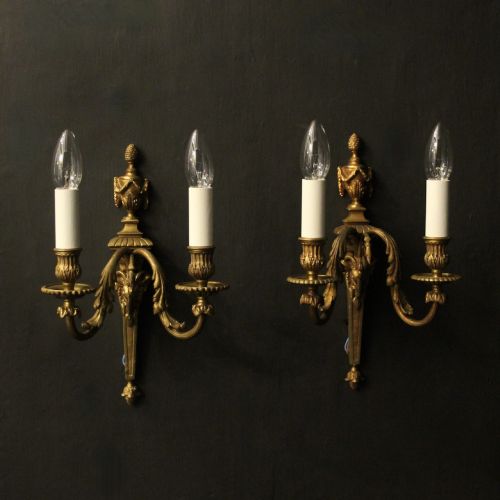
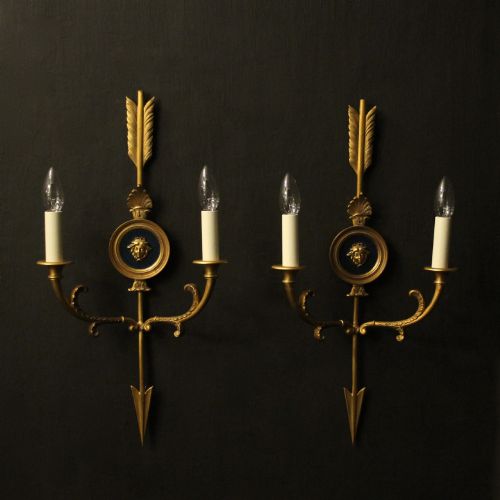
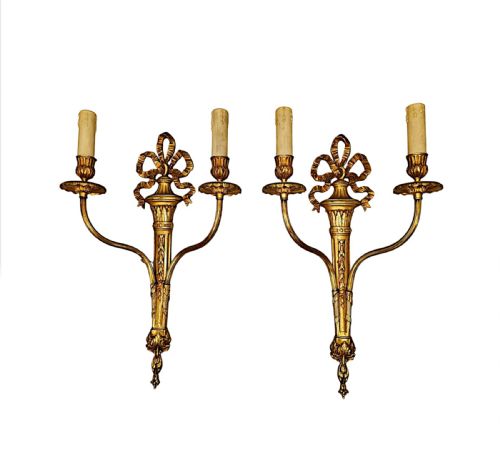
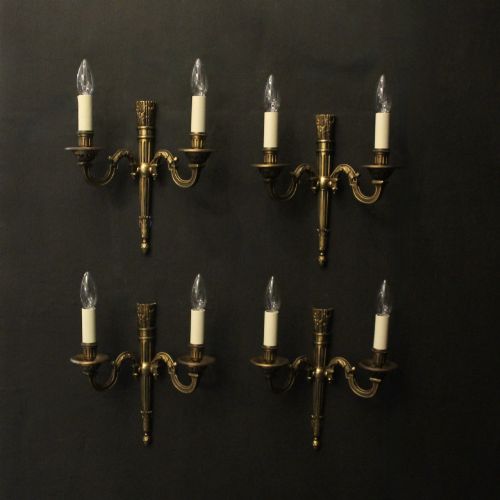
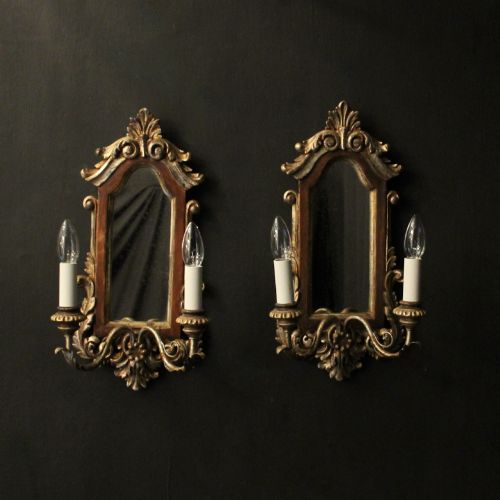
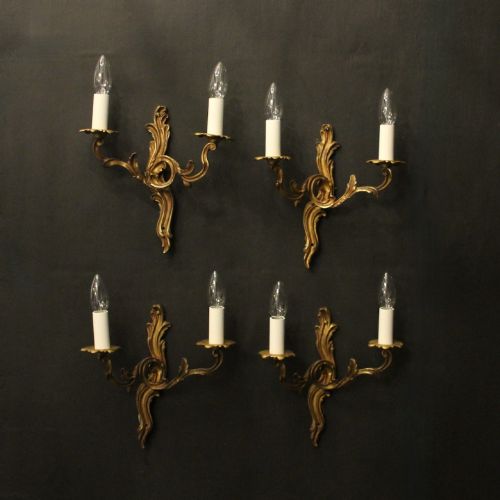
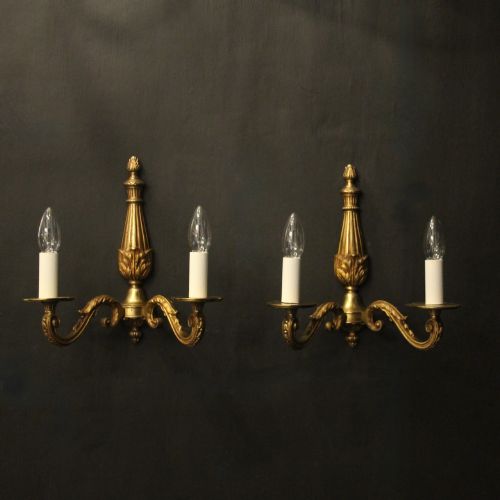
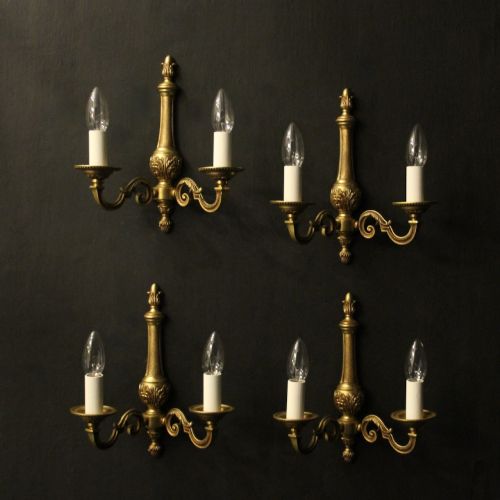
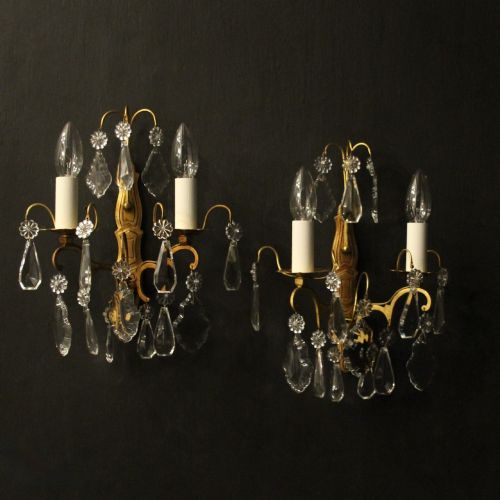
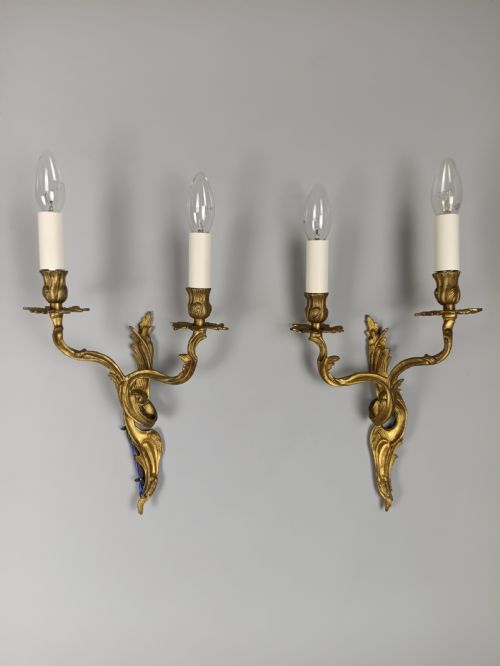
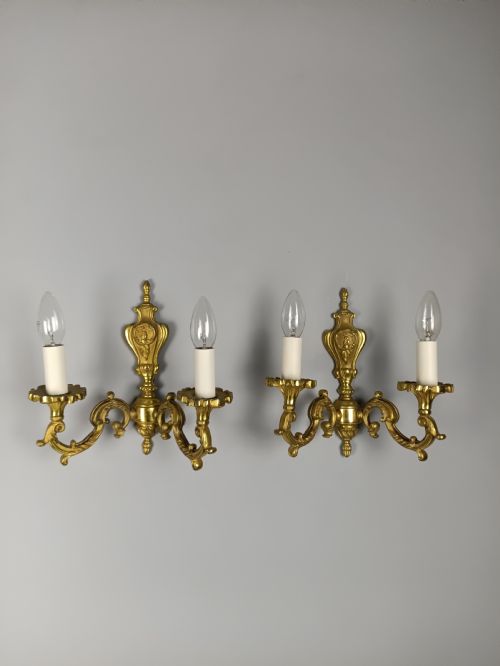
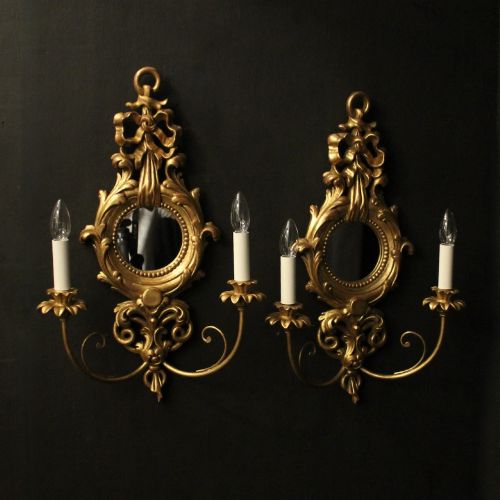
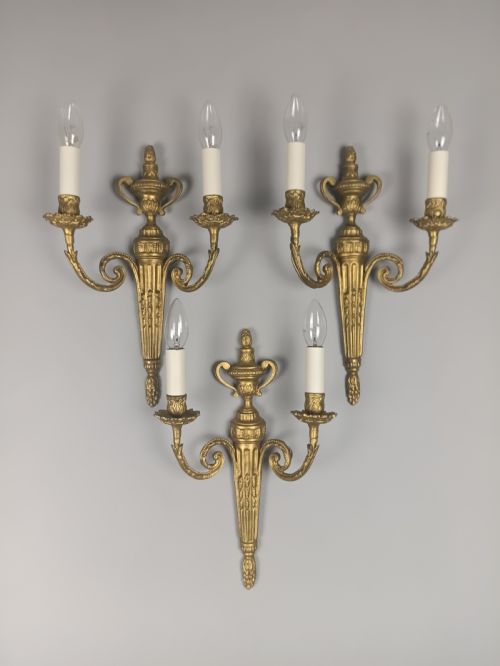
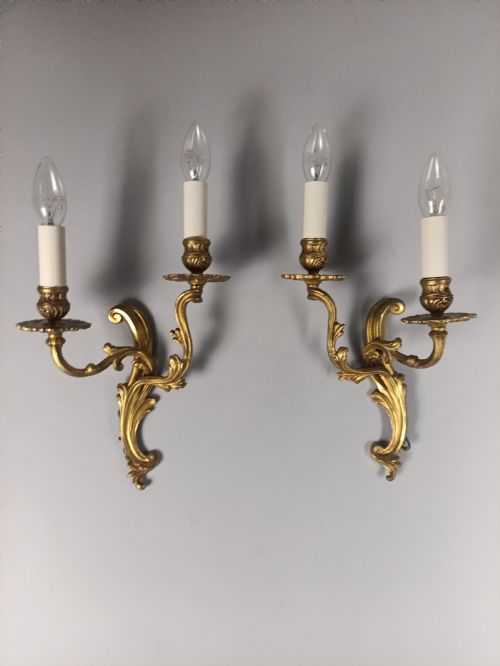
The version you are most likely to meet on this page is the French pair of gilded brass or gilded bronze wall lights, often styled after French Rococo, Louis XVI, or Empire designs. Alongside these, Italian and Florentine giltwood girandoles appear regularly, offering carved wooden alternatives to metal castings.
How They Were Made
Makers utilised metal casting techniques for brass, bronze, and ormolu frames, applying gold leaf or gilding to the surfaces to achieve a luminous finish. Bronze and brass provided sturdy armatures capable of supporting twin candle branches, while ormolu added refined detail to neoclassical and empire models.
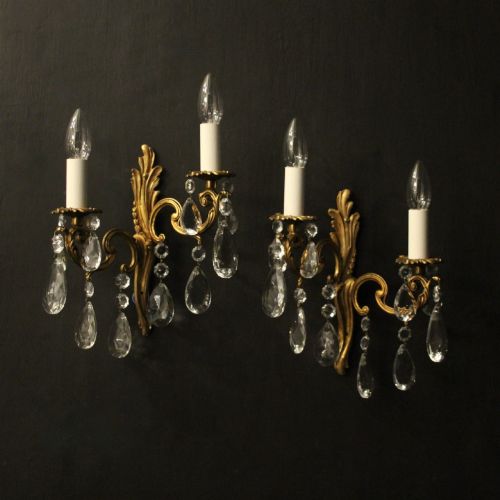
Wooden alternatives rely on carved giltwood and polychrome finishes, particularly in Florentine workshops. Crystal elements occasionally augment the metal frameworks, adding reflective facets to the twin arm configuration.
Gilded Twin Arm Lights Retail Price Guide 2026
Typical asking prices for gilded twin arm lights among the pieces listed under this phrase on Sellingantiques today, from the lower quarter to the upper quarter. They describe what is for sale here now, not the wider market.
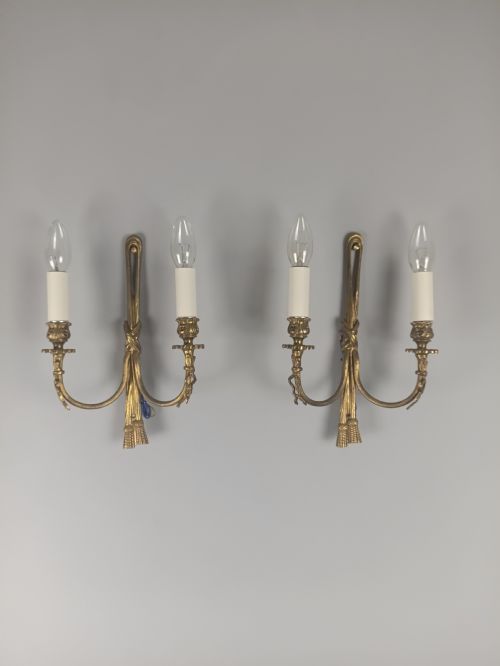
Some pairs carry ribbons so convincingly tied in metal you want to reach out and untie them.
What Varies in Quality
The refinement of the casting and the depth of the gilding determine the distinction between average and superior examples. Finer pieces exhibit crisp chisel work on bronze and brass, where leaf motifs and ribbon details remain sharp and well-defined.
Material choice also dictates the character of the object, with heavy cast bronze or fire-gilt ormolu occupying the upper tier compared to lighter pressed brass or faded gilt surfaces. The integrity of the carved giltwood on girandoles separates master carvers from standard production pieces.
The Gilded Twin Arm Lights Glossary
- Girandole
- A branched wall light or sconce, frequently incorporating a mirror or carved wooden frame. These fixtures use two or more arms to project light into a room.
- Ormolu
- Finely ground high-carat gold mercury-gilded onto a bronze object. This technique imparts a rich, durable golden sheen characteristic of French decorative arts.
- Rococo
- An ornate design style originating in France, defined by asymmetrical scrolls, plant motifs, and shell-like curves. It heavily influences the ornamentation of many twentieth-century wall sconces.
- Empire
- A neoclassical design style emerging from nineteenth-century France, drawing inspiration from ancient Roman and Greek motifs. Pieces in this style often display strict symmetry, laurel wreaths, and classical military trophies.
Gilded Twin Arm Lights: Frequently Asked Questions
How were gilded twin arm lights used?
These fixtures were mounted in pairs or sets along salon and hallway walls to provide ambient illumination by candlelight. Their twin branches helped distribute light across interior spaces before the widespread adoption of electricity.
Over time, many of these fixtures underwent conversion to electricity while retaining their original decorative arms and wall plates. They continue to function as primary or accent lighting in period and contemporary interiors.
Where should I place wall sconces?
Wall sconces suit flanking positions beside mirrors, fireplaces, or large pieces of furniture to create balanced illumination. Placing them at eye level ensures the light diffuses effectively across the room.
In pairs or sets of four and six, they establish symmetry along long corridors or reception rooms. Height placement depends on the ceiling proportion and the specific drop of the twin arms.
How do I identify French Rococo style?
French Rococo style relies on asymmetrical scrollwork, C-curves, and naturalistic plant forms rather than rigid geometry. The bronze and brass castings incorporate flowing motifs that mimic organic growth.
This aesthetic contrasts sharply with the straight lines and classical symmetry of Neoclassical and Empire designs. Examining the surface ornamentation reveals these stylistic markers clearly.
What is the difference between giltwood and ormolu?
Giltwood refers to carved wood coated with a thin layer of gold leaf, commonly seen in Florentine girandoles and wooden wall lights. It offers a warmer, softer texture derived from the underlying carved timber.
Ormolu consists of gold applied to a bronze base through a mercury amalgamation process, yielding a metallic brilliance. This material appears frequently in French bronze wall lights from the nineteenth and twentieth centuries.