





Gilded Tripod Side Table
A gilded tripod side table brings compact elegance and reflective warmth to a room, offering a surface for a lamp or small objects.
Gilded Tripod Side Table
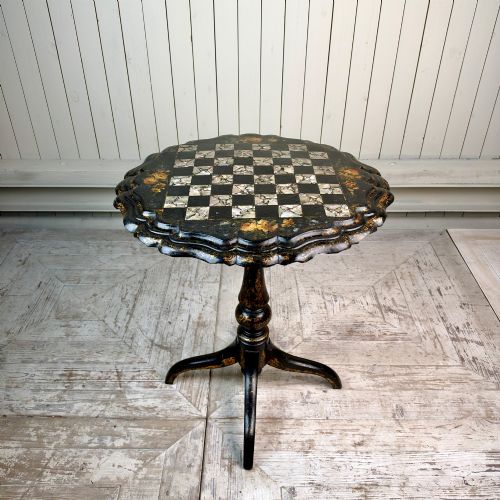
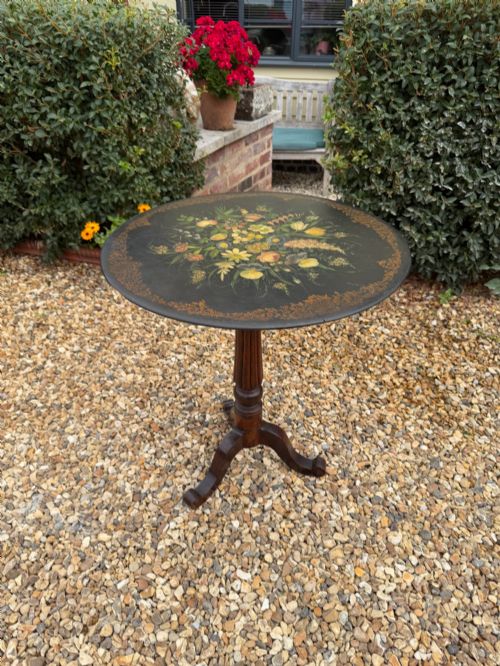
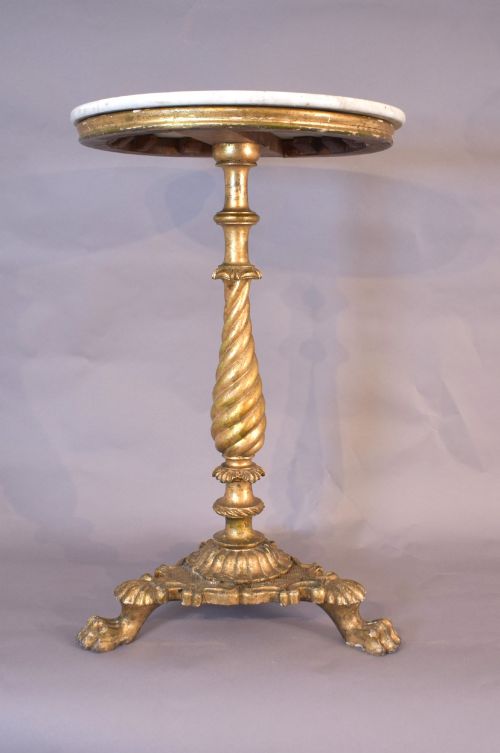
A gilded tripod side table stands on three legs, supporting a circular or shaped top designed to hold small decorative items. These items serve as functional accents in reception rooms and hallways, where floor space remains limited.
The pieces on this page span the nineteenth and early twentieth centuries, drawing on Regency, Victorian, and revival styles. Makers utilise forms ranging from simple tilt-top designs to ornate marble-topped specimens.
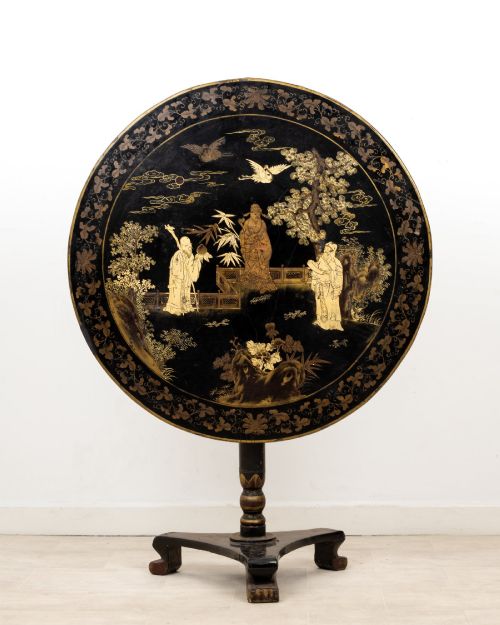
Originating from English, French, and Italian workshops, these tables incorporate diverse influences such as Chinoiserie lacquering and French Chateau aesthetics. A buyer encounters variations that include wood, marble, and hand-painted surfaces.
How they were made
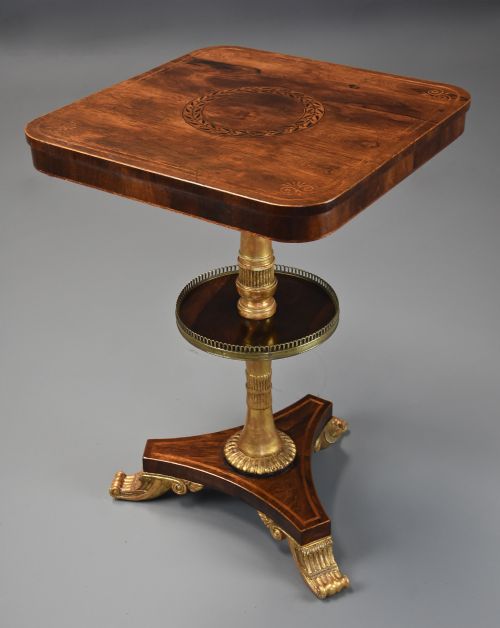
Craftsmen shape the structure from timber such as wood, walnut, and ebonised wood, applying gold leaf or giltwood finishes to the carved legs and frames. Structural support relies on sturdy three-legged tripod bases that balance the upper platform.
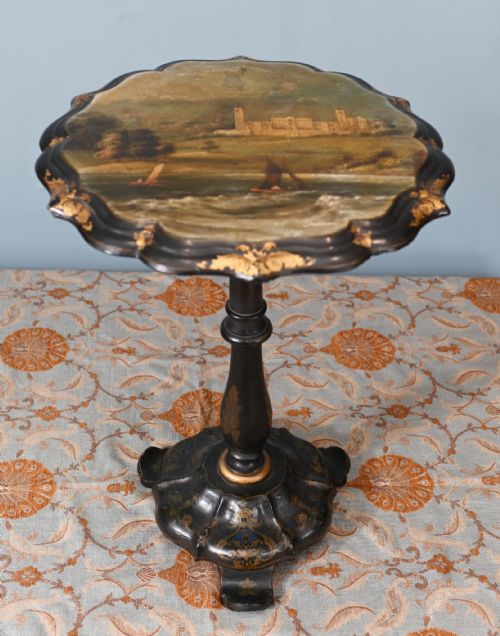
Surface decoration frequently involves hand painting, japanning, or lacquer work applied to wood panels. Marble and onyx inserts provide heavy, cool surfaces fitted securely into wooden rims.
Metal components like brass hardware appear on adjustable stands and table fittings, adding functional durability to the decorative assembly.
Gilded Tripod Side Table Retail Price Guide 2026
Typical asking prices for gilded tripod side table among the pieces listed under this phrase on Sellingantiques today, from the lower quarter to the upper quarter. They describe what is for sale here now, not the wider market.
One piece includes carved swans supporting the table top, bringing an unexpected avian grace to the furniture.
What varies in quality
The execution of the gilding and surface paintwork dictates the visual impact of each piece, distinguishing finely rendered detail from simpler decoration. Carved wooden elements show varying depths of relief and crispness in the floral or animal motifs.
Materials influence the character of the table, with solid marble tops and intricate lacquer work representing more ambitious workshop output. The stability of the tripod base and the precision of the joinery determine how well the structure withstands daily use.
The Gilded Tripod Side Table Glossary
- Tilt top
- A table mechanism allowing the surface to pivot into a vertical position for storage. This form saves space when the table is not in use.
- Japanning
- A European imitation of East Asian lacquer work using heat-dried varnishes. The technique produces a glossy dark finish often decorated with painted scenes.
- Tripod
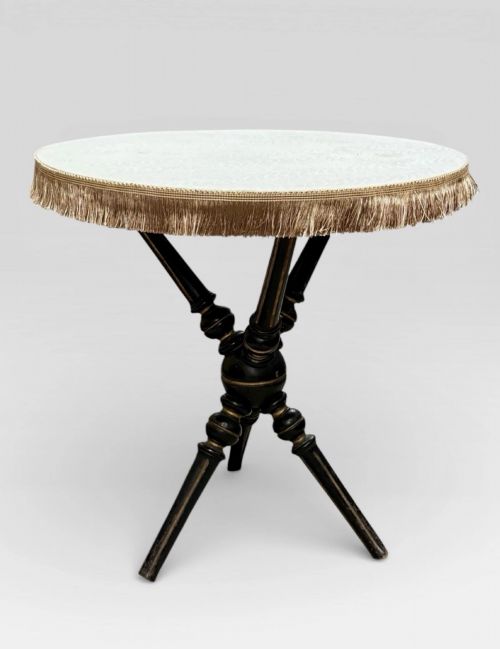
- A three-legged support structure used for small tables and stands. This design ensures stability on uneven floors.
- Specimen table
- A table featuring a top composed of various pieces of marble or stone arranged in geometric patterns. These pieces display mineral varieties gathered during travel.
Gilded Tripod Side Table: Frequently Asked Questions
What is a tilt top table used for?
A tilt top table provides a convenient surface for holding small items during the day. The pivoting mechanism allows the top to stand upright against a wall when floor space is required elsewhere.
Historically, this design enabled easy storage in parlours and drawing rooms without sacrificing surface area during gatherings.
How do I identify a Victorian side table?
Victorian side tables often incorporate revival styles, painted finishes, or Aesthetic Movement designs dating from the nineteenth century. These pieces reflect the eclectic tastes of the period through varied ornamentation and mixed materials.
Examining the underlying timber and the application of gilt or paint helps confirm the manufacturing era.
Where should I place a tripod table?
A tripod table fits comfortably beside a chair or in the corner of a room to hold a lamp or decorative vessel. The three-legged base allows the table to tuck neatly into compact spaces.
Avoid placing these tables in areas with excessive moisture or direct sunlight to protect the gilded and painted surfaces.
What is the difference between giltwood and brass?
Giltwood consists of wood treated with gold leaf to create a decorative golden surface on frames and legs. Brass is a metal alloy utilised for structural fittings, hardware, and adjustable stands.
Both materials introduce reflective metallic tones but serve entirely different structural and decorative functions.