





Gilded Travelling Desk
When you handle a gilded travelling desk or the closely related portable timepiece, you hold a piece of history built for movement and utility.
Gilded Travelling Desk
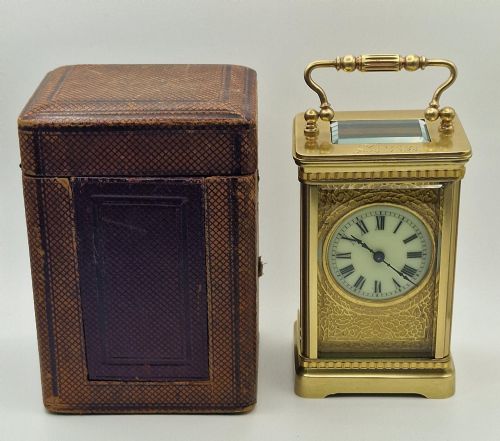
A gilded travelling desk and its related portable counterparts represent the pinnacle of 18th and 19th-century craftsmanship designed for mobility. Buyers seeking a gilded travelling desk will encounter fine examples ranging from eighteenth-century Venetian bureaux to nineteenth-century French carriage clocks and travelling mantelpieces.
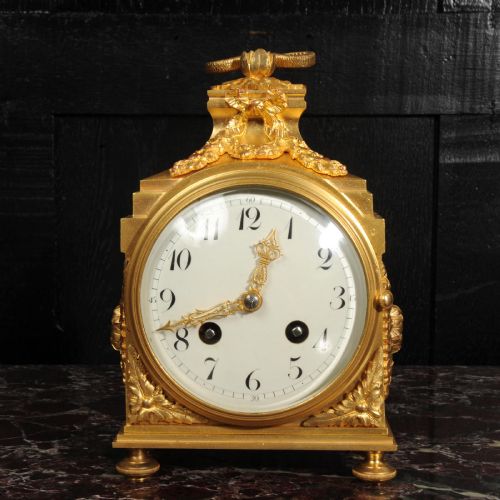
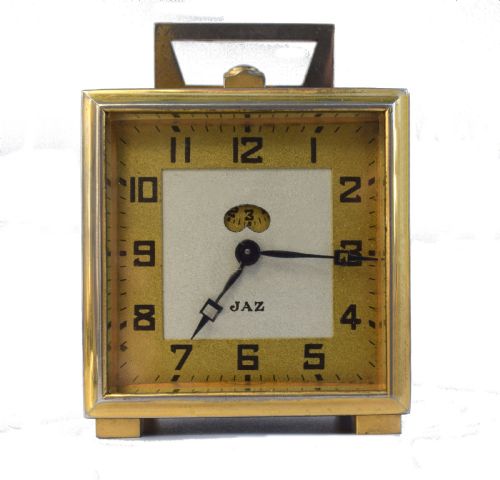
The pieces on this page span several decades, featuring carriage clocks, subminiature alarms, and pendule d'officier models. These items were originally commissioned by officers, travellers, and nobility who required reliable timekeeping and writing facilities on the move.
How they were made
The construction relies heavily on brass, gilt brass, ormolu, and gilt bronze, often paired with glass panels and intricate enamel dials. Artisans utilised chased side panels and filigree decoration to adorn the metallic housings.
Movements were engineered to withstand travel, incorporating repeating complications, alarms, and calendar mechanisms. Wood forms such as lacquered wood appear alongside metal structures in the broader category of portable desks and writing pieces.
Gilded Travelling Desk Retail Price Guide 2026
Typical asking prices for gilded travelling desk among the pieces listed under this phrase on Sellingantiques today, from the lower quarter to the upper quarter. They describe what is for sale here now, not the wider market.
Materials recorded across the inventory include glass, enamel, brass, gilt brass, ormolu, steel, gilt bronze, and lacquered wood.
What varies in quality
The calibre of the movement separates standard timepieces from masterworks by renowned makers. Complications such as petite sonnerie, grande sonnerie, and repeating mechanisms elevate the internal standard.
External execution defines visual worth, seen in the depth of chasing on the gilt bronze, the crispness of Limoges enamel work, and the presence of original travelling cases.
Drocourt·Paul Garnier·E.J.Dent·J.W.BENSON·Jaz
The Gilded Travelling Desk Glossary
- Carriage clock
- A small, spring-driven clock designed for travellers in the nineteenth century. These clocks typically feature a glass-panelled brass case and a folding handle on top.
- Pendule d'officier
- A military-style travelling mantel clock developed during the Napoleonic era. They often incorporate distinctive top handles and robust movements.
- Petite sonnerie
- A striking clock mechanism that chimes the hours and the quarters on the quarters without repeating the hours. It represents a high level of horological skill.
- Ormolu
- Gilded bronze produced by applying a finely ground, high-carat gold-mercury amalgam to a bronze object. The mercury is then driven off by heat, leaving a rich golden coating.
- Chased
- Decorated by hammering or indenting metal from the front to create low-relief patterns. This technique adds texture and depth to the brass frames.
Gilded Travelling Desk: Frequently Asked Questions
What is a carriage clock?
A carriage clock is a portable, spring-driven timekeeper housed in a brass and glass case with a folding handle. They were originally built for officers and travellers in the nineteenth century.
These pieces use a platform escapement to maintain accuracy despite movement, allowing them to function reliably while journeying.
How do I wind a carriage clock?
Winding requires a dedicated key inserted into the arbours on the backplate. Care must be taken not to overwind the mainspring.
Many antique examples include separate trains for time, striking, and alarm, each requiring individual winding.
What is a pendule d'officier?
A pendule d'officier is a specific form of military travelling clock created during the French Empire period. They are characterised by robust gilt bronze cases and secure travel mounts.
Napoleon reportedly utilised such timepieces during military campaigns to maintain precise schedules.
How do I date a French carriage clock?
Dating relies on stylistic shifts in the brass case, the shape of the escapement platform, and the complexity of the dial. Pieces from the mid-nineteenth century often feature simpler mechanical layouts compared to later grand sonnerie models.
Maker signatures and serial numbers engraved on the backplate also provide reliable chronological markers.