







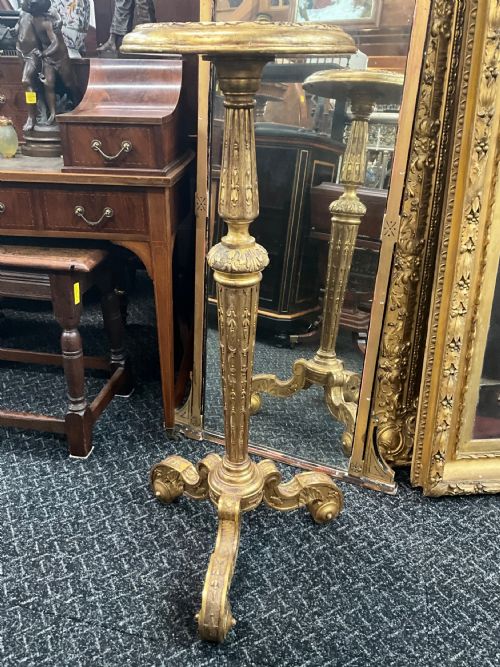
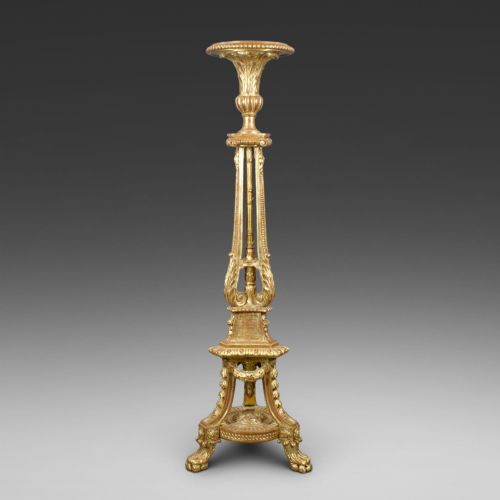
Gilded Torchere Stand
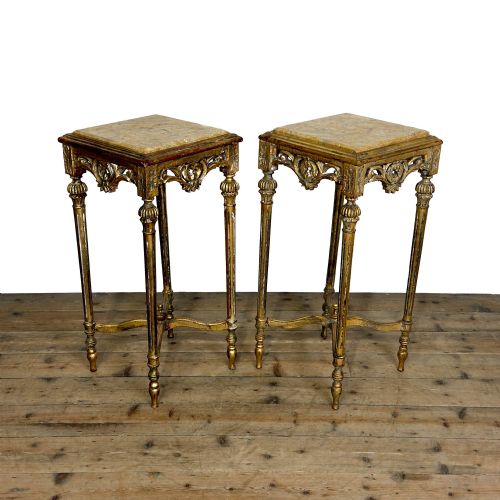
These gilded torchere stand examples bring height, candlelight and Italian or French theatre into a room.
Gilded Torchere Stand
A gilded torchere stand is a tall, slender column or pedestal designed to hold a light or display an object, taking many sculptural forms across the centuries. When you search for this phrase, you meet tall supports that elevate a candle, lamp, plant or sculpture to catch the eye.
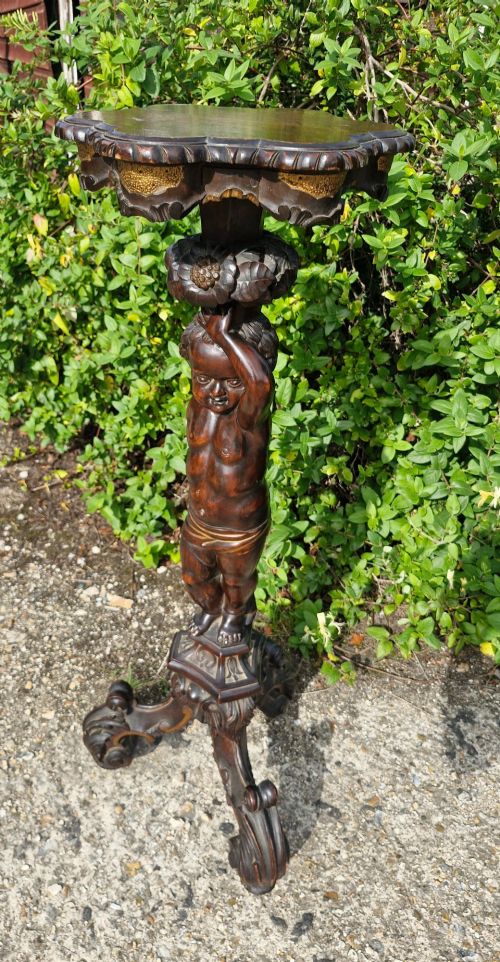
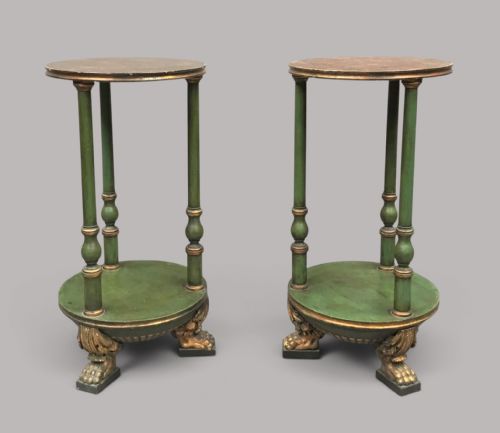
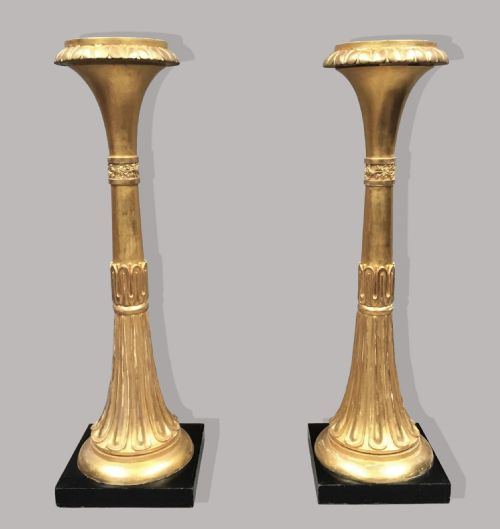
The pieces on this page span from the eighteenth century through the Victorian era and Edwardian period, drawing on French Neoclassical, Venetian, Italian Baroque and Classical Revival styles. You encounter carved wood, giltwood, gesso and polychrome paint, often shaped as columns, classical pedestals or figurative blackamoor figures.
Forms vary from simple fluted shafts to elaborate Venetian gondolier figures and marble-topped occasional tables. They serve as structural accents in a corner or beside seating, combining decorative presence with practical elevation.
How they were made
Carving forms the structural core of these pieces, utilising timber shaped by hand into acanthus leaves, fluted columns and figurative sculpture. Artisans applied gesso over the carved wood to create a smooth, dense ground suitable for receiving fine layers of gold leaf.
Gilded Torchere Stand Retail Price Guide 2026
Typical asking prices for gilded torchere stand among the pieces listed under this phrase on Sellingantiques today, from the lower quarter to the upper quarter. They describe what is for sale here now, not the wider market.
Several stands double as gondoliers, holding aloft your lighting requirements while wearing remarkably cheerful painted expressions.
What varies in quality
The depth and crispness of the wood carving distinguish exceptional examples from simpler production, particularly in the rendering of acanthus foliage and figurative detail. Sharp relief work and harmonious proportions indicate a higher level of workshop skill.
The application and preservation of the gilt surface also mark the gradation in standard, with genuine gold leaf ageing with a softer warmth than later metallic paints. Intricate polychrome decoration and the integration of marble or onyx tops add further distinction.
Coutan
The Gilded Torchere Stand Glossary
- Torchere
- A tall stand originally intended to carry a torch or candle. These pieces now often support lamps or decorative plants.
- Giltwood
- Timber coated with gold leaf or gold paint. This technique gives carved furniture a luminous metallic finish.
- Gesso
- A plaster-like mixture applied to wood surfaces as a base for gilding. It provides a smooth ground for intricate carved details.
- Polychrome
- Decorated in multiple colours. This finish appears frequently on figurative stands and Venetian pieces.
- Blackamoor
- A historical decorative figure often depicted as a Moorish page or servant. These pieces frequently take the form of carved torchere stands from the nineteenth and early twentieth centuries.
Gilded Torchere Stand: Frequently Asked Questions
What did people use a torchere for?
Historical interiors relied on torcheres to elevate candles and provide ambient lighting in dark corners. Today, they function primarily as decorative display columns for plants, sculptures or lamps.
Their slender vertical profile allows them to occupy minimal floor space while drawing the eye upward in a room.
How do I style a torchere stand at home?
Place a torchere in an empty corner, beside a fireplace or flanking a doorway to add height and architectural interest. They work well supporting a trailing plant, a bronze sculpture or a heavy ceramic vase.
Ensure the base sits level on the floor, and avoid placing excessively heavy items on delicate antique tops.
How can I tell the period of a gilded stand?
Examine the underlying materials, tool marks and stylistic cues such as French Neoclassical or Italian Baroque motifs. Eighteenth-century pieces often display heavier hand-carved timber and traditional gesso preparations.
Nineteenth-century revivals incorporate distinct Victorian or Edwardian interpretations of earlier classical designs.
Are these stands sturdy enough for daily use?
Most antique stands are structurally sound for supporting lamps and decorative objects, but their tall, narrow shape makes them vulnerable to tipping. Exercise caution in busy walkways or homes with pets and small children.
Periodic checks of the joints and base will help maintain their stability over time.