





Gilded Tea Service
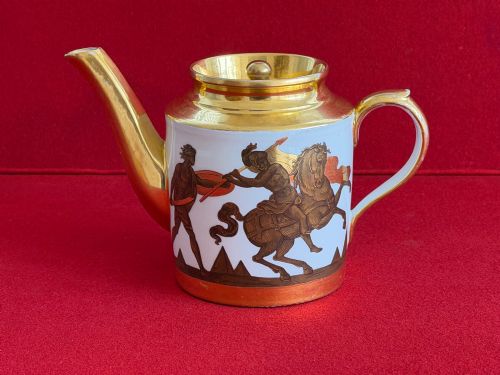
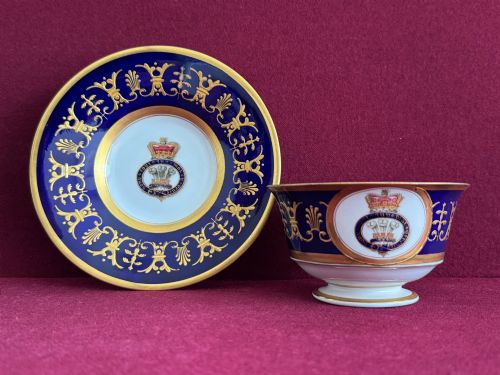
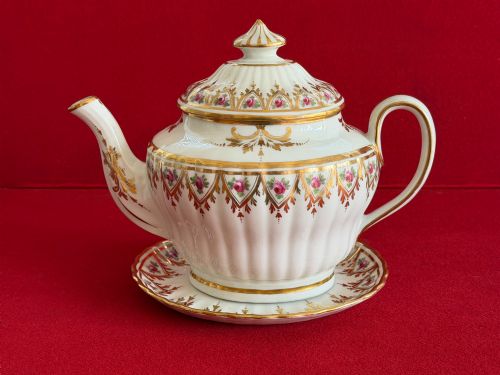
A gilded tea service brings weight and lustre to the table, uniting ceramic form with metallic embellishment.
Gilded Tea Service
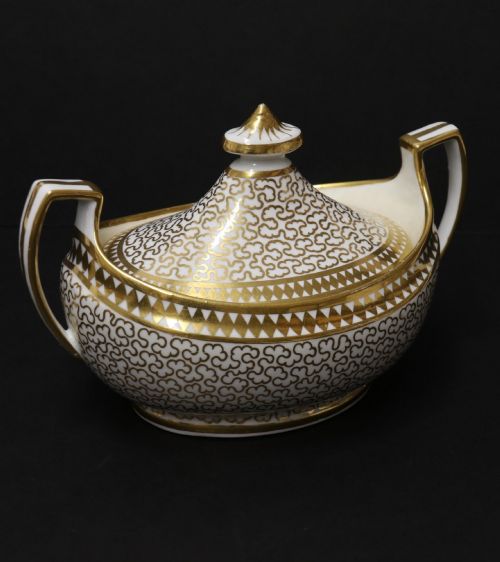
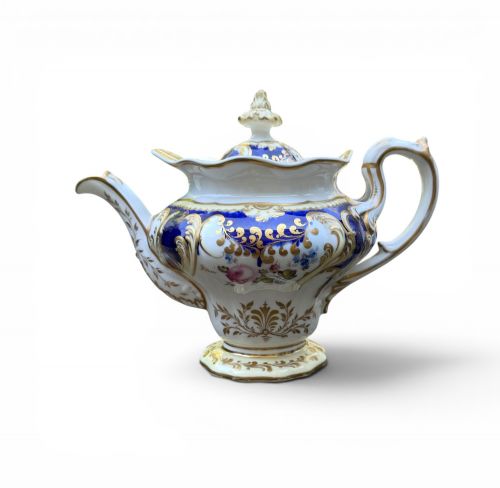
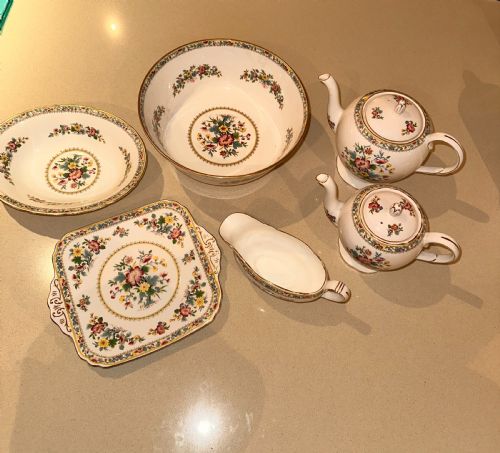
A gilded tea service comprises matching vessels for serving tea, typically including teapots, cups, saucers, and sugar bowls, all finished with gold leaf or gilt details. These sets span periods from the eighteenth century through the twentieth century, with Victorian and nineteenth-century examples appearing frequently on this page.
Forms range from intimate breakfast sets and solitaire services to extensive multi-person settings and dinner combinations. British porcelain and bone china dominate the origin points, alongside continental European factories and silver or silver-plated metal wares.
Stylistic influences vary widely across the inventory, incorporating Regency elegance, rococo revival curves, Edwardian refinement, and traditional English floral painting. Buyers encounter everything from delicate hand-painted motifs to bold Imari and Kakiemon palettes.
Materials and construction
Potters shaped these services using fine porcelain, bone china, felspar porcelain, or ceramic bodies, often formed by throwing on the wheel or casting in moulds. Makers then applied mineral colours, enamels, and gold leaf by hand before firing the pieces in kilns to fix the decoration.
Metallic elements rely on applied gold gilt or gold leaf, sometimes paired with raised enamel work or silver plating on structural tea sets. Artisans utilised skilled brushwork to execute intricate patterns like bat wing designs, floral sprays, and armorial crests.
Gilded Tea Service Retail Price Guide 2026
Typical asking prices for gilded tea service among the pieces listed under this phrase on Sellingantiques today, from the lower quarter to the upper quarter. They describe what is for sale here now, not the wider market.
Listings feature porcelain, bone china, and sterling silver services spanning the eighteenth, nineteenth, and twentieth centuries.
Distinctions in quality
Quality rests upon the crispness of the porcelain moulding and the precision of the hand-painted decoration rather than sheer scale. Superior sets display finely executed brushwork, well-defined gilding that sits evenly on the ceramic body, and harmonious proportions across every component.
The reputation of the maker and the complexity of the pattern dictate the standing of a service within the range. Pieces bearing documented patterns from established porcelain works exhibit greater artistic ambition than generic factory wares.
New Hall Porcelain·George William Adams·Barr and Barr·Chamberlains Worcester·Spode Porcelain·Royal Crown Derby·Coalport·Royal Worcester·Hicks Meigh and Johnson·Royal Davenport·William Moorcroft·Minton·Ahrenfeldt and Asalvary·Moser·Wileman Foley Shelley·Gladstone Potteries
The Gilded Tea Service Glossary
- Sucrier
- A covered sugar bowl designed to hold lump or loose sugar as part of a tea service. These vessels often mirror the decorative motifs and gilding of the accompanying teapot.
- Bone china
- A type of soft-paste porcelain containing animal bone ash, developed in England to create a durable, bright white ceramic body. It accepts glaze and gold gilding exceptionally well.
- Gilt
- A thin layer of gold applied to the surface of porcelain, silver, or ceramic objects. This finish provides the characteristic metallic gleam seen across these tea services.
- Imari
- A decorative style originating in Japan and later emulated by European factories, featuring deep blues, iron reds, and abundant gold accents. It appears frequently on nineteenth-century tea wares.
- Felspar porcelain
- An innovative ceramic body introduced in the nineteenth century using felspathic rock to increase durability and whiteness. It allowed manufacturers to produce finer walls for cups and saucers.
Gilded Tea Service: Frequently Asked Questions
How do I clean a gilded tea service?
Wash each piece gently by hand using warm water and mild dish soap, avoiding abrasive sponges or harsh chemical detergents that can wear away the delicate gold leaf.
Dry the items immediately with a soft, lint-free cloth to prevent water spots from forming on the glaze and metallic surfaces.
Can I use these antique tea sets daily?
While these sets were originally built for functional dining, antique porcelain and nineteenth-century enamels are fragile and vulnerable to thermal shock or chipping.
Most collectors reserve them for special occasions or display them on sideboards rather than risking everyday wear and tear in a modern dishwasher.
How do I date a porcelain tea service?
Examine the underside of the saucers and plates for factory backstamps, impressed registration marks, or pattern numbers that correspond to historical manufacturing periods.
The style of the handle, the shape of the teapot spout, and the painting technique also offer strong clues to whether a set belongs to the Georgian, Regency, or Victorian era.
What is a solitaire tea set?
A solitaire set is a miniature, single-person tea service typically comprising a small teapot, a cup, a saucer, and sometimes a tiny sugar bowl or creamer.
These intimate sets were designed for private morning use in a bedroom rather than formal gatherings in a drawing room.