



Gilded Silhouette Portrait
A gilded silhouette portrait captures the clean profile of a sitter enhanced by delicate gold leaf upon paper or glass, offering an intimate glimpse into Regency and Victorian interiors.
Gilded Silhouette Portrait
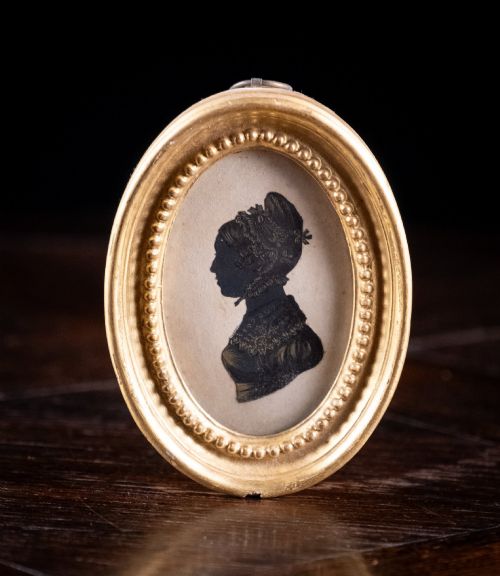
A gilded silhouette portrait brings together the stark contrast of a dark profile cut or painted against a lighter background with the rich addition of gold leaf highlights. These works record the likenesses of gentlemen, ladies, and children from the Georgian, Regency, and Victorian periods.
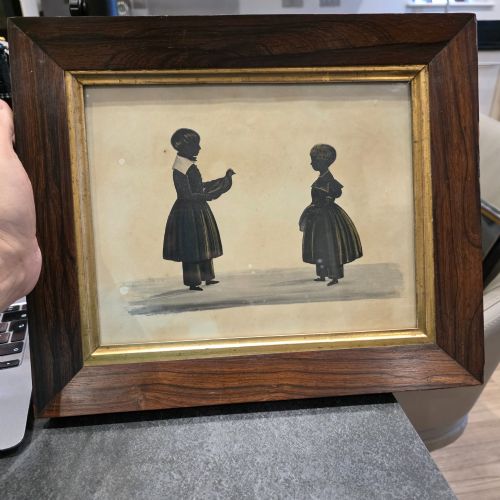
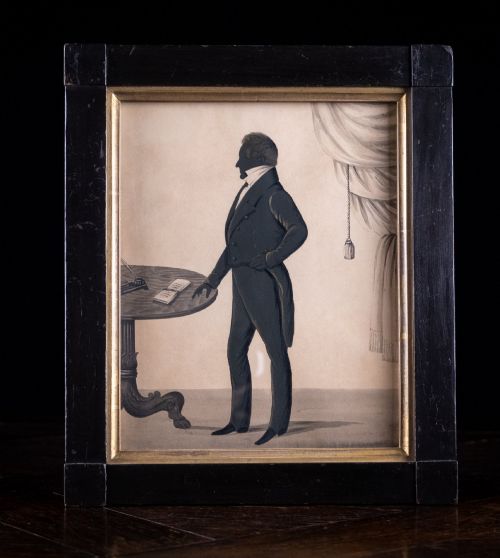
Most examples found on this page date from the nineteenth century, including works from the Regency and early Victorian eras. The subjects appear as half-length or full-length figures, sometimes holding personal items such as a bird or accompanied by a motto.
Makers such as George Atkinson, J. Deacon, John Miers, and Nathaniel Bermingham produced these profile portraits using paper, ink, and pastel. They survive housed in ebonised wood or rosewood frames, often protected behind glass.
How they were made
The resulting portraits were secured within wooden surrounds, utilising ebonised wood or rosewood to frame the work. Many pieces incorporate glass to protect the delicate paper, ink, and gold leaf surfaces from dust and environmental damage.
One young sitter is immortalised holding a tiny bird, adding a whimsical touch of life to an otherwise stern profile.
What varies in quality
The distinction between standard works and superior examples lies in the finesse of the brushwork and the precision of the paper cutting. Finer portraits display intricate detailing in the gold leaf ornamentation, capturing the texture of lace, buttons, and hair with great dexterity.
The choice of framing also indicates quality, with well-matched rosewood or ebonised wood frames and original glass contributing significantly to the integrity of the piece. Signed works by documented makers demonstrate higher craftsmanship and retain stronger historical context.
George Atkinson·J. Deacon·John Miers·Nathaniel Bermingham
The Gilded Silhouette Portrait Glossary
- Silhouette
- A portrait represented as a solid shape of a single colour, usually black, showing the profile of a sitter. These images gained widespread popularity during the eighteenth and nineteenth centuries.
- Gold leaf
- Gold beaten into extremely thin sheets, utilised for gilding and adding decorative highlights to the costume and hair within a profile portrait.
- Ebonised wood
- Timber treated with a finish to give it the appearance of dense, black ebony. This material frequently appears in nineteenth-century framing.
- Rosewood
- A heavy, durable timber featuring distinct grain patterns, favoured for nineteenth-century portrait frames. It provides a warm contrast to the dark profile.
- Regency
- A British historical period spanning the early nineteenth century, characterised by distinct neoclassical styles in arts and furnishings. Many profile portraits originate from this era.
Gilded Silhouette Portrait: Frequently Asked Questions
What is a gilded silhouette portrait?
A gilded silhouette portrait is a profile likeness of a sitter, typically created from cut paper or dark paint, enhanced with fine gold leaf details on the costume or hair.
These works date predominantly from the Georgian, Regency, and Victorian eras, preserved in dedicated frames.
How do I identify a Regency silhouette?
Regency silhouettes often feature distinct costume details such as high-waisted dresses for ladies and tailored tailcoats for gentlemen, sometimes highlighted with precise gold leaf work.
The framing materials, such as rosewood or ebonised wood, also point towards this nineteenth-century period of production.
What materials were used for framing?
Makers housed these profile portraits in wooden surrounds, with rosewood and ebonised wood being the most common choices seen in the evidence.
Glass fronts were routinely employed to protect the fragile paper, ink, and gold leaf components from atmospheric wear.
Are all silhouettes signed by the maker?
Not all silhouettes carry a signature, as many skilled artists produced unsigned work for the public during the eighteenth and nineteenth centuries.
Signed examples by practitioners like John Miers or George Atkinson offer definitive attribution and greater historical documentation.