




Gilded Religious Picture Frames
Gilded religious picture frames enclose sacred subjects across centuries of devotion, offering rich historical craftsmanship and deep spiritual resonance for your walls.
Gilded Religious Picture Frames
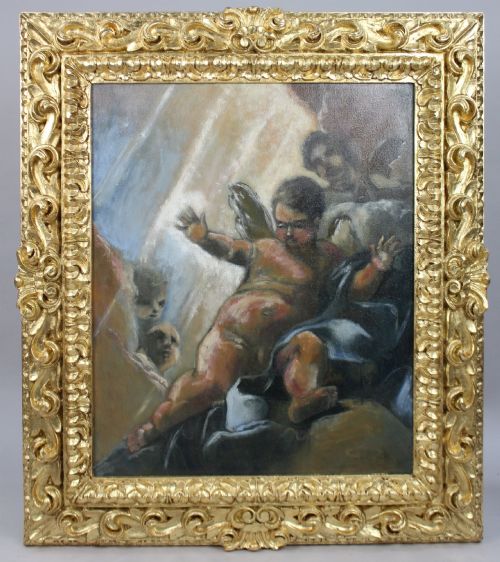
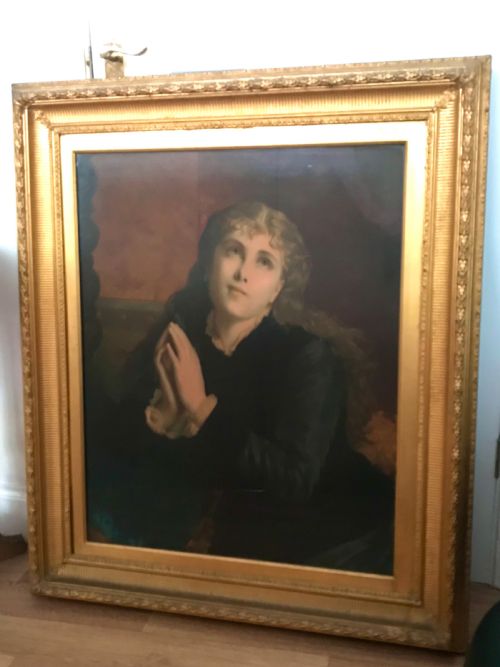
Gilded religious picture frames encompass objects housing sacred imagery, taking forms such as wall art, oil paintings, framed artwork, and altar frames. These pieces serve both devotional and decorative functions within domestic and ecclesiastical spaces.
You will most frequently encounter items from the eighteenth and nineteenth centuries, alongside earlier seventeenth-century works and later twentieth-century interpretations. The accompanying artworks include reverse glass mezzotints, oil on canvas, oil on panel, oleographs, miniatures, and cartagloria altar frames.
Origin details often point toward Italian craftsmanship, including Italian Baroque and Renaissance style pieces. Such items reflect centuries of European artistic tradition centred on Christian iconography and iconography of saints.
Materials and construction methods
Makers utilised wood as the primary structural foundation for these frames, applying gesso to create smooth surfaces for subsequent gilding. Gold leaf was then meticulously laid over the prepared ground to achieve a brilliant reflective finish.
The decorative schemes frequently employ giltwood alongside pigment, paper, and glass components. Paintings housed within these surrounds utilise oil on canvas, oil on panel, or reverse glass techniques.
Gilded Religious Picture Frames Retail Price Guide 2026
Typical asking prices for gilded religious picture frames among the pieces listed under this phrase on Sellingantiques today, from the lower quarter to the upper quarter. They describe what is for sale here now, not the wider market.
Materials recorded across the inventory include giltwood, gesso, gold leaf, paper, glass, pigment, wood, and oil on canvas.
Distinctions in craftsmanship and finish
The refinement of the carved details dictates much of the distinction between simpler surrounds and masterworks. Finer examples display deeply undercut ornamentation in the giltwood, whereas lesser pieces rely on moulded compo or flatter surfaces.
The application of the gold leaf and the preparation of the underlying gesso layer affect how light catches the frame. Superior items retain crisp burnished edges and harmonious patination developed over centuries.
The Gilded Religious Picture Frames Glossary
- Giltwood
- Wood that has been coated with gold leaf or gold paint. This finish provides the characteristic metallic brilliance seen on antique frames.
- Gesso
- A plaster mixture used as a base coat on wood before applying gold leaf. It allows carvers to achieve sharp details and a smooth surface.
- Cartagloria
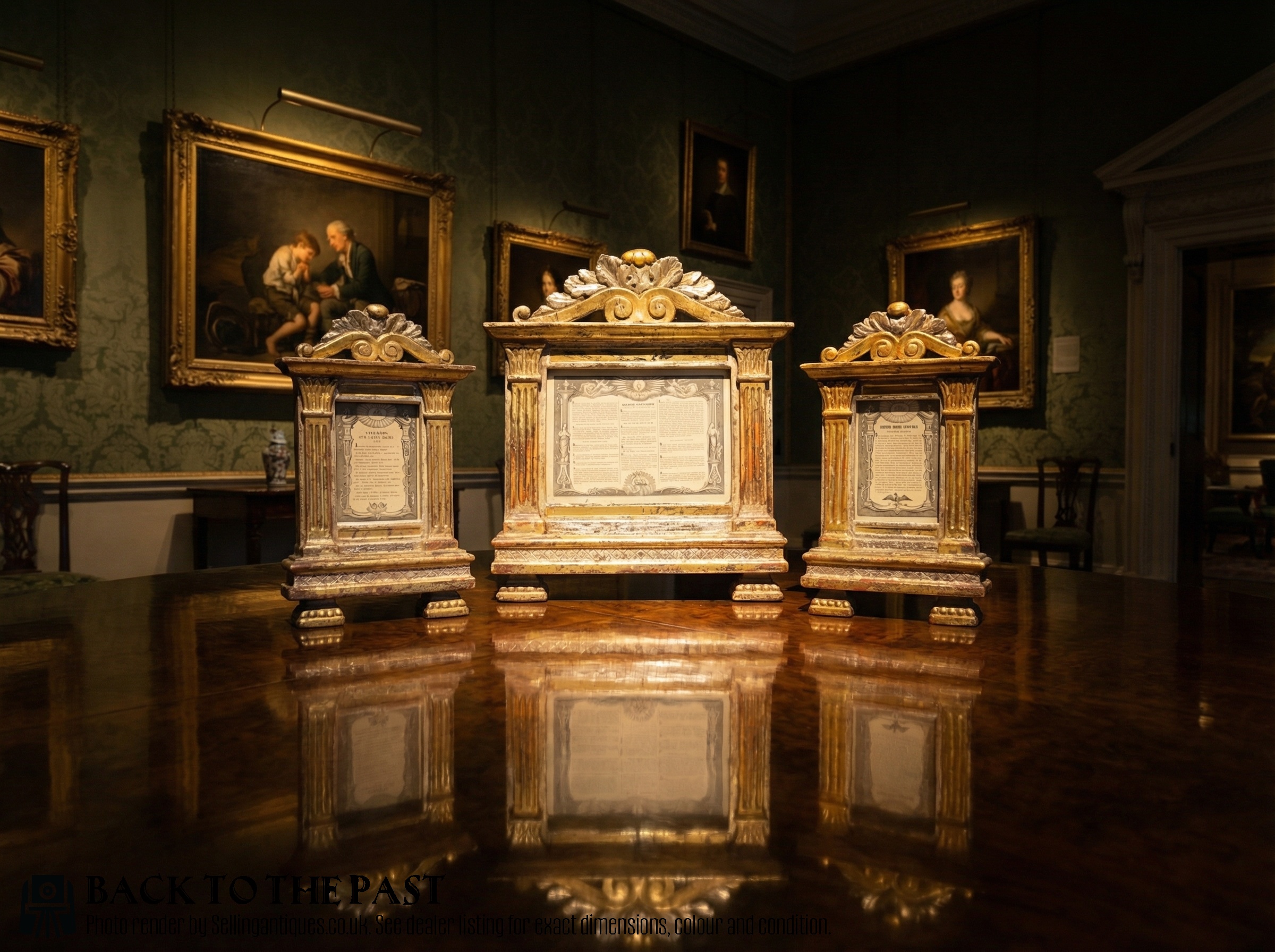
- An altar frame holding liturgical texts or sacred images. These Italian frames stood upon or near church altars.
- Mezzotint
- A printmaking process where the image is worked from dark to light on a copper plate. Coloured examples appear behind glass in eighteenth-century works.
- Oleograph
- A chromolithographic reproduction textured to imitate an oil painting. These appeared frequently in nineteenth-century religious imagery.
Gilded Religious Picture Frames: Frequently Asked Questions
What is a cartagloria frame?
A cartagloria is an altar frame designed to hold printed or written liturgical prayers for the celebrant. These pieces originate from Italian contexts and feature elaborate giltwood decoration.
They stood upon church altars to assist clergy during mass. Today, collectors value them for their intricate frames and ecclesiastical history.
How do I date a gilded frame?
Dating relies on examining the construction techniques, wood types, and gesso application beneath the gold leaf. Eighteenth-century frames typically exhibit hand-carved joinery and distinct tool marks.
Later nineteenth-century and revival pieces often incorporate standardised mouldings or different plaster compositions. Comparing the frame style to the artwork it houses provides further chronological context.
Where were these frames made?
Many surviving examples originate from Italian workshops, reflecting strong regional traditions in sacred art and framing. Italian Baroque and Renaissance styles heavily influence the design vocabulary.
Other pieces emerge from broader European traditions spanning the seventeenth through the nineteenth centuries. Makers in these regions adapted local aesthetic movements for religious devotion.
How should I hang religious art?
Display these pieces at eye level on stable walls away from direct sunlight and excessive moisture fluctuations. The heavy giltwood and glass components require secure fixings anchored into wall studs.
Allow adequate space around the frame so the reflective surface can catch natural room light. Proper placement protects both the delicate gold leaf and the artwork within.