
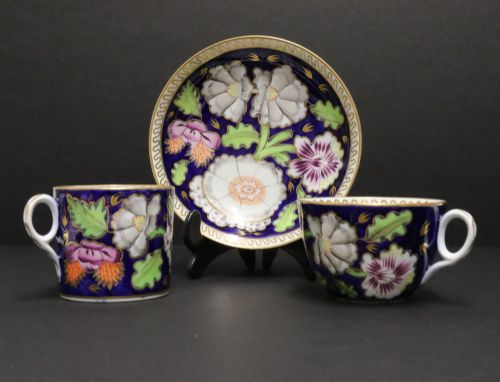
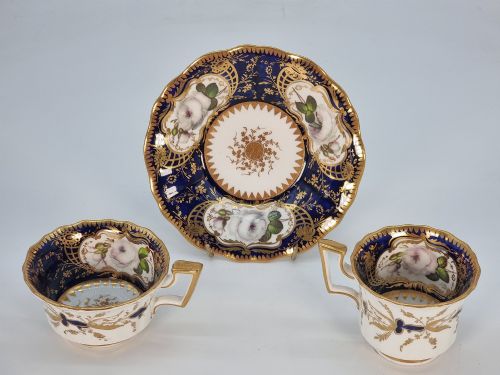
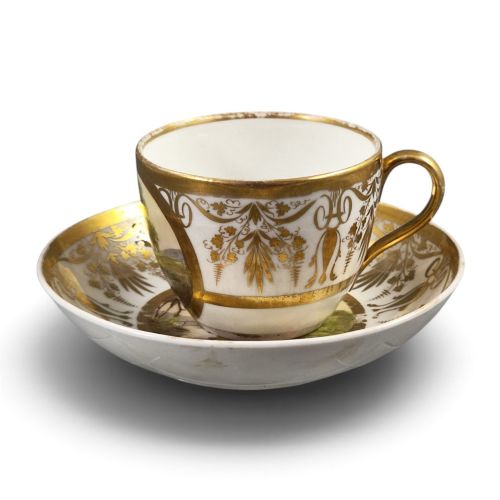
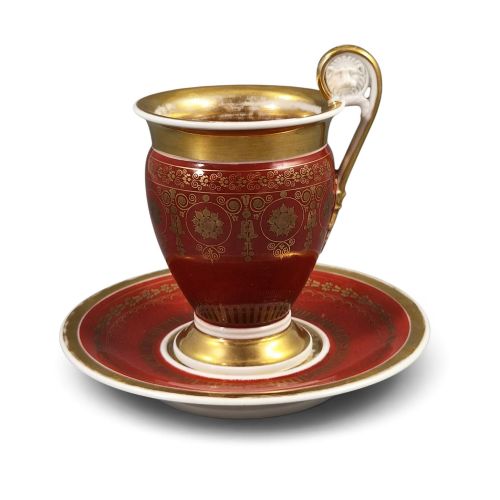
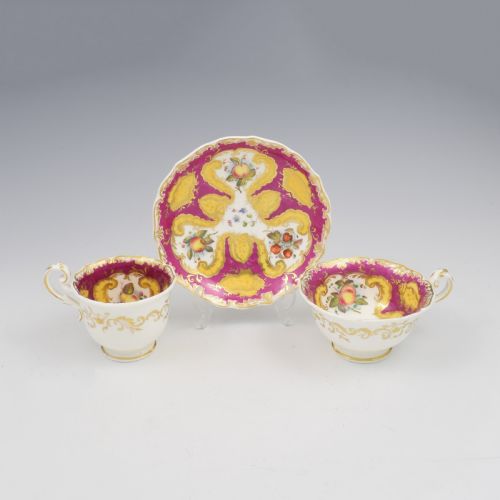
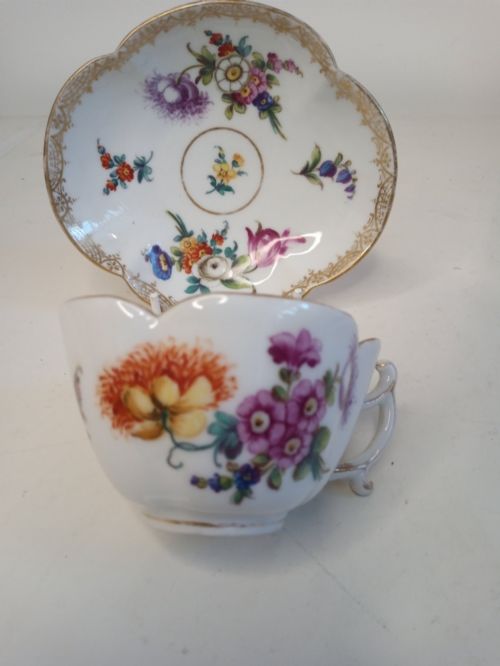
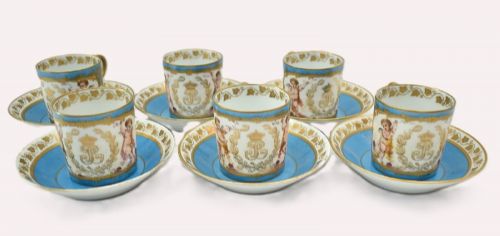


Gilded Porcelain Teacup Set
These gilded porcelain teacup set pieces combine fine ceramic bodies with applied metalwork, offering a glimpse into centuries of domestic dining tradition.
Gilded Porcelain Teacup Set
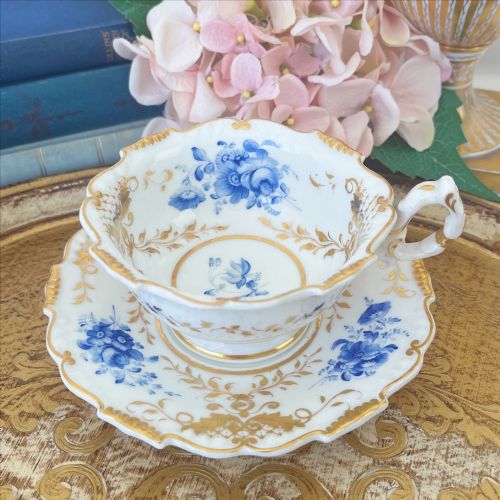
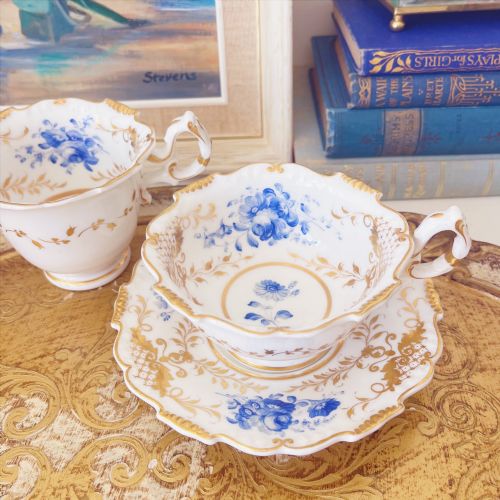
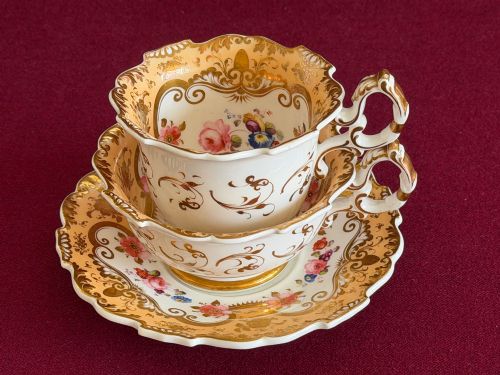
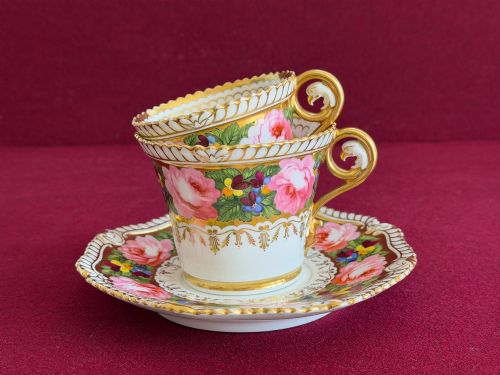
A gilded porcelain teacup set encompasses individual trios, cabinet cups, and larger afternoon tea services spanning the eighteenth, nineteenth, and early twentieth centuries. Buyers frequently encounter nineteenth-century English and continental European wares, including works from Regency, Victorian, and Edwardian periods.
The selection ranges from single cabinet cups and saucers to extensive twenty-piece tea services involving multiple cups, saucers, and matching accessories. Forms vary from simple coffee cups and demitasse sets to elaborate Derby, Worcester, and KPM Berlin productions.
Materials and Techniques
These items utilise hard-paste porcelain, bone china, and ironstone as foundational ceramic bodies, shaped into cups, saucers, teapots, and trios. Manufacturers applied enamel paints by hand alongside gold leaf, gilding, and gilt highlights to enrich the decorated surfaces.
Many objects incorporate handpainted landscapes, floral motifs, or transfer-printed patterns before undergoing high-temperature kiln firing to fuse the metallic gilding and enamel colours to the porcelain body.
Listings feature porcelain pieces spanning the eighteenth, nineteenth, and twentieth centuries, incorporating Regency, Victorian, and Art Deco styles.
Assessment of Quality
Quality rests upon the precision of the handpainted decoration, the crispness of the porcelain moulding, and the intactness of the gold leaf or gilding across handles and rims. Works featuring intricate hand-painted landscapes or detailed figural scenes by established factories demonstrate superior artistic execution compared to standard commercial output.
The weight, translucency, and thinness of the bone china or hard-paste porcelain also indicate the maker's technical skill. Complete trios or matched sets maintaining uniform pattern numbers and minimal wear to the gilt surfaces represent the higher end of surviving examples.
H & R Daniel·Chamberlain Worcester·Newhall·Coalport John Rose·KPM Berlin·Derby·Sevres·Flight Barr & Barr·Hicks, Meigh & Johnson·Royal Worcester·Doric China Longton Stafford·Masons Patent Ironstone·Davenport·Wileman Foley Shelley·Hutschenreuther·Hirsch Dresden·Royal Crown Derby
The Gilded Porcelain Teacup Set Glossary
- Trio
- A matched set consisting of a teacup, a coffee cup, and a saucer, frequently found in Regency and Victorian collections.
- Cabinet Cup
- An ornamental cup and saucer produced primarily for display in a cabinet rather than for daily drinking.
- Hard-paste Porcelain
- A durable ceramic material fired at high temperatures using kaolin and petuntse, yielding a dense white body.
- Gilding
- The application of gold leaf or powdered gold to the surface of porcelain to create metallic decorative accents.
- Demitasse
- A small cup used for serving black coffee or espresso, often paired with a matching saucer.
Gilded Porcelain Teacup Set: Frequently Asked Questions
What is included in a gilded porcelain teacup set?
These sets typically comprise teacups, coffee cups, and saucers, sometimes expanding into larger tea services that include larger bowls, plates, and teapots.
The configurations vary from single cabinet cups to multi-person afternoon tea ensembles spanning several periods of production.
How do I care for antique gilded porcelain?
Gentle hand washing in warm water using mild soap helps preserve the delicate enamel paints and delicate metallic gilding found on these pieces.
Avoiding dishwashers and harsh abrasives prevents the gold leaf and handpainted details from wearing away over time.
How do I identify the period of a teacup set?
Factory marks stamped or painted on the underside of the porcelain offer the most reliable indicator of origin and approximate date of manufacture.
Stylistic cues such as Regency shapes or Victorian floral patterns also help narrow down the historical era in which the set was made.
Were these sets used daily or displayed?
Many larger services served functional roles during formal afternoon tea gatherings in grand nineteenth-century households.
Other items, particularly specialised cabinet cups, were intended primarily for display within glass-fronted furniture rather than active dining.