


Vintage Porcelain Teacups Saucers
These vintage porcelain teacups saucers bring tangible heritage to the table, offering tactile pleasure and historical charm for daily use or display.
Vintage Porcelain Teacups Saucers
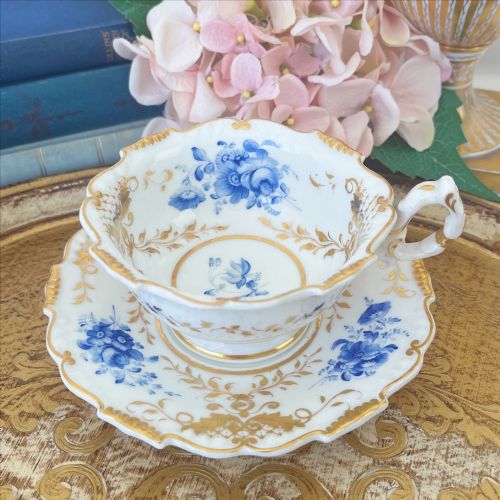
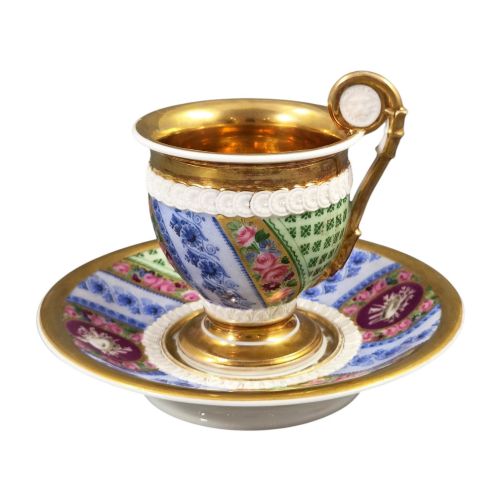
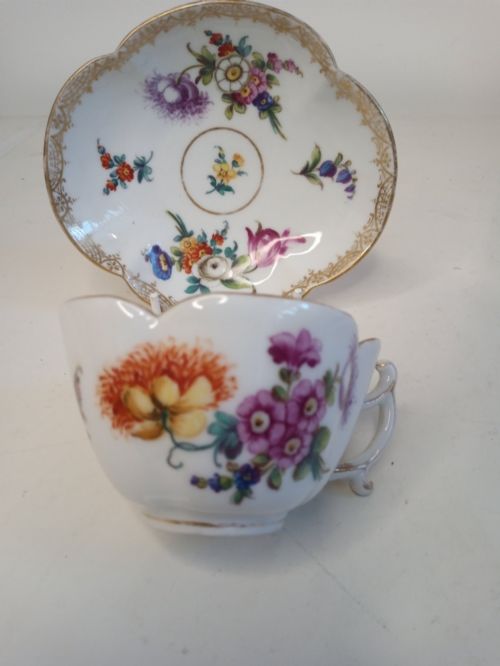
When you search for vintage porcelain teacups saucers, you encounter a diverse range of forms spanning from the eighteenth century through the 1930s. The selection includes individual cabinet cups, tea bowls, afternoon tea services, and matched trios originating from English, French, German, Russian, and Asian makers.
You are most likely to meet twentieth-century English tea sets alongside nineteenth-century cabinet pieces on this page. Pieces range from austere tea bowls dated to the Georgian period to elaborate Edwardian and Art Deco sets decorated with gilding and hand-painted motifs.
How they were made
Potters utilised hard-paste porcelain, soft-paste porcelain, and bone china to shape these vessels, often applying detailed hand-painted scenes and transfer-printed patterns. Early examples rely on delicate tea bowl forms, while later nineteenth and twentieth-century pieces adopt more robust moulded profiles.
Surface decoration frequently incorporates enamel, gold leaf, and heavy gilding. Artisans applied these metallic finishes by hand to rims, handles, and bat-wing motifs, sealing the pigment through high-temperature kilning.
Some nineteenth-century makers applied lion mask handles to porcelain cups so drinkers could face imaginary beasts at breakfast.
What varies in quality
The degree of artistic execution in hand-painted details separates ordinary utilitarian wares from exceptional cabinet pieces. Precision in the brushwork of floral studies, bird panels, and figurer groups determines the distinction between standard production and masterwork output.
The preservation of original gold leaf and enamel integrity dictates the overall standard of surviving examples. Thicker porcelain bodies and crisper moulding during production contribute to greater structural resilience over centuries of use.
Royal Crown Derby·Royal Worcester·Royal Albert·Wileman Foley Shelley·KPM Berlin
The Vintage Porcelain Teacups Saucers Glossary
- Cabinet cup
- A decorative cup and saucer intended for display in a cabinet rather than for serving tea.
- Bone china
- A type of porcelain containing bone ash that provides a bright white body and high strength.
- Enamel
- Opaque vitreous composition fused to the porcelain surface to add coloured decoration.
- Gilding
- The application of gold leaf or gold dust onto the porcelain glaze for decorative effect.
- Tea bowl
- A handleless drinking vessel used in early tea services before standard cups with handles became common.
Vintage Porcelain Teacups Saucers: Frequently Asked Questions
How do I date my teacup set?
Examine the style of decoration, handle shape, and any factory marks stamped or painted on the base. Comparing these details against known periods from the eighteenth century to the 1930s helps narrow the timeframe.
Changes in porcelain body composition, such as the introduction of bone china or soft-paste variations, also provide clear chronological indicators for origin and age.
Can I use antique tea sets daily?
Many sturdy porcelain and bone china sets from the Victorian and Edwardian eras remain structurally sound for occasional use. Hand washing protects the delicate overglaze enamels and gold gilding from dishwasher heat and harsh detergents.
Earlier eighteenth-century soft-paste porcelain and delicate cabinet cups require greater care and are better suited for display or very gentle handling.
What is the difference between a teacup and a tea bowl?
Tea bowls are traditional handleless vessels derived from early Asian ceramic imports, common in eighteenth-century British sets. Teacups incorporate attached handles for gripping, which became standard during the Georgian period.
Both forms were accompanied by matching saucers designed to hold the vessel while cooling hot tea.
What does a tea trio include?
A tea trio consists of three matching components intended for a single place setting: a teacup, a matching saucer, and a corresponding side or cake plate.
These sets gained popularity during the Victorian and Edwardian periods for formal afternoon tea service.