



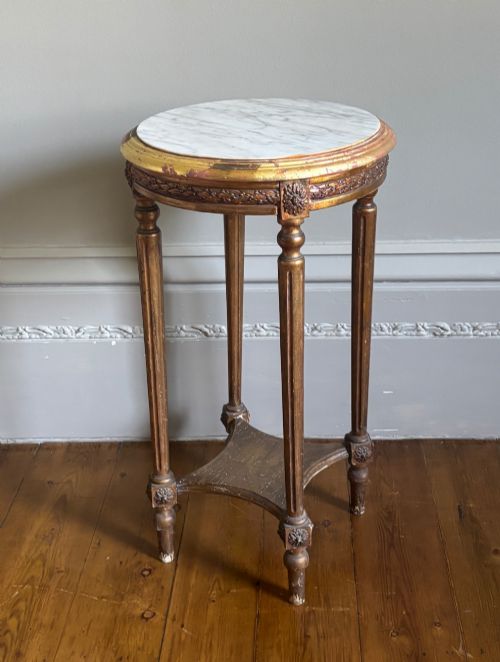


Gilded Plant Pedestal
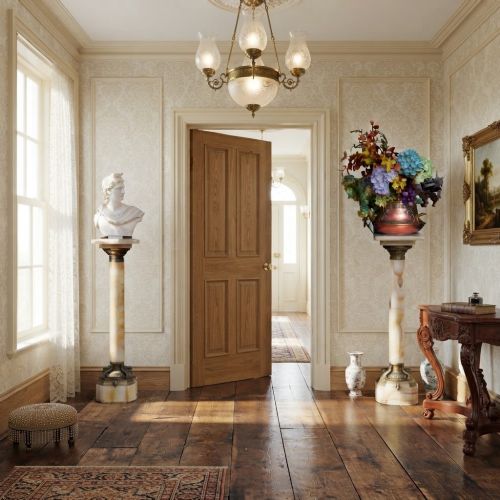
A gilded plant pedestal brings neoclassical grandeur to a corner, lifting greenery into the room on carved wood and marble.
Gilded Plant Pedestal
A gilded plant pedestal serves as an elevated stage for greenery, urns, and lamps, combining structural presence with decorative display. These pieces appear across nineteenth-century styles, drawing on French Neoclassical, Louis XVI, and Venetian traditions.
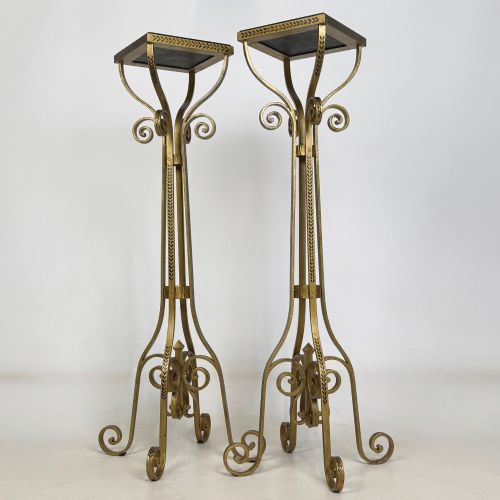
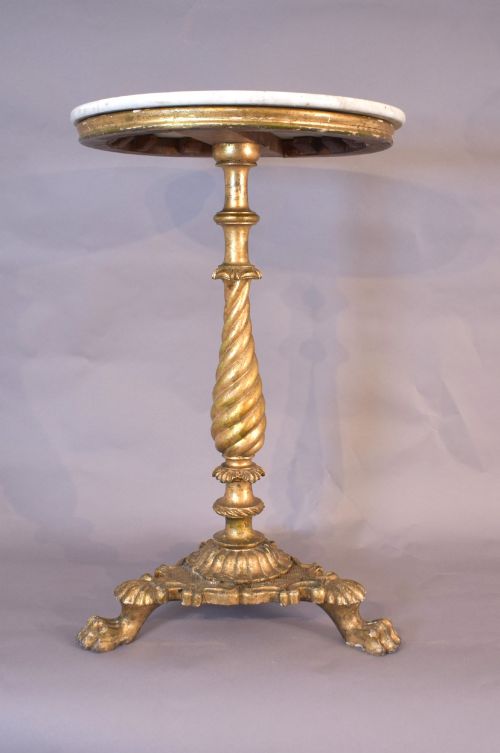
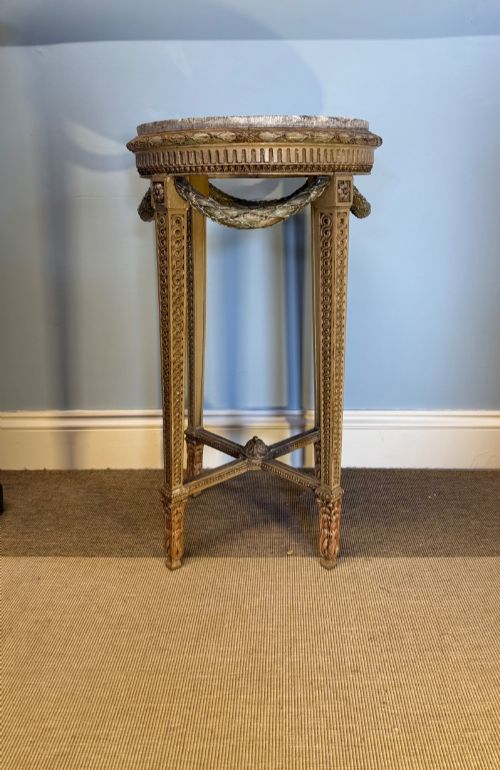
The most common forms on this page include tall torchères, column stands, and small occasional tables topped with marble or onyx. Makers shaped these surfaces in wood, brass, and gesso before applying gold leaf or polychrome paint.
Origins stretch from English Regency workshops to Italian and French ateliers, yielding varied silhouettes from tripod bases to sculptural figural supports. Each piece balances utility with the theatrical display favoured by nineteenth-century interiors.
Materials and construction
Carvers shaped the foundational structures from timber such as mahogany, walnut, and softwood before applying layers of gesso to smooth the surface for gilding. Artisans laid fine gold leaf over this preparation, burnishing sections to catch the light.
Insets of marble, onyx, and polished stone provide durable upper surfaces capable of holding heavy planters and urns without water damage. Metal elements in brass and ormolu add structural collars and scroll feet to support slender column shafts.
Gilded Plant Pedestal Retail Price Guide 2026
Typical asking prices for gilded plant pedestal among the pieces listed under this phrase on Sellingantiques today, from the lower quarter to the upper quarter. They describe what is for sale here now, not the wider market.
Watch out for cheeky wooden gondoliers and elephants holding up your ferns.
Judging the quality
Quality rests upon the crispness of the wood carving and the depth of the original gilding, where hand-applied gold leaf reveals subtle tool work. Inferior pieces rely on heavy modern paints that obscure the underlying detail of the gesso.
The choice and thickness of the inset marble or onyx top distinguish finer examples from standard production, as does the stability of the central column or tripod base. Original faux-marble finishes and intact ormolu collars elevate the standing of the piece.
The Gilded Plant Pedestal Glossary
- Torchère
- A tall, slender stand designed to hold a light, plant, or urn in a corner or alcove. These pieces often feature tripod bases and decorative carving.
- Gesso
- A plaster-like mixture applied to wood surfaces to create a smooth ground for gilding or painting. Artisans built up the paste to model intricate relief details.
- Ormolu
- Gilded bronze used for decorative mounts, collars, and feet on nineteenth-century furniture and stands. The technique imparts a rich metallic lustre.
- Onyx
- A banded variety of chalcedony used frequently for smooth, decorative table and pedestal tops. Its natural patterns provide a contrasting texture to giltwood frames.
- Polychrome
- Painted in several colours, often seen on figural stands and Venetian furnishings. This decoration adds vibrant pictorial detail to carved wooden surfaces.
Gilded Plant Pedestal: Frequently Asked Questions
What is a torchère stand used for?
A torchère provides an elevated surface for displaying potted plants, urns, or decorative objects within a room.
Historically, these tall stands also held lighting fixtures to illuminate dark corners during the evening.
How do I clean a gilded pedestal?
Dust the gilded surfaces gently with a soft, dry brush to avoid disturbing fragile gold leaf or gesso.
Keep marble and onyx inserts wiped with a damp cloth, ensuring no moisture reaches the wooden framing.
Are these pedestals structurally stable?
Most pedestals feature weighted tripod bases or solid stone columns designed to bear the weight of heavy planters safely.
Heavier marble tops add downward gravity, keeping the slender vertical shafts secure on level flooring.
How do I identify a nineteenth-century piece?
Look for traditional construction methods such as hand-cut joinery, aged gesso underlays, and authentic gold leaf application.
Nineteenth-century examples frequently combine classical motifs like fluted columns with regional French or Italian carving styles.