





Gilded Pedestal Table
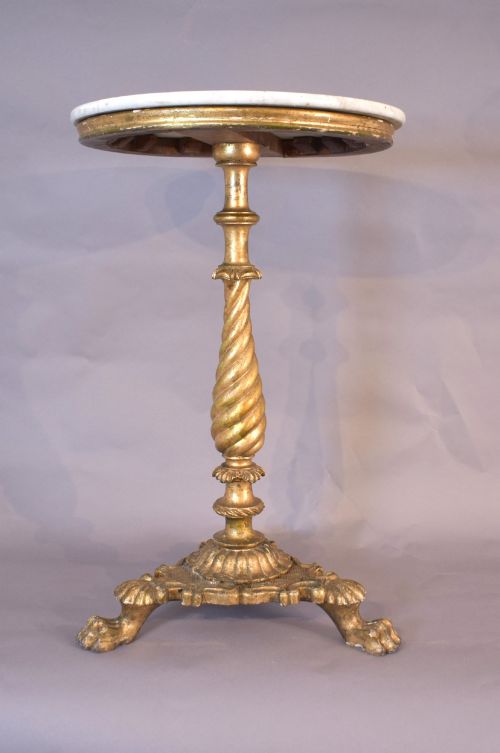
A gilded pedestal table brings a gleam of classical formality to a room, resting on a central column rather than four legs.
Gilded Pedestal Table
A gilded pedestal table is a compact surface designed to stand alone, relying on a central support column rather than standard corner legs.
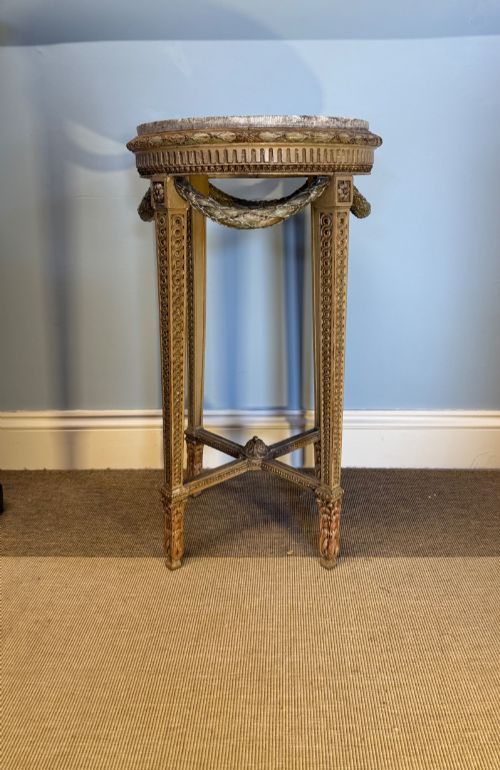
The evidence shows forms ranging from round occasional tables and wine tables to side tables, plant stands, and card tables.
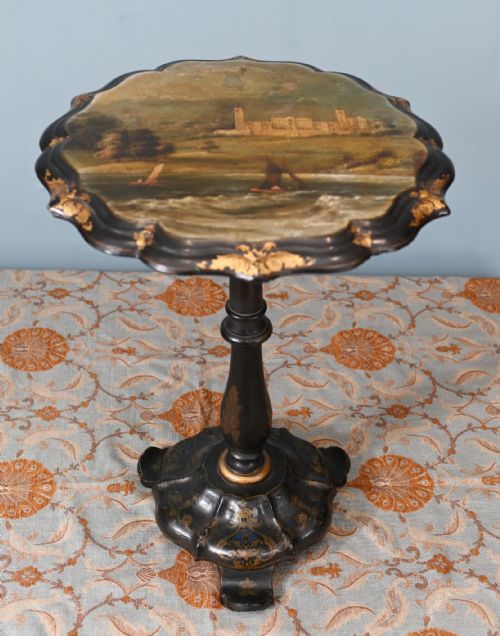
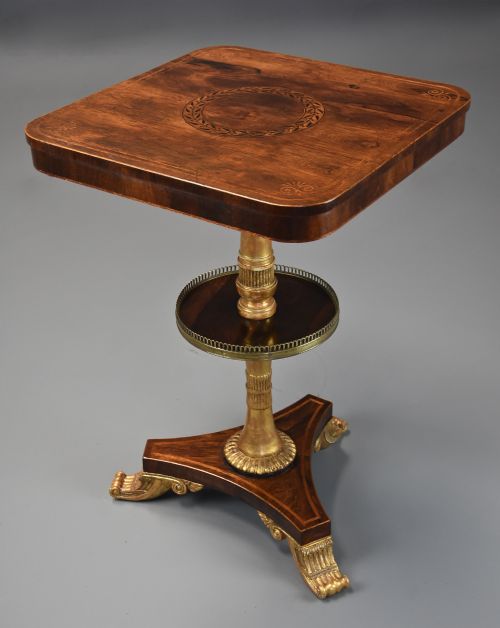
Victorian and Regency examples dominate the selection, often carrying marble tops and giltwood or brass embellishments.
Materials and Construction
Makers built these tables from timbers such as mahogany, walnut, rosewood, and lime wood, applying gold leaf or gesso over carved wooden foundations.
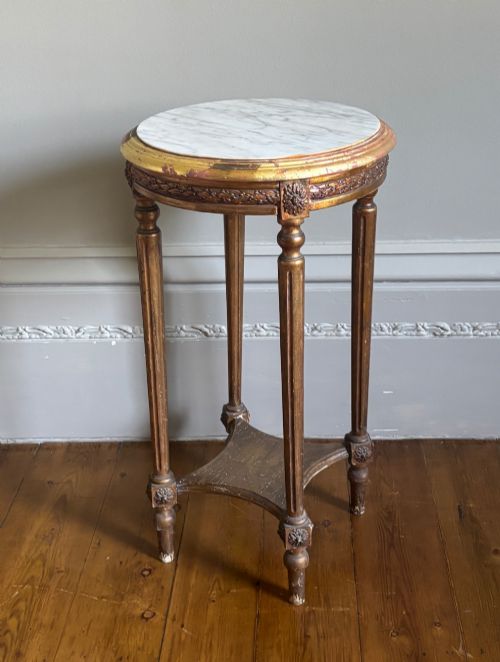
Surfaces frequently feature inset marble, onyx, or leather, supported by cast bronze, ormolu, and gilded brass mounts.
Carved details, floral mouldings, and tripod bases provide both structural stability and ornamental depth.
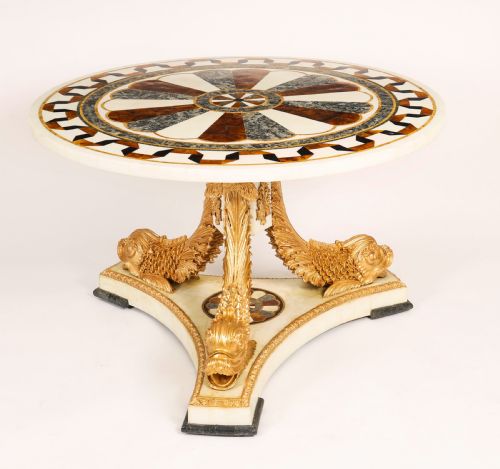
Several tables feature carved wooden elephants or dolphins serving as the structural column, holding up the weight of the world or at least a cup of tea.
Assessing Quality and Execution
Quality rests upon the crispness of the carving and the purity of the gilding, where hand-applied gold leaf surpasses simple painted bronze paint.
The weight and finish of the inset marble or onyx top indicate the original ambition of the piece.
Joinery at the central column joint dictates the firmness of the table over decades of use.
The Gilded Pedestal Table Glossary
- Giltwood
- Wood that has been coated with thin sheets of gold leaf over a prepared gesso ground. This technique creates a warm, reflective surface that patinates gently.
- Ormolu
- Cast bronze that has been mercury-gilded or electroplated with gold. It provides sharp, metallic detailing on mounts and pedestals.
- Gesso
- A plaster mixture applied to wood surfaces as a smooth base for gilding. It allows carvers to achieve fine relief work before applying gold leaf.
- Tripod base
- A three-legged support structure beneath the central column. This design ensures stability on uneven floors.
- Card table
- A folding table designed for gaming, often featuring a baize-lined interior and pivoting top.
Gilded Pedestal Table: Frequently Asked Questions
Where should I place a gilded pedestal table?
These tables suit hallways, drawing rooms, or corners where a compact surface with reflective qualities can catch the light. They function effectively as plant stands or occasional drinks tables.
Avoid placing them in direct, strong sunlight to protect the gilded surfaces and prevent timber warping.
Are marble tops original to these tables?
Many nineteenth-century occasional and side tables were manufactured specifically to receive heavy stone tops like marble or onyx. The robust central column and tripod base support this weight.
Check the underside of the top to ensure the seating matches the period of the base.
How do I distinguish Regency from Victorian examples?
Regency tables typically display restraint, clean neoclassical lines, rosewood timbers, and precise brass inlays. Victorian versions often embrace heavier carving, bolder floral mouldings, and walnut or mahogany frames.
Construction methods inside the pedestal joint often confirm the manufacturing era.