
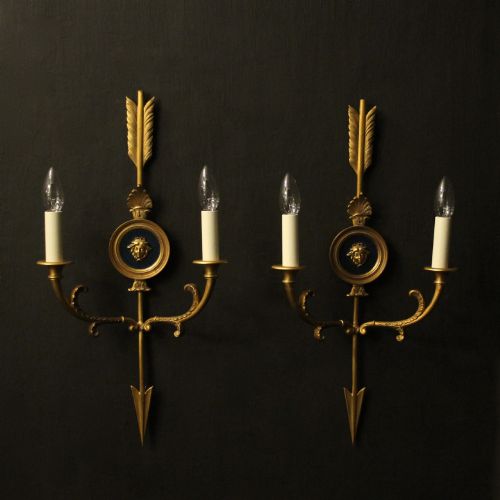
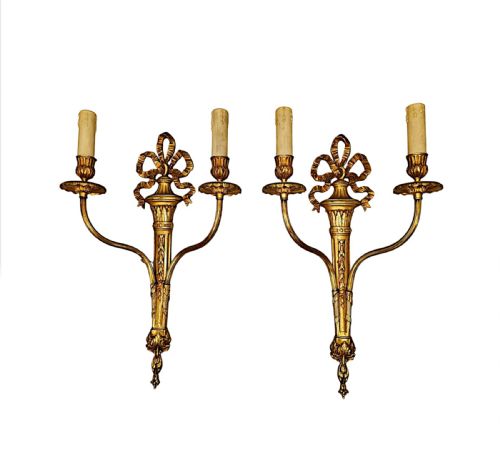
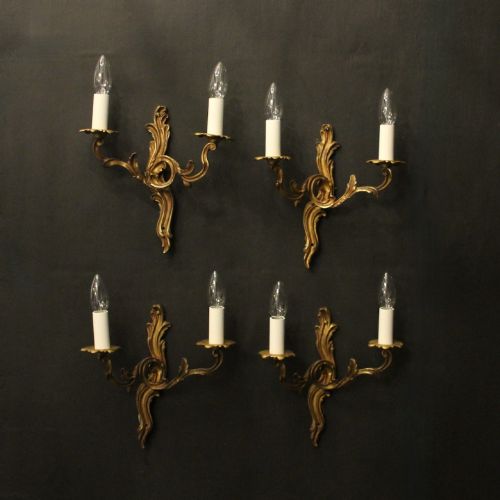
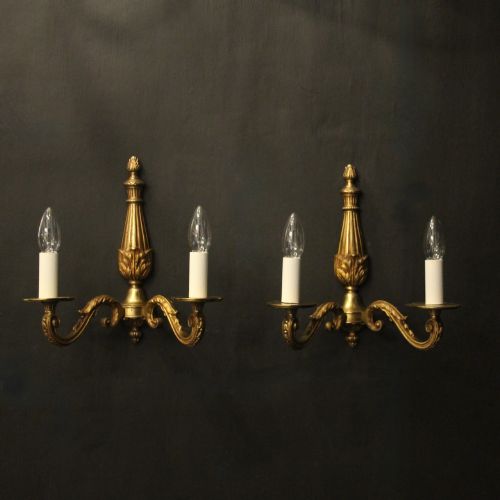
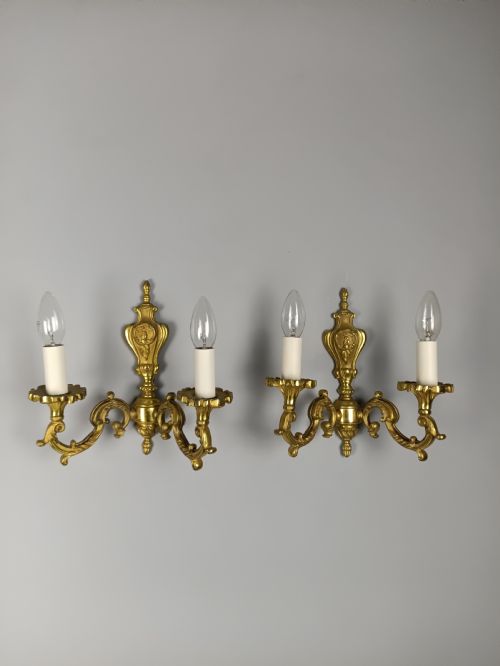
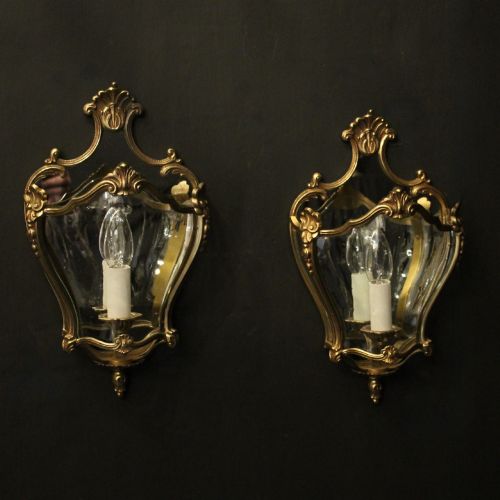
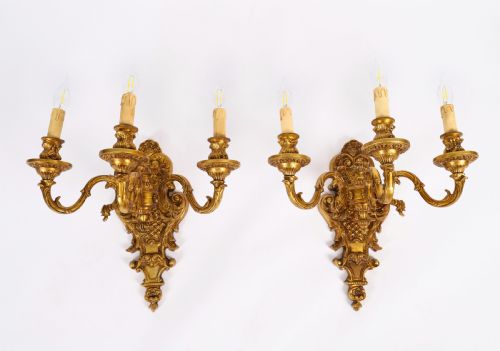
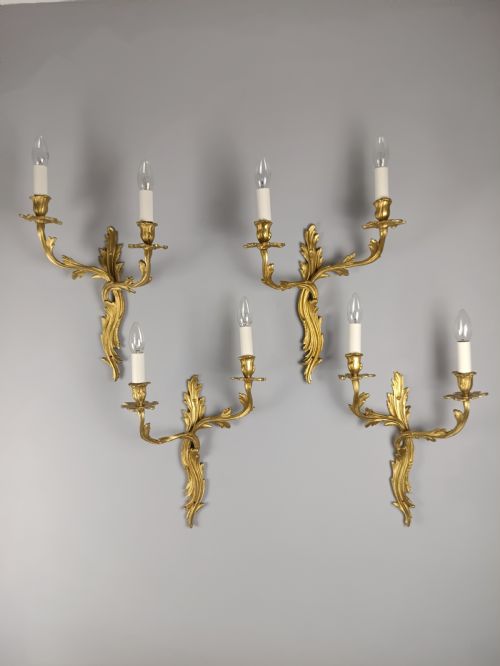
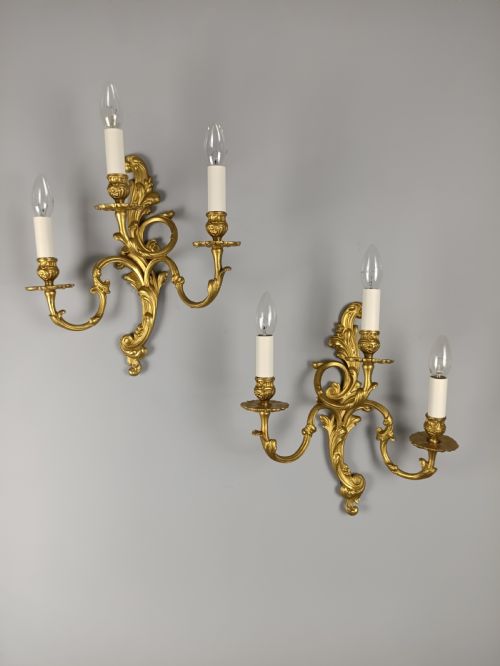
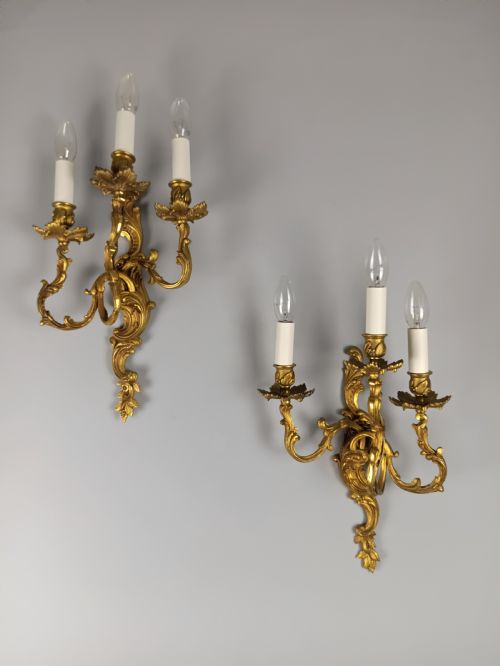
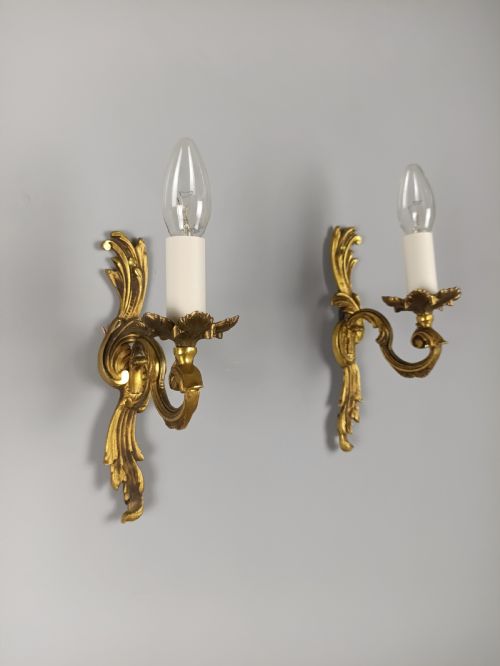
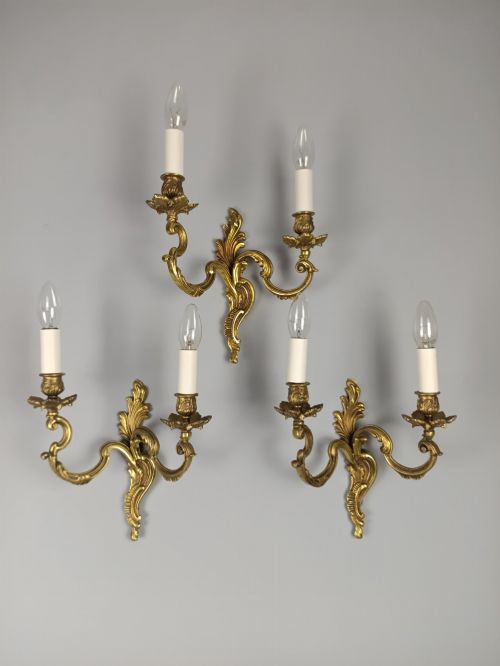
Gilded Ormolu Wall Appliques
These gilded ormolu wall appliques provide layered candlelight and dramatic reflective brilliance for period interiors.
Gilded Ormolu Wall Appliques
When hunting for gilded ormolu wall appliques, buyers look for decorative wall-mounted lighting fixtures designed to hold multiple candles or bulbs. These fixtures illuminate reception rooms, hallways, and stairwells while adding sculptural metalwork to the plaster or wood panelling.
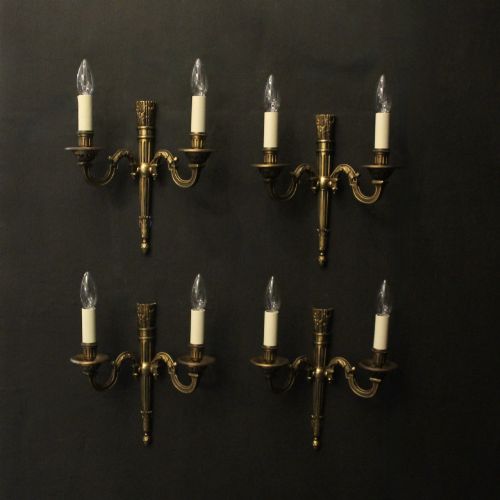
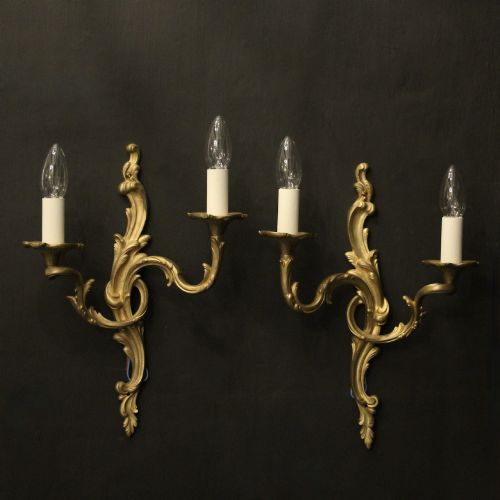
The most common versions met on this page are French twin-arm and triple-arm wall lights originating from the early twentieth century. These pieces frequently draw upon earlier historical vocabularies, presenting familiar ornamental schemas adapted for domestic electrification.
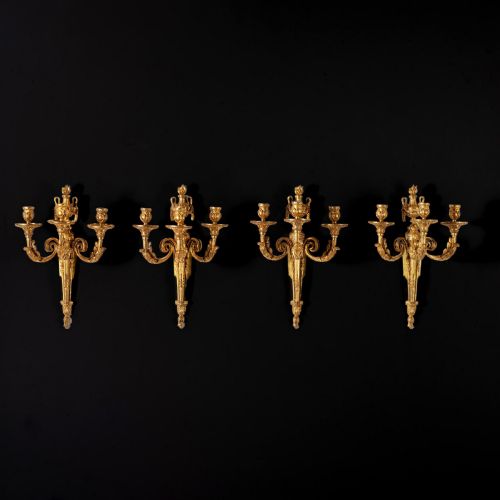
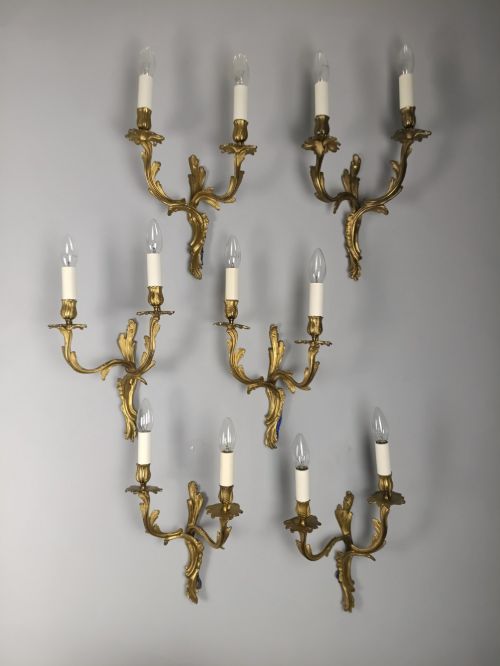
Objects span from eighteenth-century examples to twentieth-century revivals, taking the form of sconces, half lanterns, and branch lights. They appear in matching pairs and larger sets intended for balanced placement across a room.
Materials and construction
These lighting fixtures employ bronze, brass, and mixed metal bases finished with surface gilding or ormolu. Artisans cast the metal components in sections before chasing the surface details by hand and applying gold leaf or mercury gilt.
Selected designs incorporate glass elements such as crystal drops, lustres, and panels that catch and refract the light. Structural joints link the backplates securely to the branching arms that support the candle nozzles.
Listings incorporate items spanning from the eighteenth century through the 1930s, executed in gilded bronze, brass, and ormolu.
Standard and execution
Quality rests upon the crispness of the metal casting and the depth of the hand-chased surface work. Superior examples display sharply defined acanthus leaves, scrollwork, and figurative elements without smoothing or softening of the contours.
The weight of the bronze and the rigidity of the arm joints separate standard production from finer creations. Original gilding intact across complex recesses indicates careful preservation and superior initial application.
The Gilded Ormolu Wall Appliques Glossary
- Ormolu
- A type of gilded metalwork involving the application of finely ground gold-mercury amalgam to a bronze base. This technique creates a durable golden finish with a warm metallic lustre.
- Applique
- A decorative wall-mounted light fitting or sconce. The term describes fixtures that apply directly to the vertical surface.
- Rococo
- An ornate design style characterised by asymmetry, C-scrolls, and naturalistic shell motifs. It dominates many of the eighteenth-century and revival pieces seen here.
- Neoclassical
- A decorative movement drawing inspiration from classical antiquity, featuring symmetrical lines, urns, and flaming torches. This style provides strict geometric balance to wall lighting.
- Lustre
- A glass pendant or hanging prism suspended from a wall light to reflect illumination. These components enhance the visual sparkle of the fixture.
Gilded Ormolu Wall Appliques: Frequently Asked Questions
How do I mount them securely?
These fixtures require direct attachment to wall studs or the use of heavy-duty hollow wall anchors suited to the weight of cast bronze.
Electrical wiring runs through the backplate directly into the wall junction box during professional installation.
Are they wired for electricity?
Many surviving examples have been rewired with modern internal flex to meet contemporary safety standards while retaining their vintage appearance.
Candle-form sleeves fit over modern lamp holders to preserve the silhouette of the original lighting design.
How do I clean gilded bronze?
Dust the metal surfaces gently using a soft, dry brush to prevent accumulation in the recessed chased details.
Avoid abrasive metal polishes and chemical cleaners that strip away the original gold gilding or ormolu surface.
How do I date these pieces?
Stylistic markers such as Rococo asymmetry or Neoclassical symmetry offer initial clues to the design inspiration and period.
Casting methods, fastener types, and the composition of the underlying metal help distinguish eighteenth-century originals from later revivals.