

Gilded Ormolu Clock
A gilded ormolu clock brings warmth and sculptural presence to a room through cast metal and fine detailing.
Gilded Ormolu Clock
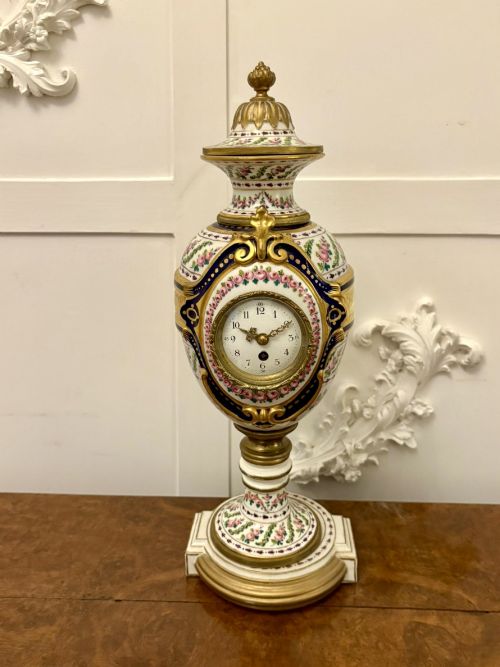
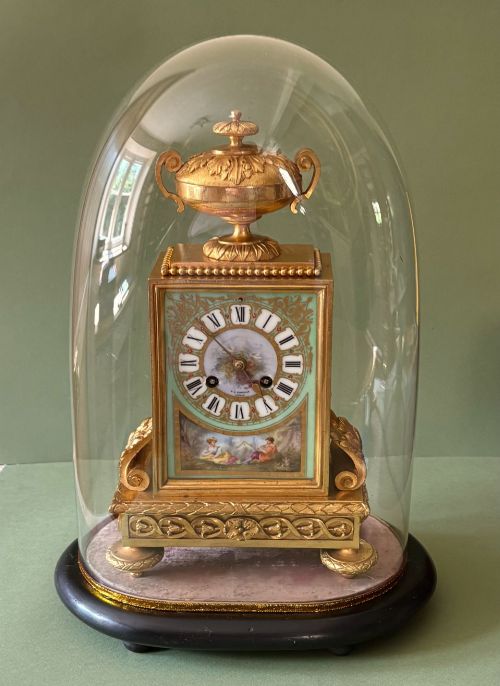
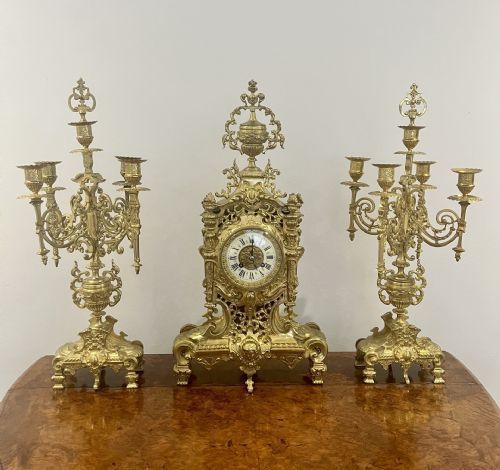
A gilded ormolu clock is typically a nineteenth-century French mantel piece designed to sit prominently on a fireplace or console table. These items span mantel clocks, wall clocks, and complete clock garnitures featuring matching side ornaments.
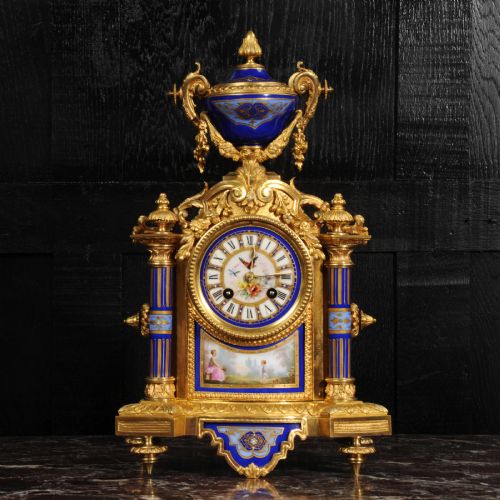
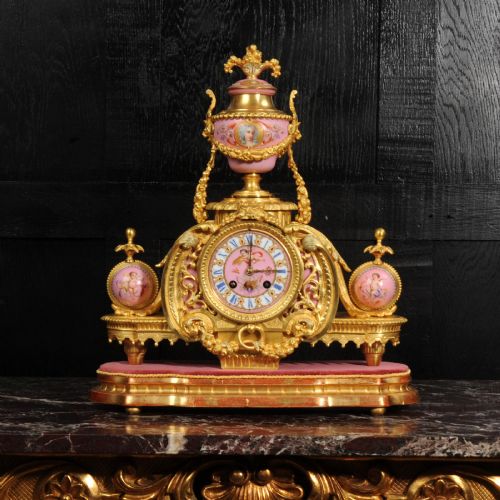
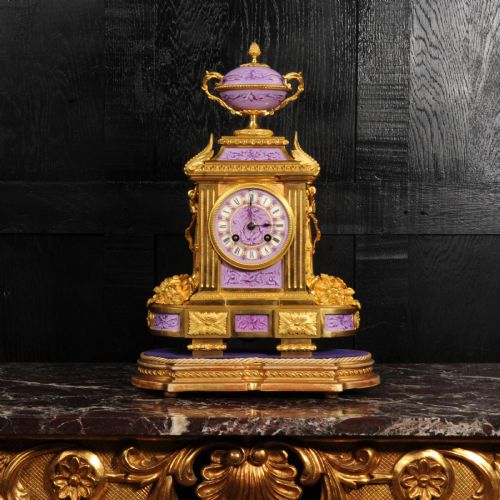
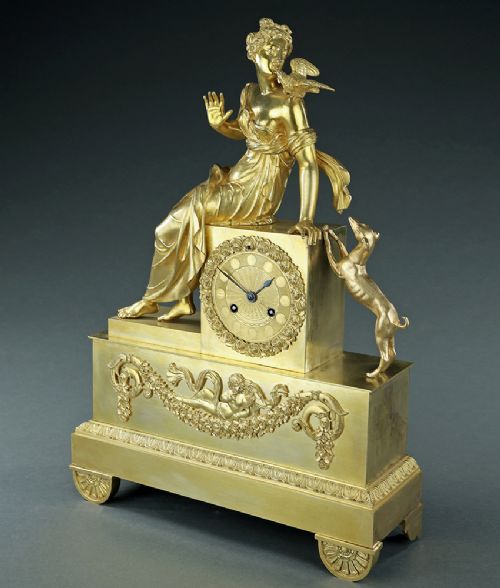
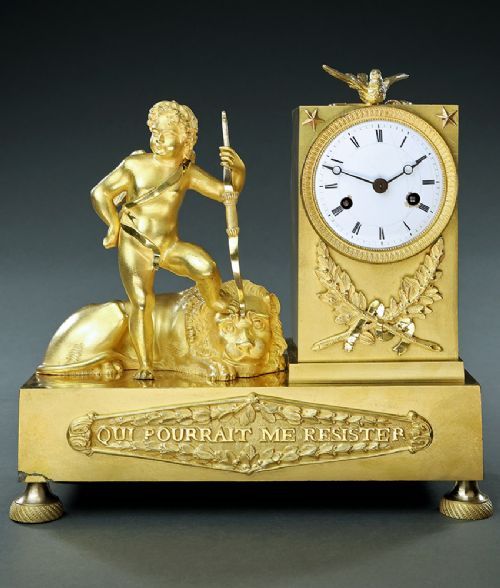
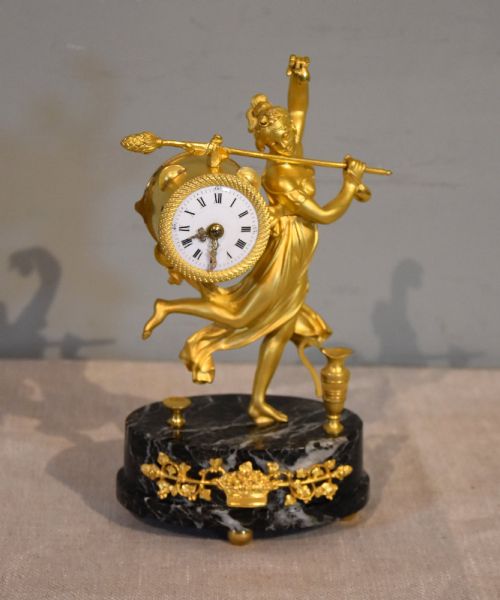
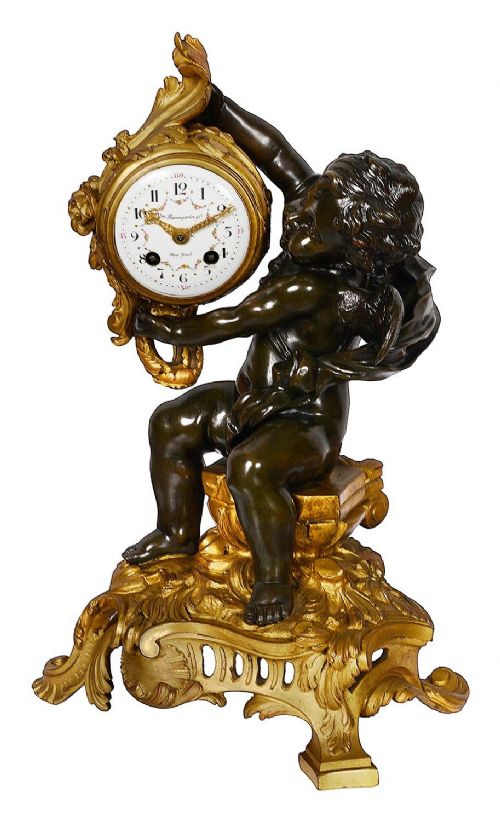
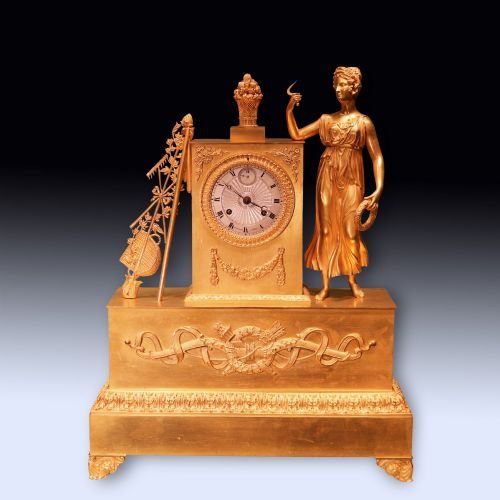
The pieces on this page draw on various revival aesthetics, including French Rococo, Louis XVI, Empire, and Napoleon III styles. Buyers encounter works shaped as classical urns, portico designs, and architectural cases housing intricate mechanical movements.
Makers and clockmakers utilised bronze, brass, porcelain, marble, and glass to construct substantial timepieces that combined utility with ornamental display. The widespread French production during the Victorian era means most surviving examples reflect continental manufacturing methods.
How they were made
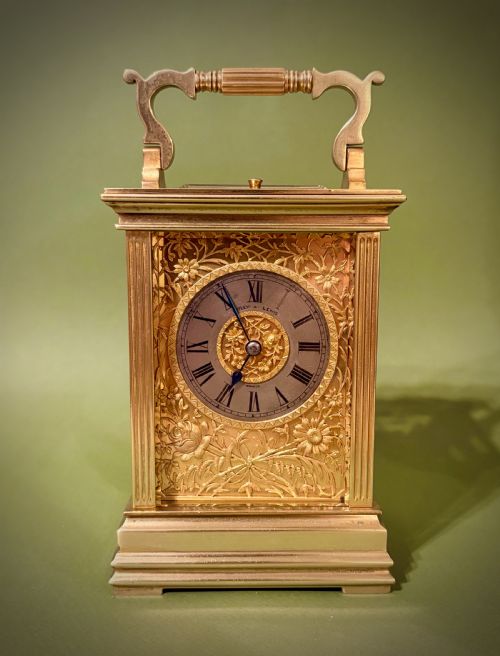
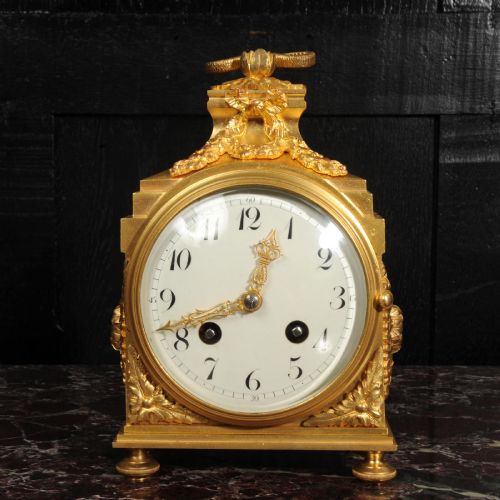
The manufacture of these timepieces relied on bronze or brass cast in detailed moulds before receiving a layer of fine gold gilding, known as ormolu. Artisans chased and burnished the metal surfaces by hand to create contrasting matte and bright finishes.
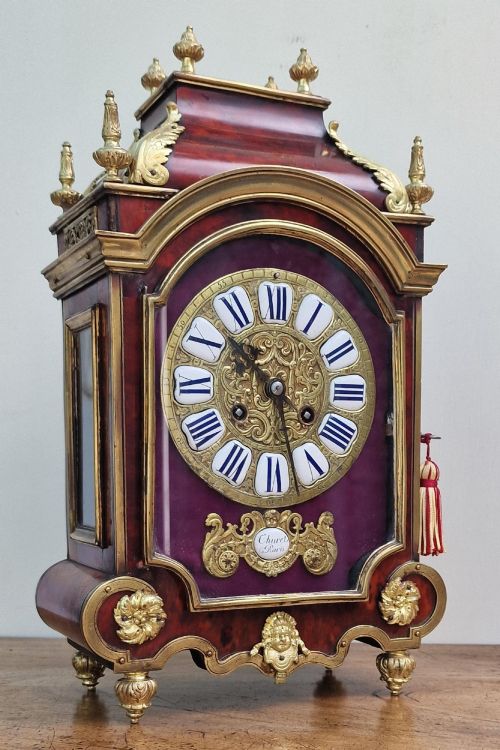
Many clock bodies incorporate contrasting materials such as white or coloured marble, hand-painted Sèvres porcelain panels, and enamel dials with delicate numerical markers. Cabinet makers also applied tortoiseshell and cut crystal to house specialised movements.
The internal gear trains were produced by established Parisian workshops and movement makers, who engineered escapements to drive striking mechanisms and pendulum timekeeping.
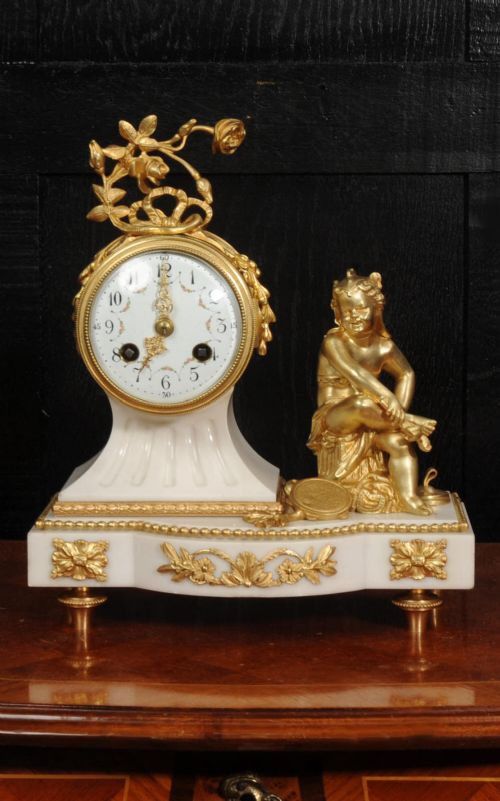
Several clocks on this page feature triumphant cherubs and romantic figures locked in eternal struggles over love and fidelity.
What varies in quality
The standard of a gilded ormolu clock depends heavily on the crispness of the metal casting and the depth of the hand-chasing applied after the fire-gilding process. Superior examples display sharp relief on scrollwork, cherubs, and acanthus leaves rather than soft, rounded edges.
The choice of secondary materials marks distinct tiers of craftsmanship, with hand-painted porcelain panels and genuine marble bases indicating higher-end production. Signed movements by notable Parisian makers also elevate the horological standing of a piece.
Achille Brocot·Japy Freres·Thuret·Canaillor of Paris·Le Roy·John Barwise·PH Mourey
The Gilded Ormolu Clock Glossary
- Ormolu
- A technique of applying finely ground gold-mercury amalgam to bronze, then firing it to drive off the mercury and leave a rich metallic coating. It protects the base metal while providing a distinctive golden lustre.
- Garniture
- A set of matched ornamental objects designed to be displayed together on a mantelpiece, usually comprising a central clock flanked by two matching vases, urns or candelabra.
- Champlevé
- An enamelling technique where troughs or cells are hollowed out of the metal surface and filled with vitreous enamel powder before firing.
- Cartel clock
- A wall-mounted clock featuring an ornate frame made of gilt bronze or carved wood, popular in formal eighteenth and nineteenth-century interiors.
- Fusee
- A conical pulley used in clock and watch movements to maintain equal driving force as the mainspring unwinds.
Gilded Ormolu Clock: Frequently Asked Questions
How do I wind my clock?
Use the appropriate key provided with the movement to turn the winding squares clockwise or anti-clockwise depending on the gear train layout.
Take care not to overwind the mainsprings, stopping as soon as you feel firm resistance to protect the internal components.
Why is my clock not striking?
The striking train often gets out of sequence if the hands are moved backward or if the clock has been transported without securing the pendulum.
Advancing the minute hand slowly past the hour allows the internal rack and snail mechanism to realign itself naturally.
Where should I place an ormolu clock?
Position the piece on a stable, level surface away from direct sunlight, heating vents, and damp exterior walls to protect the gilding and delicate marble or wood cases.
Mantelpieces and sturdy console tables offer the ideal support for heavy bronze and porcelain models.
How do I clean ormolu metal?
Dust the gilded surfaces gently with a dry, soft-bristled brush or a clean microfiber cloth to remove airborne particles without scratching the delicate gold finish.
Avoid using commercial metal polishes, abrasive cloths, or liquid cleaners, as these will strip away the historic ormolu layer entirely.