

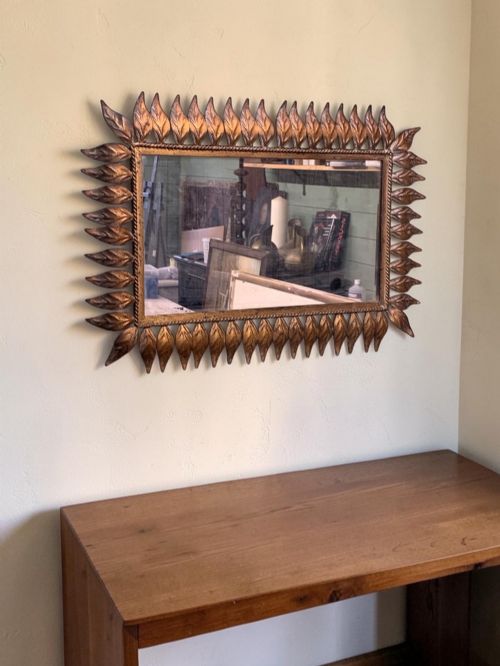
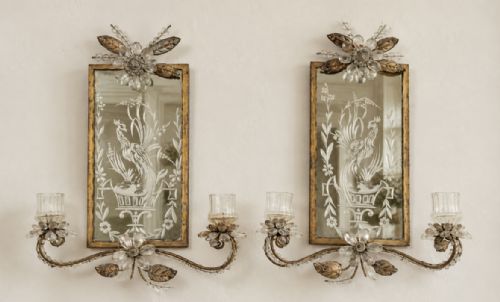


Gilded Metal Wall Mirrors
These gilded metal wall mirrors bring instant light and classical presence to a room, catching the eye with their gleaming metallic frames.
Gilded Metal Wall Mirrors
When you search for gilded metal wall mirrors, you encounter decorative looking glasses framed in brass, cast iron, and gilt metal, often dating from the late nineteenth and early twentieth centuries. These pieces reflect the tastes of the Victorian, Regency, and Napoleon III periods, drawing heavily on French Rococo and Neoclassical Revival styles.
You are most likely to meet wall sconces, girandoles with twin arms, and cushion mirrors featuring distinct metal mounts. The selection ranges from substantial French chateau designs to sturdy cast iron pieces bearing mottos, designed primarily to hang in principal rooms and hallways.
How they were made
The construction of these mirrors relies on sturdy foundations of brass, cast iron, and wood, combined with traditional glass plates. Metalworkers utilised casting and mounting techniques to build decorative frames, applying gilding to create a bright, reflective surface.
Makers integrated mirror glass with detailed metal mounts, frequently incorporating wooden elements and candle arms into girandoles and wall sconces. The combination of heavy cast iron or brass with delicate gilt details demonstrates nineteenth-century metalworking proficiency.
Gilded Metal Wall Mirrors Retail Price Guide 2026
Typical asking prices for gilded metal wall mirrors among the pieces listed under this phrase on Sellingantiques today, from the lower quarter to the upper quarter. They describe what is for sale here now, not the wider market.
What varies in quality
Quality reveals itself in the crispness of the cast metal ornamentation and the depth of the gilding applied to the frame. Finer examples display meticulous attention to detail in the Neoclassical or Rococo motifs, whereas simpler items show softer casting lines and less refined surface finishes.
The integrity of the mirror glass and the stability of the metal mounts further distinguish the tiers of quality. Pieces featuring integrated candle arms or original mirror plates demonstrate superior craftsmanship compared to standard utilitarian looking glasses.
The Gilded Metal Wall Mirrors Glossary
- Girandole
- A decorative wall mirror fitted with branches or arms for holding candles. These fixtures doubled the light in dim Victorian and Edwardian rooms.
- Cushion mirror
- A looking glass featuring a convex or padded frame construction, often accented with metal mounts. This style creates a distinct three-dimensional profile on the wall.
- Gilt metal
- A metal base coated with a thin layer of gold leaf or gilt finish. This technique provides the appearance of solid gold while utilising more accessible base materials.
- Wall sconce
- A light fixture or mirror bracket fixed directly to a wall. In historical interiors, these pieces served to illuminate dark hallways and parlours.
Gilded Metal Wall Mirrors: Frequently Asked Questions
How do I hang a heavy cast iron mirror?
These heavy pieces require robust wall fixings secured directly into masonry or solid wooden studs to support the substantial weight of the metal and glass.
Using appropriate professional brackets ensures the mirror hangs securely without straining the frame or mounts.
What is a girandole mirror?
A girandole is a wall mirror that incorporates one or more candle arms attached directly to the frame.
These arms held candles to reflect additional light around nineteenth-century rooms before the widespread adoption of electricity.
How do I clean a gilt metal frame?
Gilt metal requires very gentle dusting with a soft, dry cloth to avoid disturbing the delicate metallic finish.
Water and chemical cleaners can strip the gilding or damage the surrounding glass, so they must be avoided entirely.
Are these mirrors French or English?
The selection includes both French chateau pieces and English items, often reflecting continental design influences like Rococo and Neoclassical styles.
Maker details and regional casting characteristics help distinguish the origin of individual pieces.