



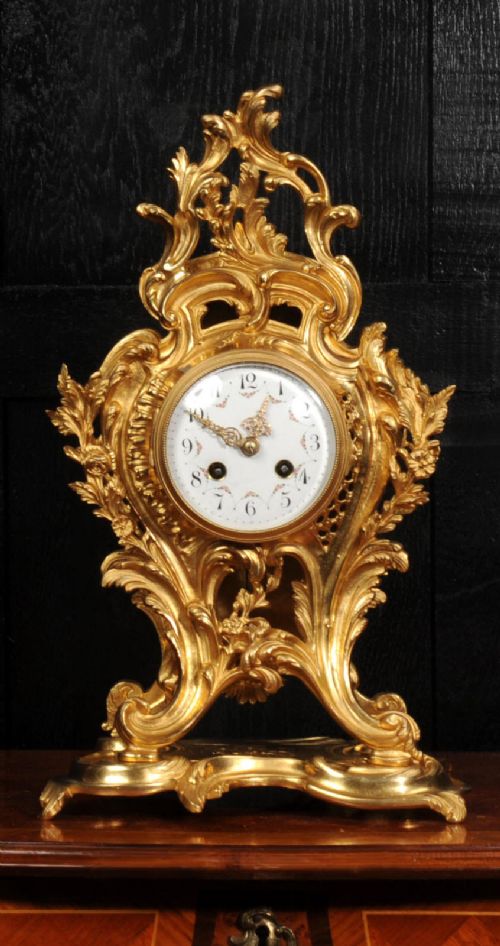


Gilded Metal Clock
These gilded metal clock examples bring nineteenth-century French and English precision into a room with brilliant metalwork and porcelain.
Gilded Metal Clock
A gilded metal clock serves both to tell time and to anchor a mantelpiece, desk, or wall with ornate metalwork. When searching for a gilded metal clock, buyers encounter pieces ranging from substantial Victorian mantel clocks to wall-mounted cartel clocks and multi-piece garniture sets.
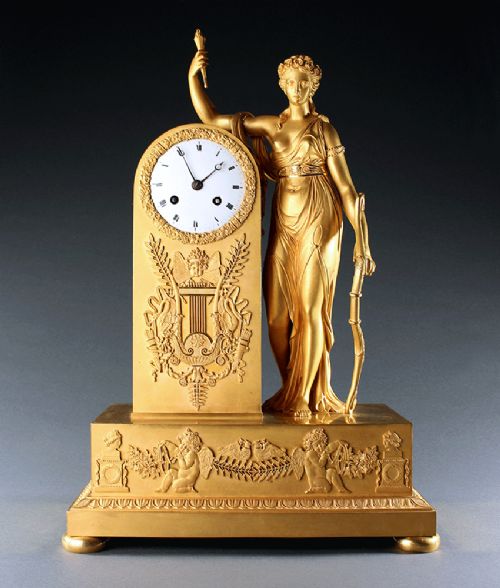
The objects stem predominantly from the nineteenth century, including specific decades such as the 1860s, 1880s, and 1890s, alongside earlier Regency and eighteenth-century examples. Forms vary from figural pieces surmounted by classical figures to architectural portico clocks and turret clock movements.
French revival styles dominate the selection, showing deep roots in Rococo Revival, Louis XVI Neoclassical, and French Rococo designs. Alongside these stand English fusee movements and Victorian Gothic Revival interpretations.
How they were made
Maker workshops built these timepieces using base metals finished with mercury gilding, ormolu, or simpler gilt plating. Artisans cast bronze, brass, and gilt metal into elaborate scrollwork, architectural porticos, and figural mounts.
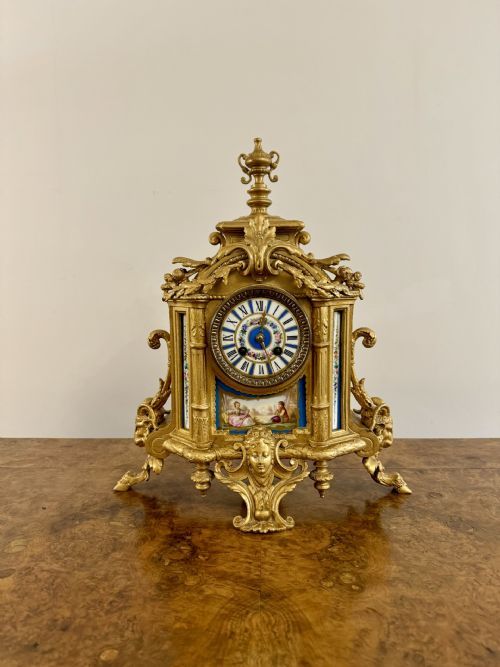
Many examples incorporate contrasting materials like porcelain dial plates and painted panels, white marble bases, and protective glass domes or bezels. Clockmakers integrated complex mechanical movements, including fusee and pendulum systems, behind enamel dials signed by prominent makers.
Gilded Metal Clock Retail Price Guide 2026
Typical asking prices for gilded metal clock among the pieces listed under this phrase on Sellingantiques today, from the lower quarter to the upper quarter. They describe what is for sale here now, not the wider market.
Listings feature periods spanning from the eighteenth century through the late nineteenth century, with strong representation from the 1860s and 1880s.
What varies in quality
The refinement of the cast metal ornamentation separates standard production from exceptional pieces. Superior examples display crisp chasing and deep, even gilding across intricate rococo scrolls and human figures.
The integration of secondary materials defines the tier of the object. High-grade pieces pair finely painted porcelain panels and genuine ormolu with robust, maker-signed mechanical movements rather than simpler stamped brass assemblies.
John Barwise of London·Leroy & Fils·Japy Fils·Bently & Beck London·P.H Mourey
The Gilded Metal Clock Glossary
- Ormolu
- Finely ground high-carat gold applied to a bronze base using a mercury amalgamation process. This historic technique produced a warm, lasting finish seen on high-end French clocks.
- Fusee
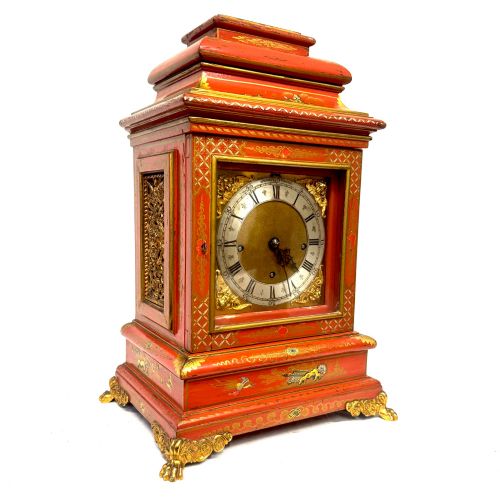
- A conical pulley used in clock movements to maintain even driving tension as the mainspring unwinds. English makers favoured this mechanism for superior timekeeping accuracy.
- Garniture set
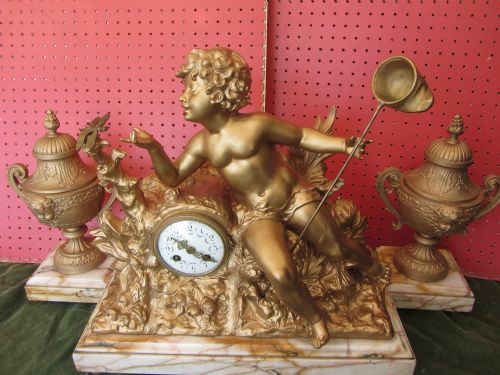
- A mantel clock accompanied by matching side pieces such as vases or candelabra. These matched sets created a balanced decorative scheme on nineteenth-century hearths.
- Cartel clock
- A wall-mounted clock featuring an ornamental frame made of gilt metal or carved wood. These pieces hung directly on parlour walls rather than resting on mantelpieces.
- Portico clock
- A monumental clock designed with architectural columns supporting the movement housing. They often utilised striking bronze and gilt metal construction.
Gilded Metal Clock: Frequently Asked Questions
What is a clock garniture set?
A clock garniture set pairs a central mantel clock with matching decorative side pieces, such as ornate vases or candelabra. Placed together on a mantelpiece, they create a unified decorative arrangement.
These sets were popular in grand nineteenth-century interiors, designed to dominate the visual space of a room. The side pieces echo the materials and revival styles of the main clock.
How do French and English clocks differ?
French clocks from this selection often lean into ornate Rococo and Neoclassical revival styles, utilising elaborate ormolu, gilt metal, and painted porcelain. Their focus frequently includes sculptural figures and rich surface ornamentation.
English clocks in the selection, by contrast, frequently highlight precision mechanical systems like fusee movements created by notable London makers. Their aesthetic tends to balance decorative metalwork with understated architectural restraint.
Where were mantel clocks displayed?
Mantel clocks found their primary home on the fireplace mantelpiece, serving as the visual centrepiece of a reception room or parlour. Their gilded surfaces caught the flickering light of fires and oil lamps.
Beyond the hearth, smaller boudoir clocks sat on dressing tables or desks. Wall-mounted cartel clocks occupied prominent wall spaces in hallways and formal rooms.