
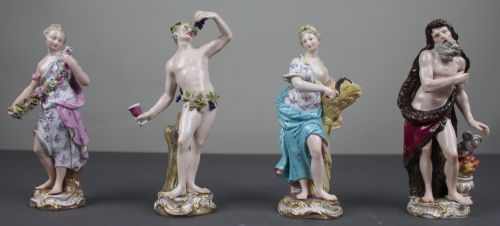


Gilded Meissen Porcelain Statue
A gilded meissen porcelain statue brings courtly eighteenth-century theatre and rich polychrome modelling into a room.
Gilded Meissen Porcelain Statue
A gilded meissen porcelain statue represents European ceramic artistry at its most theatrical, depicting allegorical figures, pastoral lovers, and mythological groups. When searching for a gilded meissen porcelain statue, collectors encounter pieces ranging from delicate eighteenth-century examples to robust nineteenth-century revivals. These works typically take the form of freestanding figurines, pairs, and elaborate figure groups modelled with meticulous detail.
The pieces catalogued here span from the mid-eighteenth century through the Edwardian period, capturing distinct shifts in European taste. Eighteenth-century models share space with nineteenth-century interpretations and related works from factories like Sitzendorf and Samson. Buyers frequently find sets such as the Four Seasons or theatrical pairs depicting street vendors and musicians.
Materials and construction
These pieces are fashioned from hard-paste porcelain, a dense ceramic body fired at high temperatures that accepts intricate moulding and sharp definition. Artisans built up the forms using multiple press-moulds for limbs, drapery, and base elements before hand-assembly with liquid slip. Delicate adjuncts such as lace skirts or floral garlands required painstaking individual modelling by hand.
Surface decoration relies on painted enamel colours combined with applied gold leaf to highlight garments, bases, and rococo scrollwork. The metallic gilding is fused to the hard-paste porcelain surface during secondary low-temperature kiln firings to ensure durability. This combination of vitreous enamel and reflective gold gives each statue its characteristic courtly brilliance.
Materials recorded across these pieces include enamel, gold leaf, and hard-paste porcelain shaped into figurines and figure groups.
Distinguishing quality
The application of gold leaf further separates standard production from exceptional work, with finer statues featuring chased or burnished gilding rather than flat yellow pigment. The complexity of the composition, particularly in multi-figure groups like the Drunken Silenus or seasonal sets, dictates the ambition and skill of the original workshop.
Helena Wolfsohn·Sitzendorf·Samson
The Gilded Meissen Porcelain Statue Glossary
- Hard-paste porcelain
- A true porcelain composed of kaolin and petuntse, fired at very high temperatures to create a vitrified, translucent body. This material forms the durable foundation for Meissen and related European figures.
- Gold leaf
- Beat gold applied to the porcelain surface to create reflective highlights on garments and bases. This precious metal application enhances the theatrical appearance of rococo and neoclassical designs.
- Rococo Revival
- A nineteenth-century design movement that reinterpreted the curving, asymmetrical motifs of the mid-eighteenth century. Figures from this period often feature elaborate scrollwork bases and exuberant ornamentation.
- Model number
- An archival code assigned by a factory to identify a specific sculptural form across multiple production runs. These numbers help attribute figures to particular designers and eras.
Gilded Meissen Porcelain Statue: Frequently Asked Questions
How do I date these figures?
Dating relies on examining the paste, painting style, and secondary characteristics such as base construction and gilding application. Eighteenth-century examples typically show lighter, finer potting and softer enamel palettes compared to later nineteenth-century revivals.
Secondary markers include impressed model numbers and factory marks underneath the glaze. Comparing the modelling sharpness against known factory archives helps confirm the period of manufacture.
What are figure groups?
Figure groups comprise two or more interconnected figures telling a narrative story, unlike single standing statues. These compositions often depict mythological scenes, allegorical representations like the Four Seasons, or pastoral interactions.
Because they required multiple moulds and complex assembly before firing, these groups represent higher ambition from the workshop. Their dynamic arrangements create focal points within a room's display.
Where were they displayed?
Historically, these porcelain figures adorned dining tables as part of elaborate dessert services before transitioning to cabinet display. Wealthy patrons placed them on mantelpieces, console tables, and dedicated tiered brackets to showcase their refinement.
Today, collectors house them in glass-fronted cabinets to protect the delicate enamel and gold leaf. Proper placement avoids direct sunlight, which can fade the polychrome enamels over time.
Are all porcelain figures from Meissen?
Not all figures originate from the Meissen manufactory, even though the name often serves as a generic term for fine antique porcelain statues. Other European factories such as Sitzendorf and Samson produced similar figures inspired by eighteenth-century models.
Examining the paste quality, modelling depth, and secondary factory marks helps distinguish authentic Meissen output from nineteenth-century continental competitors.