

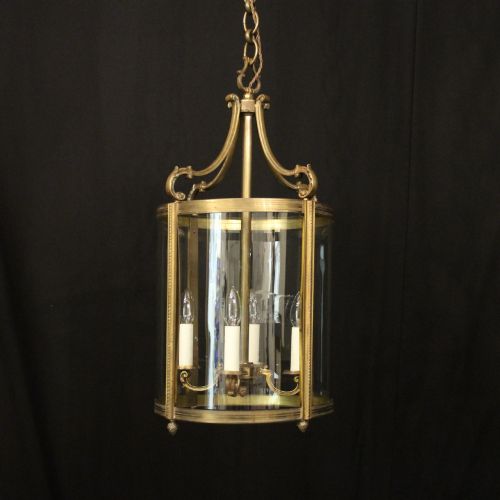
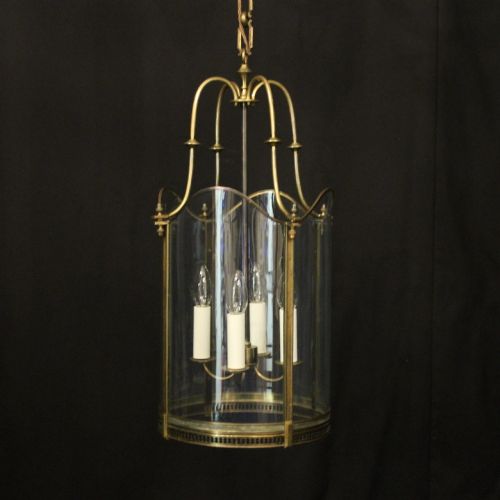
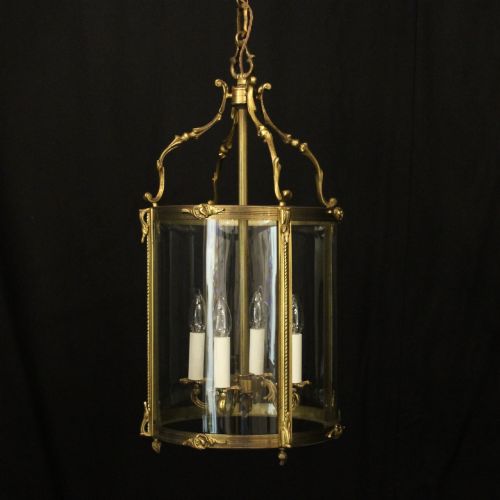
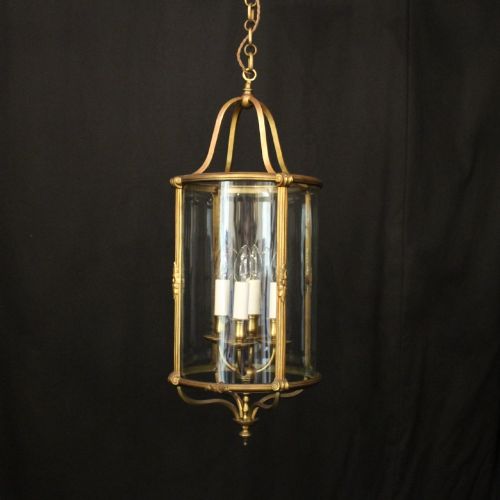
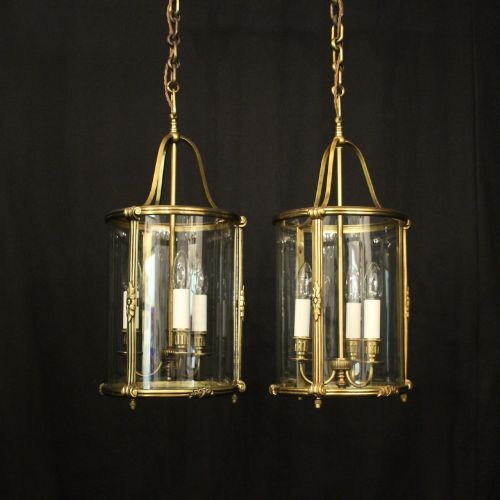
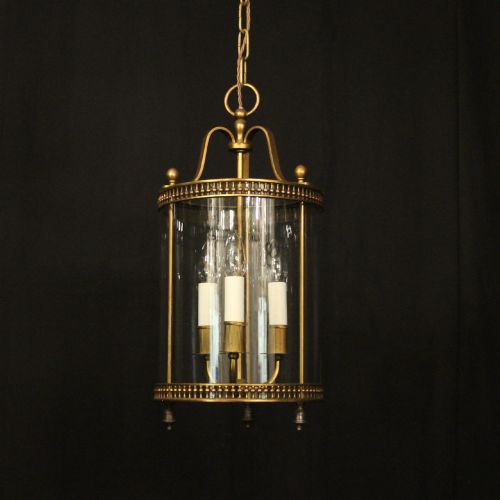
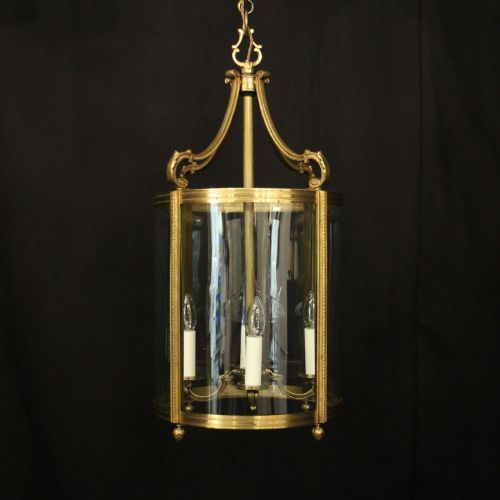

Gilded Lantern Pendant
A gilded lantern pendant brings overhead illumination and ornamental presence to entrance halls, drawing the eye upwards through glass and metal.
Gilded Lantern Pendant
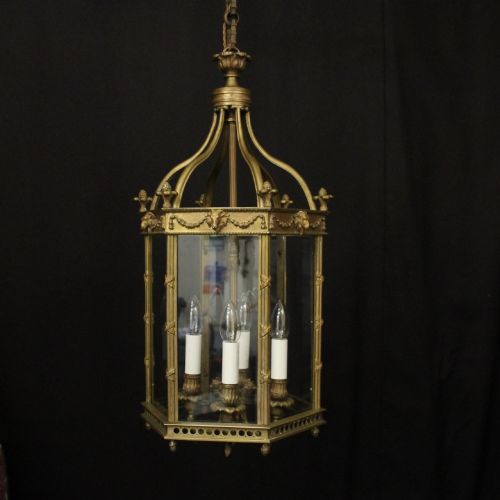
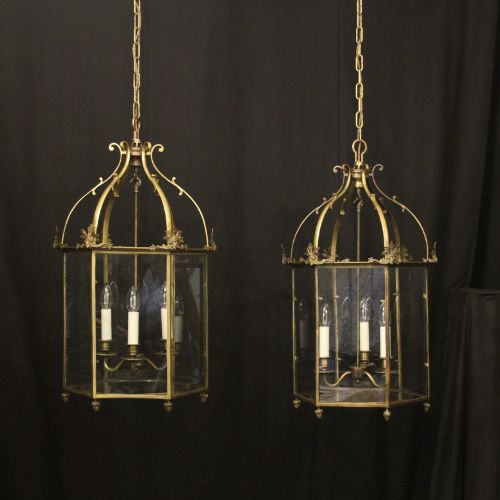
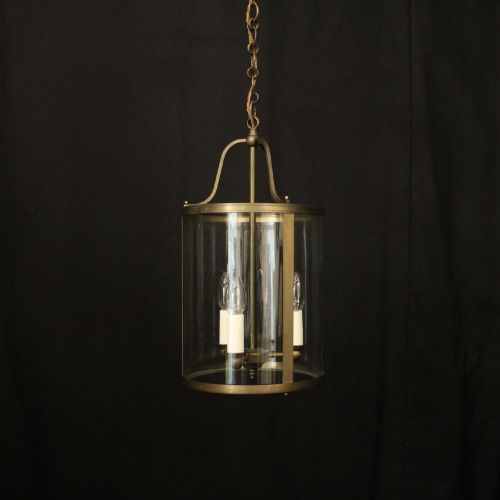
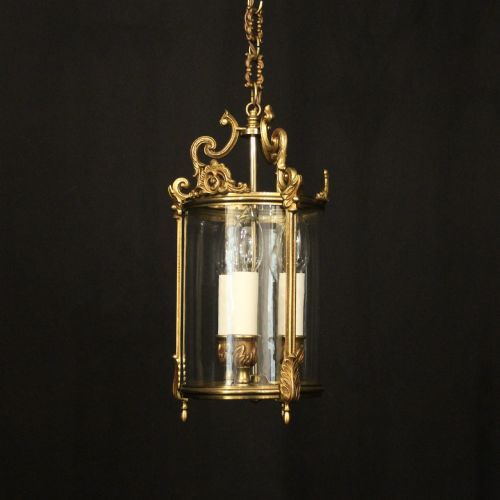
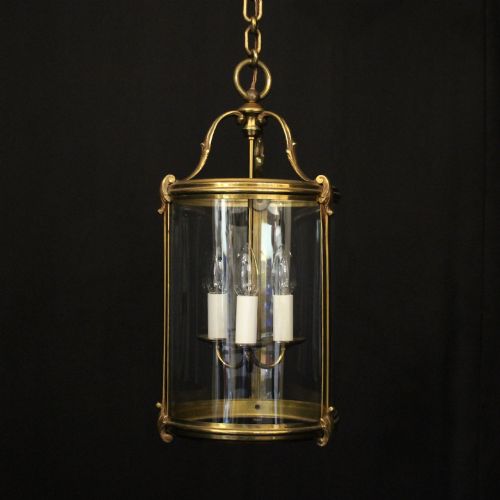
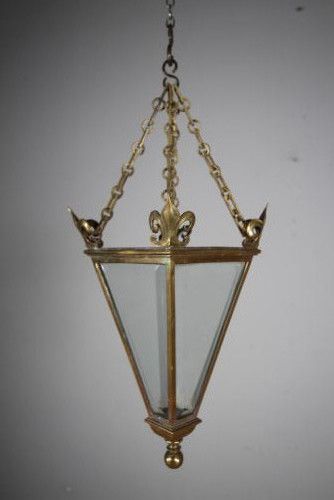
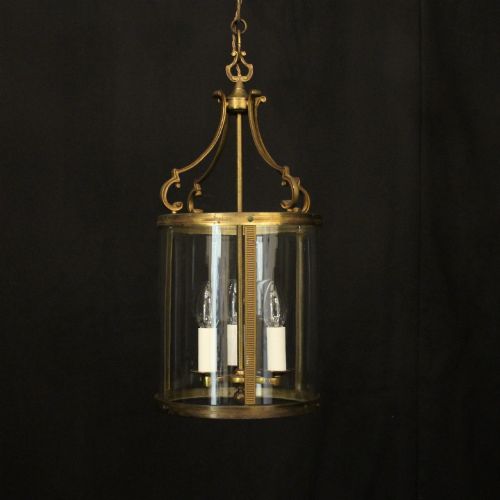
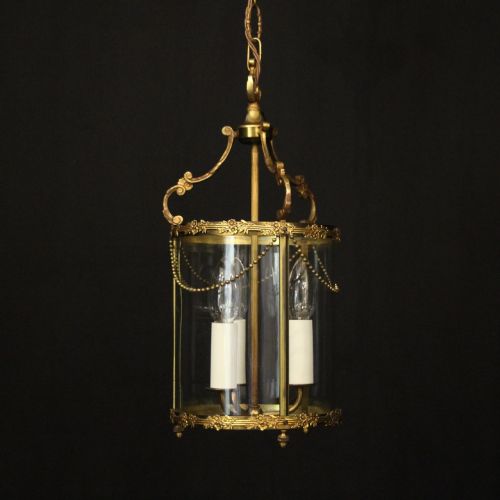
A gilded lantern pendant is an overhead lighting fixture designed primarily for hallways, vestibules, and high ceilings, utilising a metal frame enclosed by glass panels. When searching for a gilded lantern pendant, buyers encounter numerous French fixtures dating from the early twentieth century alongside nineteenth-century English, Venetian, and Florentine examples.
The dominant forms on this page include hall lanterns, convex lanterns, and multi-light pendant lights shaped by French Neoclassical, Louis XVI, and Rococo Revival styles. These pieces function as architectural statements in corridors and stairwells, casting warm light through clear, bevelled, or cut glass panels set within gilded bronze, brass, or giltwood frames.
Materials and construction methods
Makers constructed these hanging fixtures using cast bronze, brass, or carved wood, applying gold leaf or gilding to the metal and wooden surfaces to create a reflective metallic finish. Glass panels - frequently convex, bevelled, or cut - were fitted into the metal frameworks to enclose the internal bulb holders or candle arms.
Metal components show techniques of casting, chasing, and mounting, while wooden variations involve hand-carving in giltwood and carved giltwood styles. Frames incorporate architectural details such as scrolling foliage, crests, and glazed panes secured by internal metal glazing bars.
Gilded Lantern Pendant Retail Price Guide 2026
Typical asking prices for gilded lantern pendant among the pieces listed under this phrase on Sellingantiques today, from the lower quarter to the upper quarter. They describe what is for sale here now, not the wider market.
Listings span periods from the 1850s through the 1930s, featuring glass, gilded bronze, gilt brass, and carved giltwood.
Factors of craftsmanship and distinction
Quality in these hanging fixtures rests upon the crispness of the cast bronze or brass ornament, the depth and integrity of the original gilding or gold leaf, and the weight of the metal framework. Finer examples display hand-chased enrichment on the mounts and substantial cast elements rather than thin stamped sheet metal.
The glass elements further separate categories of work, with heavy bevelled, convex, or cut glass panels showing superior optical clarity and precise fitting compared to flat, thin panes. The structural integrity of the suspension loop, internal candle clusters, and original framing determines the overall standard of the pendant.
The Gilded Lantern Pendant Glossary
- Gilded bronze
- Metal cast into decorative shapes and coated with a thin layer of gold or gold leaf. This material provides durability and a rich reflective surface for the lantern frame.
- Convex glass
- Curved glass panels fitted into the sides of the lantern. This shape refracts light outward and magnifies the visual presence of the internal lights.
- Bevelled glass
- Glass panes with angled edges cut around the perimeter. The angled border catches and disperses light passing through the lantern walls.
- Ormolu
- Finely chased and gilt bronze ornament applied to decorative objects and lighting. The term denotes high-status French metalwork from various periods.
- Giltwood
- Timber carved and surfaced with gold leaf. This material appears on Venetian and Florentine hanging lanterns.
Gilded Lantern Pendant: Frequently Asked Questions
Where should a gilded lantern pendant hang?
These hanging fixtures suit entrance halls, high-ceilinged vestibules, and stairwells where their vertical proportions and glass panels can be viewed from multiple angles. They provide both ambient and directional illumination in transitional spaces.
Ensure adequate clearance beneath the lowest point of the pendant for foot traffic, particularly in narrow corridors or above stair landings.
How do I determine the period of a lantern?
Dating relies on stylistic indicators such as the symmetry of French Louis XVI designs versus the ornate curves of Rococo Revival or the Gothic tracery found in nineteenth-century English examples. Material combinations, casting techniques, and glass types also point toward specific decades from the nineteenth and early twentieth centuries.
Inspect the construction joints, wiring channels if altered, and the methods used to secure the glass panels into the metal frame.
What type of glass is common in these pendants?
Listings feature plain glass, bevelled panels, convex glass that bows outward, and cut glass crystals. These transparent or faceted surfaces protect the internal light source while diffusing the illumination across the room.
Convex and bevelled panels require careful cleaning to preserve the clarity of the glass and the reflection from the surrounding gilded frame.
How do French and English lanterns differ?
French examples on this page frequently display Neoclassical, Louis XVI, or Rococo styling executed in gilded bronze or brass with convex glass. English lanterns from the nineteenth century often incorporate Gothic revival elements or architectural brass frames.
Comparing the decorative motifs on the crown and corners reveals the regional aesthetic preferences of the makers.