


Gilded French Trinket Box
A gilded french trinket box sits on a dressing table to hold small treasures, combining metalwork and glass, porcelain, or leather.
Gilded French Trinket Box
When you search for a gilded french trinket box, you encounter lidded caskets, small bowls, and vanity containers designed to hold rings, pins, and small keepsakes. These decorative containers originate from French workshops across the eighteenth, nineteenth, and early twentieth centuries, spanning periods from the reign of Louis styles through to the Belle Epoque and Art Nouveau.
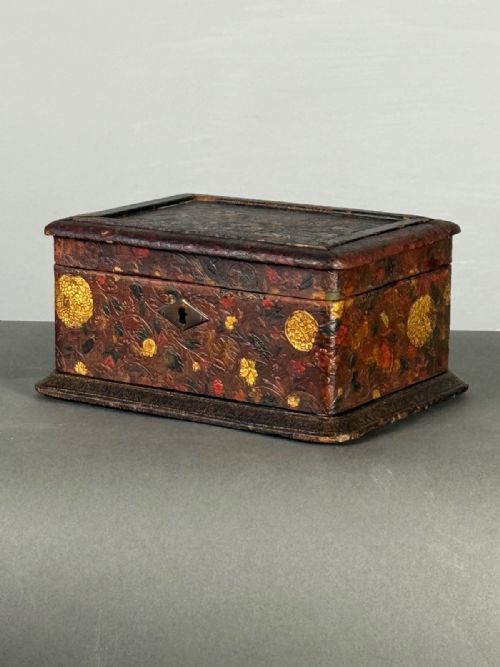
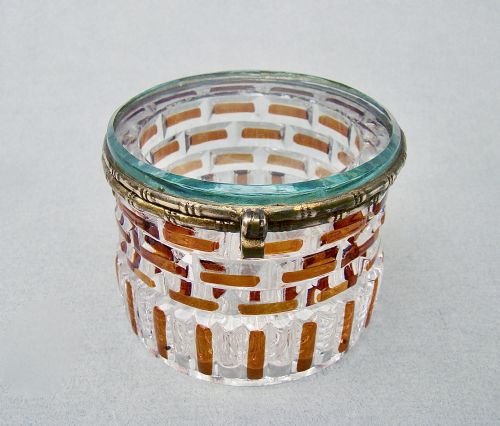
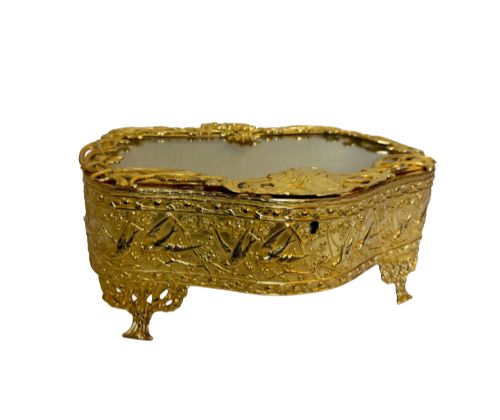
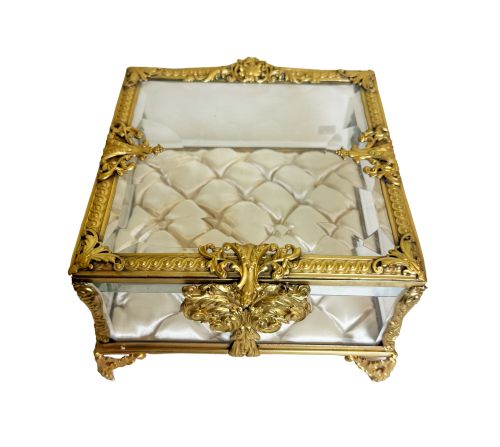
The pieces on this page take various forms, including crystal cut glass jars mounted in metal frames, hand-painted porcelain vessels, and leather-covered boxes adorned with gold detailing. Makers such as Susse Freres and Edme Samson produced refined examples, alongside anonymous workshops that created heavy bronze caskets and vermeil silver covered bowls.
Revival styles dominate the selection, with French Rococo and Neoclassical motifs appearing frequently on ormolu mounts and cast bronze frames. Buyers find both intimate pill boxes intended for waistcoats and larger jewellery caskets designed for a lady's boudoir.
What Varies in Quality
The quality of a gilded french trinket box depends heavily on the crispness of the metal casting and the depth of the gilding. Finer pieces display sharply chased details in the bronze or ormolu mounts, whereas lesser examples show softer, blurred edges from worn production moulds.
The integration between materials separates standard production from superior craftsmanship, particularly in how securely glass panels fit into bronze frames and how smoothly hinges operate. Hand-painted porcelain panels and miniature portraits executed with fine brushwork elevate a piece above simpler transfer-printed decorations.
Listings feature items spanning the 18th Century through to 1910, utilising materials like porcelain, cut crystal, and gilt bronze.
Susse Freres Paris·Edme Samson Of Paris·Limoges
The Gilded French Trinket Box Glossary
- Ormolu
- Gilded bronze, where a mercury and gold amalgam is applied to cast bronze and heated to leave a durable golden layer. This technique created the bright finish seen on many nineteenth-century mounts.
- Bonbonniere
- A small decorative box originally intended to hold sweets or confectionery. Collectors now use the term for small porcelain and enamel containers of similar scale.
- Vermeil
- Sterling silver plated with a heavy layer of gold. It provides the weight of silver with the warmth of gold.
- Electro-form
- A manufacturing process using electroplating to deposit metal onto a form to create hollow items. This technique allowed makers to produce intricate metal casings for boxes in the later nineteenth century.
- Baccarat
- A famous French glassworks known for high-quality crystal production. Pieces attributed to them feature heavy, clear glass with precise cutting.
Gilded French Trinket Box: Frequently Asked Questions
How do I date a gilded french trinket box?
Dating relies on stylistic clues like Rococo revival scrolls or Art Nouveau organic lines, combined with manufacturing methods such as casting quality and hinge construction.
Markings on the base, porcelain factory stamps, or metal signatures also help narrow down the decade of production.
What were these boxes used for originally?
These containers held precious items like rings, brooches, hairpins, and small personal documents on dressing tables.
Smaller versions were designed as pill boxes or trinket holders to be carried in pockets or kept in travel bags.
How do I care for antique gilt metal?
Gilt surfaces require gentle dusting with a soft, dry cloth to prevent damage to the delicate gold layer.
Avoid chemical polishes entirely, as they strip away the thin gold leaf or ormolu finish over time.
Are all these boxes made in France?
The stylistic influence and workshops associated with these pieces are predominantly French, reflecting the major manufacturing centres of Paris and Limoges.
Some exported components or inspired designs appeared across Europe, but the core aesthetic remains distinctly French.