

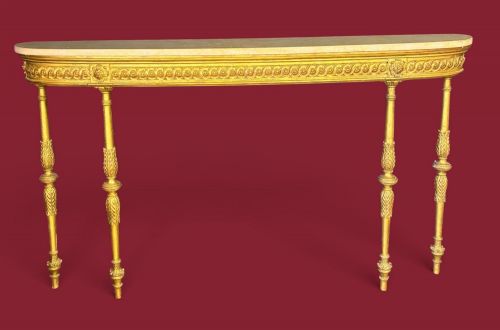


Gilded French Hall Table
A gilded french hall table brings ornate Continental character to an entranceway, combining carved wood and polished stone.
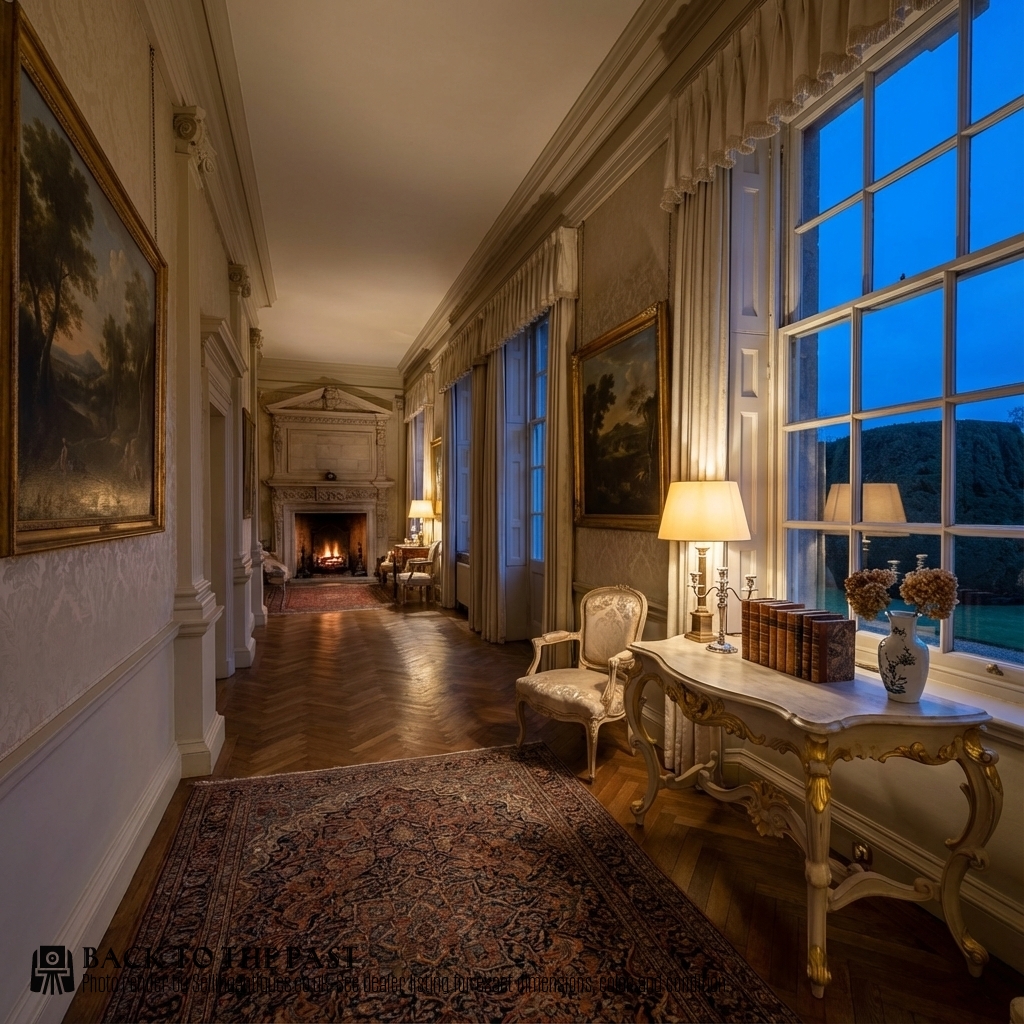
Gilded French Hall Table
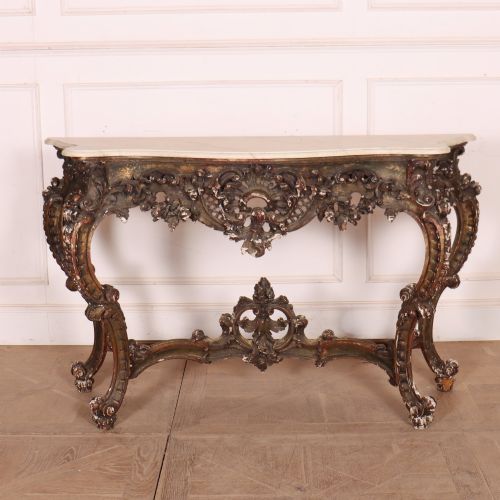
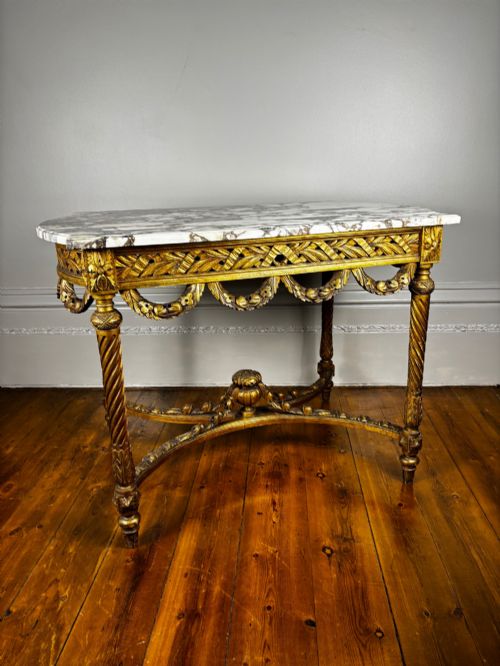
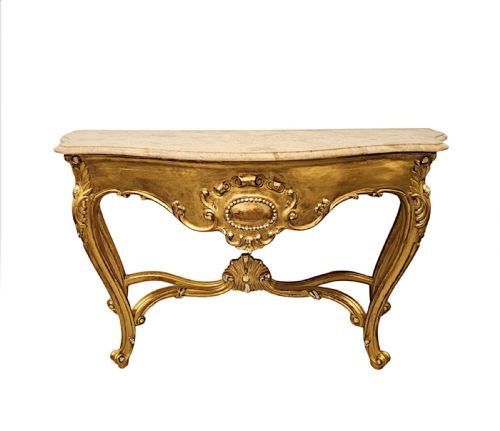
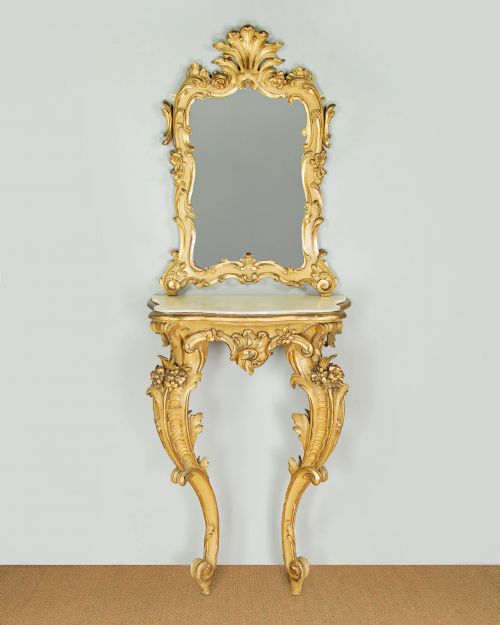
A gilded french hall table typically manifests as a console or side table designed to stand against a wall, frequently accompanied by a matching pier mirror. These pieces originate across the eighteenth, nineteenth, and early twentieth centuries, reflecting enduring design revivals.
The forms span serpentine fronts, half-moon shapes, and rectilinear structures in the Rococo and Neoclassical styles. Most examples integrate a heavy marble top resting upon a heavily carved wooden frame.
Originating in French chateaux and formal salons, these tables suit grand hallways and reception spaces where decorative impact matters. The dominant aesthetic draws on Louis periods, bringing dramatic curves and gilt surfaces to domestic interiors.
How they were made
Makers shaped the timber frames from wood, applying gesso to smooth the surfaces before laying down gold leaf or paint. Carved details such as scrolls, foliage, and figures took shape by hand prior to gilding.
Materials across the selection consistently pair carved wood, gesso, and gold leaf with heavy marble tops.
What varies in quality
The crispness and depth of the hand-carved woodwork dictate the visual distinction of a piece, separating fluid, deeply undercut ornamentation from shallow, mechanical moulding. Superior execution shows in the precision of joints and the naturalistic flow of Rococo or Neoclassical motifs.
The application of gold leaf and the preservation of original painted or gilded surfaces determine the integrity of the finish. High-tier examples retain harmonious patination on both the wooden framework and the heavy marble top.
The Gilded French Hall Table Glossary
- Console table
- A wall table supported by consoles or legs, designed to stand against a vertical surface rather than freestanding. These tables often anchor an entrance hall or living space beneath a mirror.
- Giltwood
- Timber coated with gold leaf over a prepared gesso ground. This technique creates a brilliant metallic surface that catches the light in formal rooms.
- Gesso
- A plaster mixture applied to wood to create a smooth surface for carving and gilding. It allows crisp decorative details to be modelled before applying gold leaf.
- Serpentine outline
- A furniture edge curved in a wave shape, convex at the centre and concave at the ends. This contour adds movement and elegance to console tables.
- Pier mirror
- A tall mirror designed to hang on the pier wall between windows, frequently paired directly with a console table beneath it.
Gilded French Hall Table: Frequently Asked Questions
Where do you put a hall table?
These tables belong in entrance halls, corridors, and formal reception rooms where their narrow profiles allow them to sit flush against a wall.
Because they frequently feature finished backs or anchor beneath matching mirrors, positioning them centrally in a hallway creates an immediate focal point upon entry.
How do you clean a marble top?
Maintenance requires gentle wiping with a damp cloth and mild soap, avoiding acidic cleaning agents that etch the polished stone surface.
Regular dusting keeps the marble and the surrounding giltwood frame protected from accumulation without risking the historic finish.
What is the difference between Rococo and Neoclassical styles?
Rococo designs emphasise asymmetrical scrolls, C-curves, naturalistic foliage, and dynamic movement across the carved wooden frame.
Neoclassical pieces shift toward symmetry, straight lines, classical architectural motifs, and restrained ornamentation derived from ancient Greek and Roman art.
Are these tables freestanding?
Console tables are designed to stand against a wall and frequently require wall fixings for stability due to the heavy marble tops.
Centre tables, by contrast, are constructed to stand freely in the middle of a room, finished symmetrically on all four sides.