

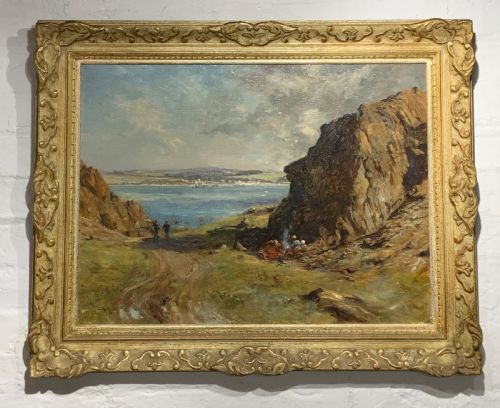
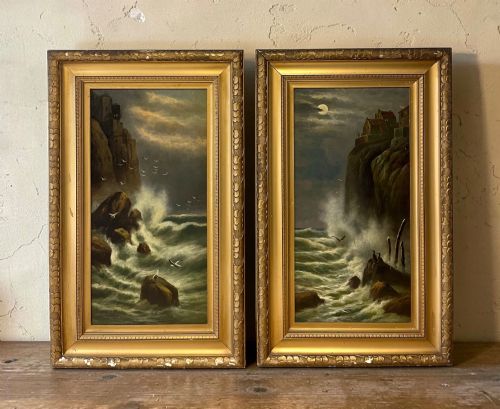
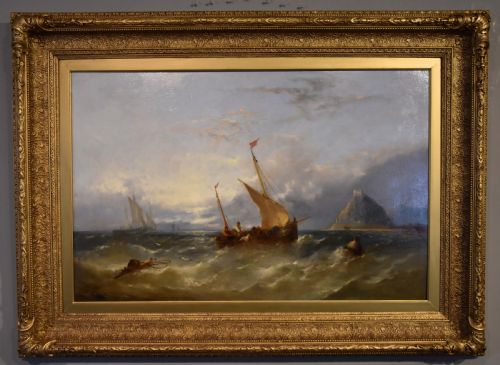


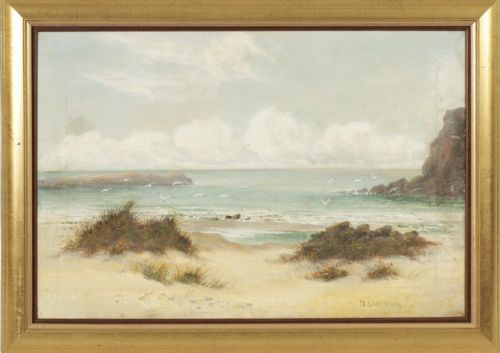


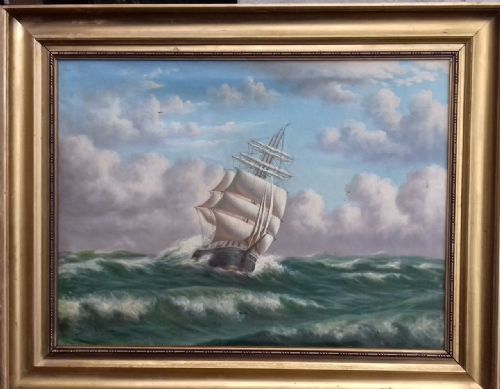
Gilded Frame Sea Landscape
A gilded frame sea landscape brings the movement of nineteenth-century tides and shores directly into a room.
Gilded Frame Sea Landscape
A gilded frame sea landscape captures maritime views, coastal shores, and shipping scenes from the nineteenth and early twentieth centuries. These works record coastal life, shipwrecks, and fishing vessels rendered in oil on canvas, board, or watercolour on paper.
Buyers frequently meet Victorian marine art and British or French impressionist coastal works on this page. Subjects range from tranquil Cornish mounts and Yorkshire shores to dramatic Dutch coastal shipping and Normandy beaches.
How they were made
Artists painted these marine scenes primarily using oil on canvas, oil on board, or watercolour on paper. Canvas and board supports provided the rigidity required for heavier oil applications, while paper suited detailed watercolour studies.
Frames utilise wood and gesso, finished with gold leaf or gilt wood to create the bright gilded surface surrounding each painting. Moulded gesso ornaments applied to wooden mouldings formed the traditional decorative patterns of the period.
Gilded Frame Sea Landscape Retail Price Guide 2026
Typical asking prices for gilded frame sea landscape among the pieces listed under this phrase on Sellingantiques today, from the lower quarter to the upper quarter. They describe what is for sale here now, not the wider market.
Listings feature works from the nineteenth century through to nineteen thirty, utilising oil and watercolour.
What varies in quality
Quality rests in the precision of brushwork and the handling of atmospheric light over water. Stronger examples convey movement in waves and accurate vessel rigging, whereas weaker pieces rely on formulaic repetition.
The integrity of the original gilt wood and gesso frame influences the overall standard. Frames retaining their original gilding without heavy modern restoration elevate the complete artwork.
William Henry Williamson·John McDougal·Claude Thomas Stanfield Moore·Thomas Rose Miles·Thomas Bush Hardy·William Langley·Eugene Boudin·Robert Farren·Daniel Sherrin·Charles Martin Powell
The Gilded Frame Sea Landscape Glossary
- Gesso
- A plaster mixture applied to wood frames before gilding. This substance creates a smooth, carved surface that accepts gold leaf.
- Gilt Wood
- Wood treated with gold leaf or gold paint. This finish provides the characteristic metallic brilliance seen around nineteenth-century paintings.
- Marine Art
- Artwork depicting ships, sea views, and coastal locations. This genre encompasses both calm harbour scenes and dramatic maritime disasters.
- Watercolour
- A paint consisting of pigment suspended in a water-soluble vehicle. Artists applied this medium to paper for lighter coastal studies.
Gilded Frame Sea Landscape: Frequently Asked Questions
What subjects appear in these paintings?
These works depict maritime activities, fishing boats, shipwrecks, and coastal towns. Scenes range from British shores to Dutch coastal waters and French beaches.
Artists focused on the interaction between light, sea, and human endeavour along the coastline.
How do I date a sea landscape?
Dating relies on the painting style, costume details of figures on the shore, and the construction methods of the frame. Nineteenth-century and early twentieth-century works often carry signatures or exhibition labels on the reverse.
Victorian marine art typically displays specific riggings and vessel types attributable to precise decades.
Where were these framed artworks displayed?
Owners originally hung these pieces in nineteenth-century drawing rooms and parlours to display maritime interests. The gilt frames were designed to catch domestic lamplight and daylight.
Today, they suit both traditional studies and contemporary living spaces.
Are watercolours different from oil paintings?
Watercolours utilise paper supports and transparent pigments, resulting in lighter, more delicate coastal studies. Oil paintings use canvas or board, allowing for thicker paint layers and deeper textures.
Both mediums were common across the Victorian period for capturing marine subjects.