


Gilded Floral Teacup
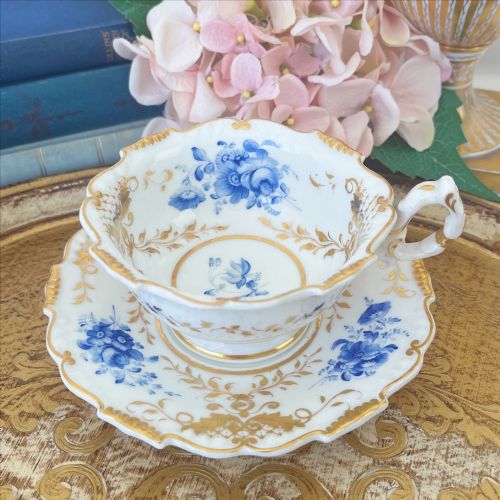
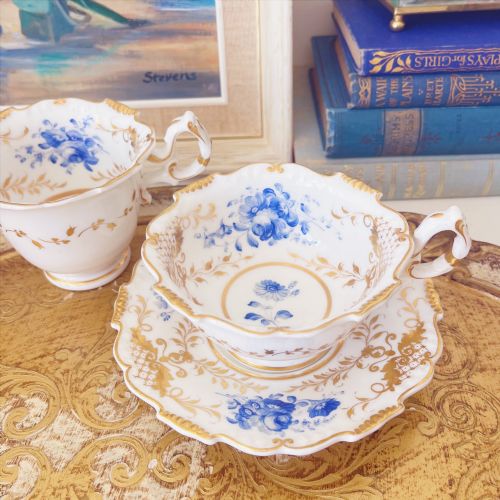
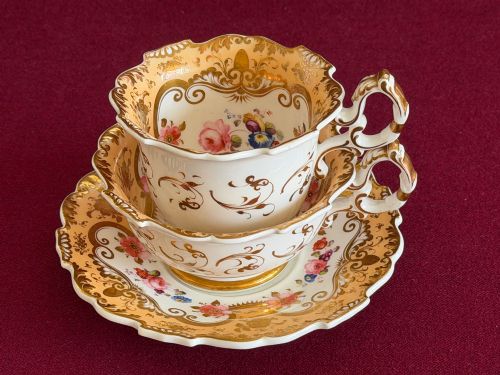
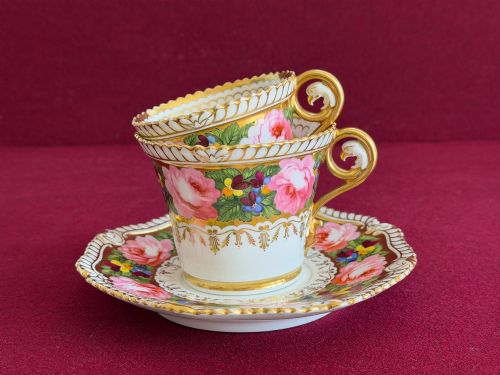
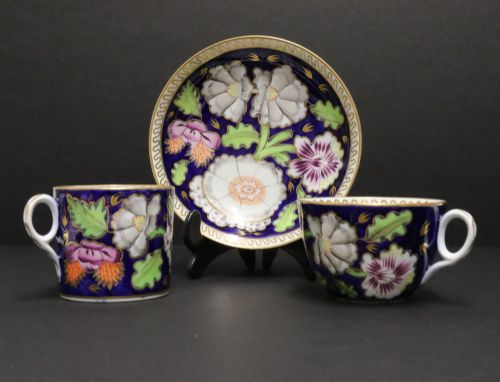
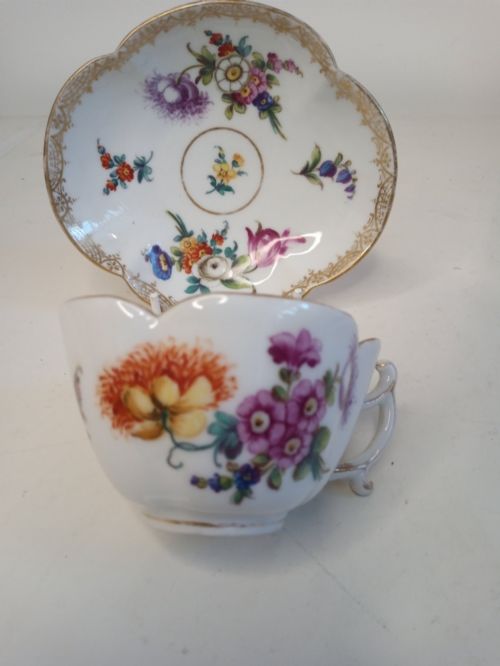
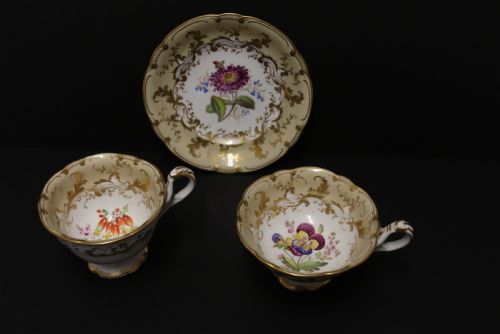
These gilded floral teacup examples bring hand-painted botanicals and gold leaf together across Georgian, Regency, and Victorian periods.
Gilded Floral Teacup
A gilded floral teacup brings together porcelain, bone china, and hand-painted botanical motifs framed by gold leaf. When searching for a gilded floral teacup, buyers encounter cabinet cups, trios, and larger tea sets spanning the 18th century to the 1930s.
The pieces on this page emerge from distinct eras including the Regency, Victorian, and Edwardian periods. Forms range from solitary demitasse cups to complete tea services and breakfast sets.
English factories dominate the selection, alongside continental makers such as Hirsch Dresden and KPM. Buyers frequently find tea sets and cabinet cups ornamented with enamel and gilt.
What varies in quality
The crispness of the hand-painted botanical details and the precision of the enamel work distinguish the finer examples from simpler factory output. Superior pieces often feature raised gilding and carefully burnished gold leaf rather than flat gilt lines.
The weight and translucency of the porcelain or bone china also separate standard domestic wares from high-status cabinet cups and specialised trios. Maker attribution, such as work from Worcester or Coalport, further defines the standing of individual pieces.
Object forms span individual cabinet cups, trios, breakfast sets, and larger tea services.
H & R Daniel·Chamberlain Worcester·Newhall porcelain·Royal Worcester·Coalport·Wileman Foley Shelley·Hirsch Dresden·KPM·Davenport
The Gilded Floral Teacup Glossary
- Trio
- A matched set consisting of a teacup, a coffee cup, and a saucer. These configurations appear frequently in Regency and 19th-century English ceramics.
- Cabinet Cup
- An ornamental cup and saucer intended for display in a cabinet rather than daily use. These often exhibit superior hand-painting and elaborate gilding.
- Gilt
- A thin layer of gold applied to the surface of the porcelain. This material highlights rims, handles, and painted motifs.
- Demitasse
- A small cup used for serving strong black coffee. They appear in later 19th-century and 20th-century listings.
- Bone China
- A type of soft-paste porcelain incorporating bone ash. It provides a bright white body and high translucency.
Gilded Floral Teacup: Frequently Asked Questions
How do I identify a Regency teacup?
Regency teacups often feature distinctive handle shapes, delicate footrings, and specific porcelain bodies associated with early 19th-century English makers.
Examination of the baseline potting style and pattern numbering helps connect a piece to this era.
What is a tea service set?
A tea service comprises multiple matching components for serving tea, which can include teacups, saucers, teapots, and ancillary vessels.
These comprehensive sets allow collectors to acquire a cohesive grouping from a single period or maker.
How do I care for antique gilded cups?
Antique cups with gold leaf and enamel require gentle hand washing in warm water without abrasive cleaners.
Avoiding dishwashers preserves the delicate hand-painted floral details and prevents the gilding from wearing away.
What makes a cabinet cup different?
Cabinet cups were produced primarily for display within collector cabinets rather than for active dining use.
Consequently, they frequently display more intricate hand-painted subjects and heavier application of gold gilding.