


Gilded Floral Cabinet
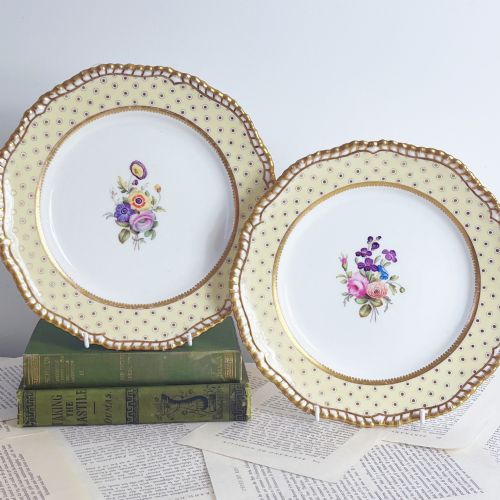
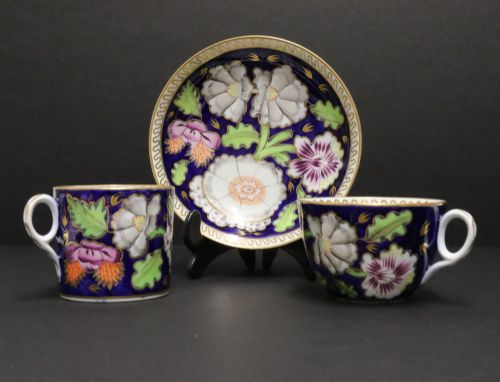
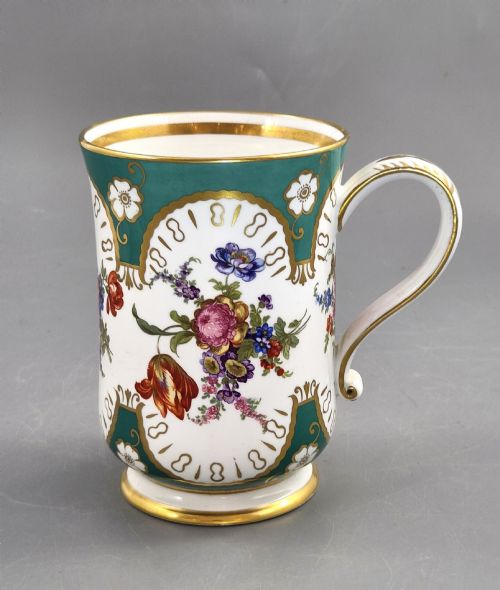
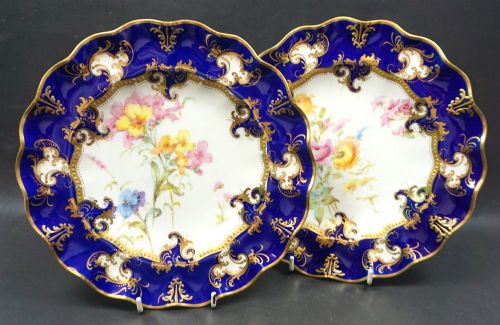
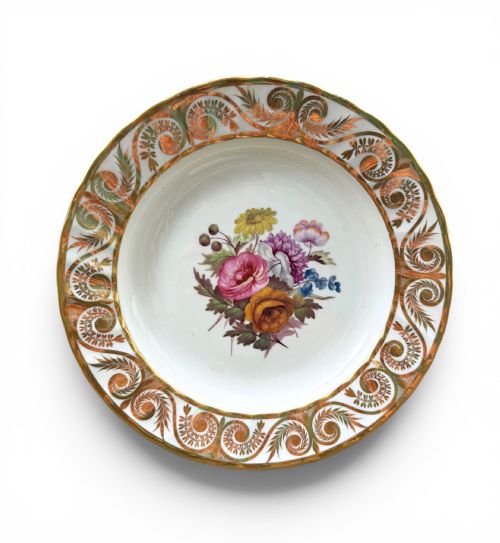
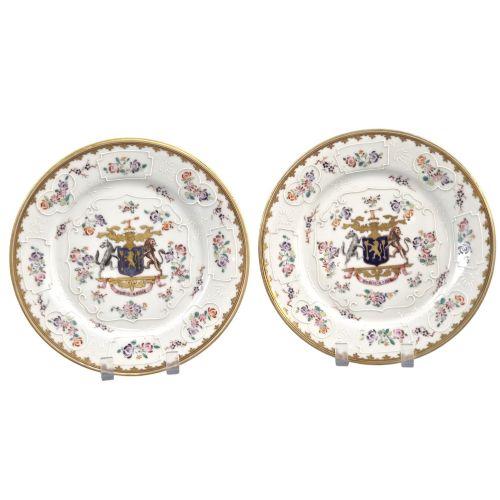
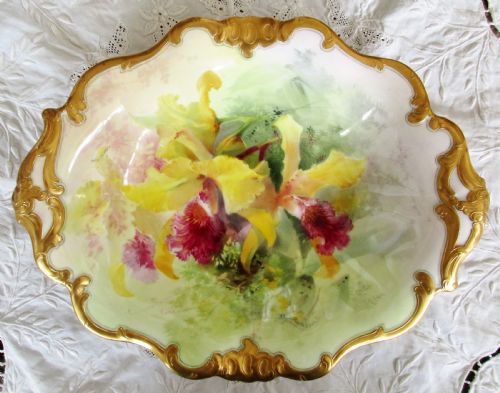
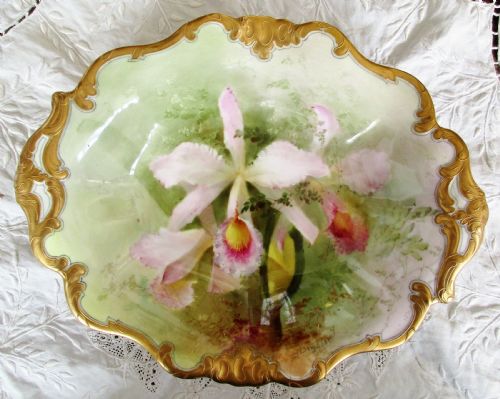
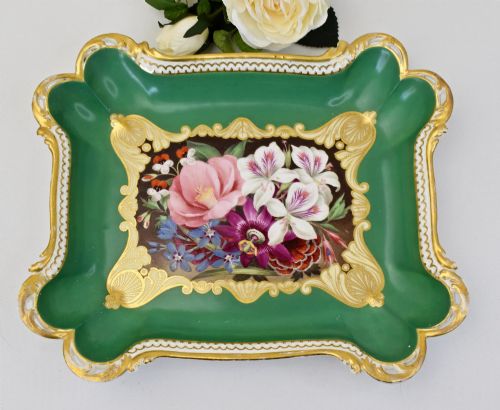
These gilded floral cabinet pieces span delicate porcelain plates and decorative dishes adorned with gold leaf and hand-painted botanicals.
Gilded Floral Cabinet
A buyer searching for a gilded floral cabinet item typically encounters nineteenth-century porcelain plates, dishes, and trios designed for display rather than everyday dining.
The selection here draws heavily from English and continental factories, ranging from Regency Minton and Coalport to Victorian Worcester and French porcelain.
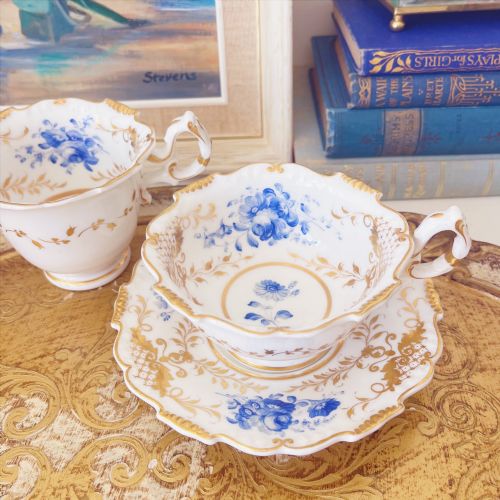
Forms include cabinet plates, serving dishes, and teacups, often painted with botanical subjects and enriched with gilt borders.
Materials and technique
Factories utilised hard-paste porcelain, bone china, and enamel, shaping them into plates, dishes, and vessels before hand-painting floral subjects.
Gold leaf, gilt, and gilding were applied by hand to rims, handles, and borders, then fired to achieve a durable metallic finish.
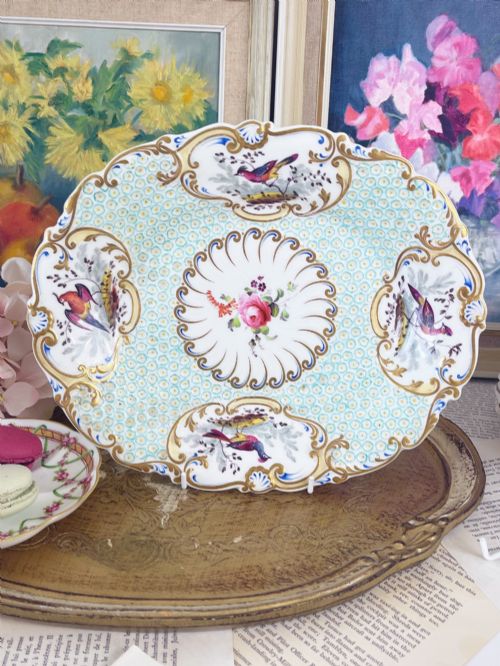
Skilled painters rendered botanical studies and birds directly onto the glazed ceramic surface.
The listings span porcelain and bone china from the Georgian, Regency, and Victorian periods, featuring gold leaf and enamel decoration.
Judging quality
The refinement of the hand-painted botanical details and the precision of the gilding set superior items apart from simpler production.
Pieces bearing the specific marks of renowned porcelain makers or named decorators hold greater distinction.
The crispness of the porcelain moulding and the vibrancy of the enamel colours indicate the standard of the workshop.
Spode·H & R Daniel·Meissen·Royal Crown Derby·Royal Doulton·Doe & Rogers·John Ridgway·Pucher Deroche·Minton·Coalport·Royal Worcester·Kerr & Binns·Chamberlain Worcester·New Hall·Wedgwood·KPM
The Gilded Floral Cabinet Glossary
- Cabinet plate
- A decorative ceramic plate intended for display in a cabinet rather than for table service. These pieces usually feature elaborate hand-painted scenes and rich gilding.
- Gilding
- The application of gold leaf or powdered gold to the surface of porcelain or metal. This technique highlights rims and motifs.
- Hard-paste porcelain
- A dense, durable ceramic composed of kaolin and petuntse, fired at high temperatures. It forms the base of many fine European cabinet pieces.
- Bone china
- A type of porcelain incorporating bone ash, known for its milky translucency and strength. It became a staple of nineteenth-century English potteries.
- Enamel
- A glassy substance fused to the ceramic surface through firing, providing vibrant colours for painted floral decoration.
Gilded Floral Cabinet: Frequently Asked Questions
What are gilded floral cabinet pieces?
These items are nineteenth-century porcelain plates, dishes, and cups created by major European factories for display in drawing rooms.
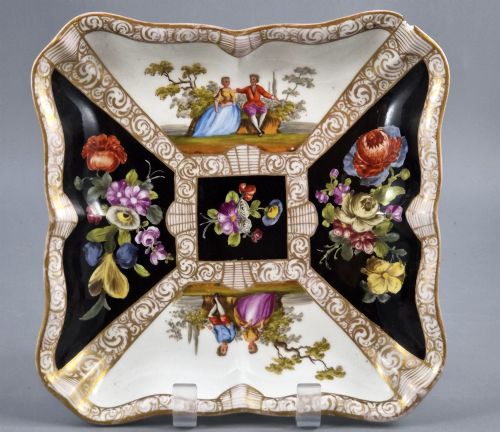
They feature hand-painted botanical studies, birds, or Watteau scenes enhanced by applied gold leaf and gilt borders.
How were these items used?
Most of these ceramic pieces were made for visual appreciation in cabinets, on sideboards, or mounted on walls rather than for practical dining.
Some trios and serving dishes saw service during formal dessert courses before being preserved as cabinet ornaments.
How do I care for antique porcelain?
Display these items away from direct sunlight to preserve the vibrancy of the hand-painted enamel colours and the integrity of the porcelain body.
Wash them by hand in lukewarm water with mild soap when necessary, avoiding dishwashers and harsh abrasives that damage delicate gilding.
How can I identify the maker?
Look for factory marks, pattern numbers, or decorator signatures painted or impressed on the underside of the porcelain base.
Reference books and maker archives help match specific cumber styles, shapes, and floral motifs to particular nineteenth-century potteries.