



Gilded Curio Case
A gilded curio case offers a luminous stage for small treasures, catching the light through glass panels.
Gilded Curio Case
A gilded curio case brings together fine display cabinetry and rich surface decoration, spanning the nineteenth century and the Edwardian era. You will frequently encounter freestanding vitrines, bijouterie tables, and tall display cabinets designed to showcase precious objects.
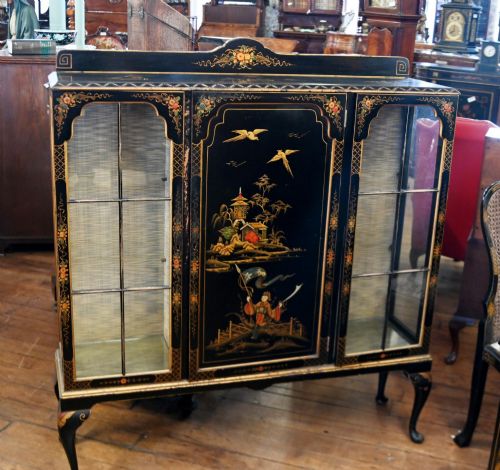
The pieces on this page heavily favour French taste, including Louis XV revival styles, Rococo revival forms, and pieces bearing intricate Chinoiserie decoration. Makers working in this idiom drew inspiration from earlier court furniture, adapting it for Victorian and Edwardian interiors.
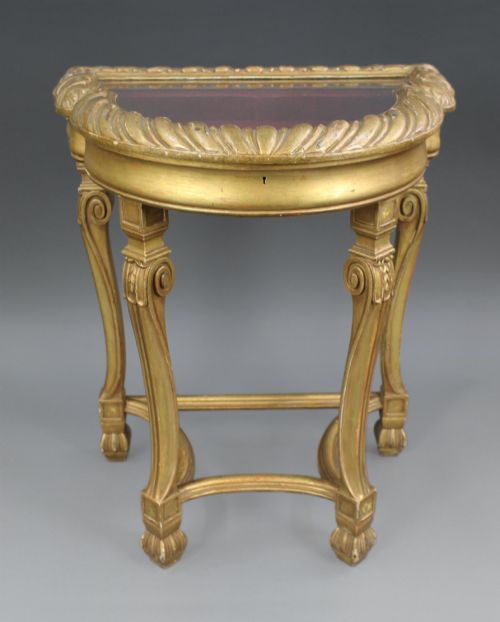
Forms vary from cylindrical pedestals and demilune tables to substantial wall cabinets with glazed sides and marble tops. Each design prioritises visibility, allowing light to reach collectibles from multiple angles while protecting them behind glass.
Materials and construction
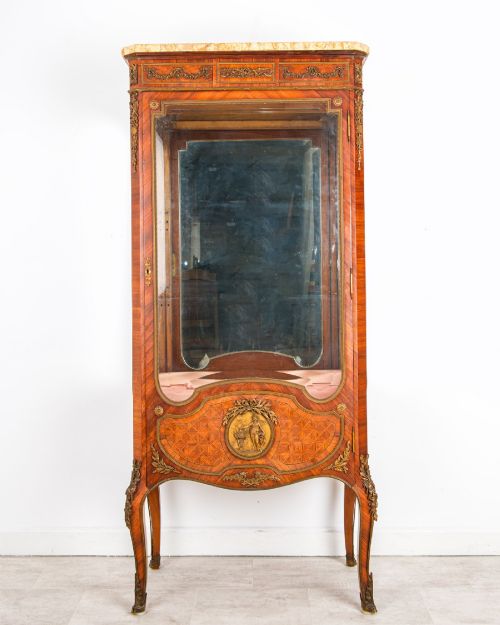
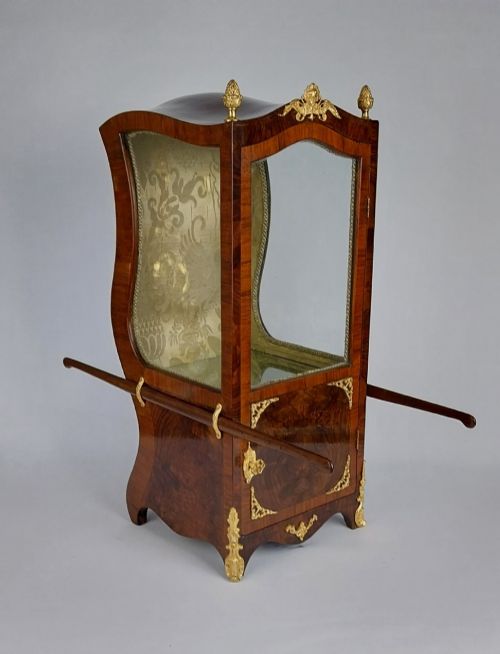
Cabinetmakers utilised sturdy foundational timbers like kingwood, rosewood, and lacquered wood, often applying veneers to achieve smooth, decorative surfaces. Ormolu and gilt bronze mounts were cast and chased to frame doors, corners, and legs, adding bright metallic contrast to the dark wood.
Giltwood frames provided continuous shimmering borders, carved with scrolls and floral motifs typical of revivalist furniture. Glass panels were fitted securely into doors and sides, while interiors frequently lined themselves in velvet to cushion delicate items.
Gilded Curio Case Retail Price Guide 2026
Typical asking prices for gilded curio case among the pieces listed under this phrase on Sellingantiques today, from the lower quarter to the upper quarter. They describe what is for sale here now, not the wider market.
Listings feature nineteen-century and Edwardian pieces, employing materials such as kingwood, ormolu, glass, marble, and giltwood.
Factors of quality
The crispness of the bronze casting and the precision of the chasing set the better pieces apart from standard production. Superior ormolu mounts fit seamlessly against the timber contours without excessive gaps or clumsy pinning.
Cabinetwork complexity also dictates standing, with shaped glass, serpentine marble tops, and hand-painted Vernis Martin panels demonstrating high workshop skill. The integration of structural integrity with delicate ornamentation ensures the piece survives centuries of use.
Maison Krieger·François Linke
The Gilded Curio Case Glossary
- Ormolu
- Gilded bronze used for decorative mounts on furniture. It provides a rich, metallic highlight against wood surfaces.
- Vitrines
- Glass-fronted cabinets designed to display porcelain, silver, and curiosities. They protect items from dust while offering maximum visibility.
- Bijouterie table
- A glass-topped display table intended for holding jewellery and small ornaments. These tables typically sit at a height that allows close inspection of the contents.
- Kingwood
- A dense, richly figured tropical timber utilised in high-end cabinetmaking. Its distinctive grain patterns enhance the visual appeal of French furniture.
Gilded Curio Case: Frequently Asked Questions
What is a gilded curio case?
A gilded curio case is a glass-fronted or glass-topped display piece accented with gold leaf or ormolu mounts, designed to showcase small collectibles.
These cabinets and tables emerged prominently during the nineteenth and early twentieth centuries, drawing heavily on French court styles to display precious objects in domestic settings.
Where should I place a vitrine?
Vitrines suit principal reception rooms where natural light can pass through their glass panels to illuminate the interior contents.
Keep them away from direct sunlight to protect interior velvet linings and delicate collectibles from fading over time.
How do I care for ormolu mounts?
Ormolu mounts require gentle dusting with a soft, dry cloth to prevent the accumulation of grime in the chased recesses.
Avoid abrasive cleaners or chemical polishes, as these can strip the original gilding from the bronze surface.
How do I date a display cabinet?
Dating relies on examining construction methods, wood types, and stylistic revival cues such as Victorian Rococo or Edwardian Chinoiserie.
Hardware fixings, glass clarity, and secondary timbers inside the cabinet often provide further clues to the manufacturing decade.