


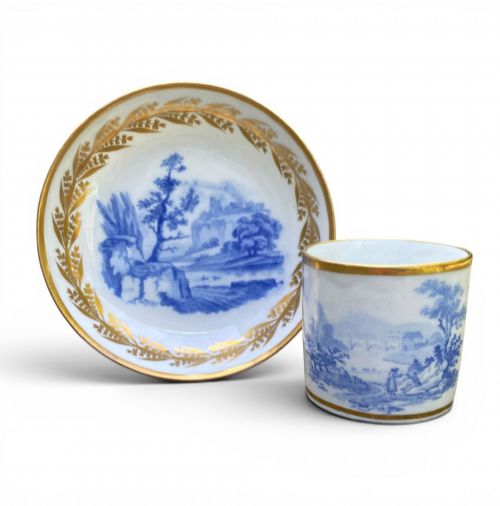
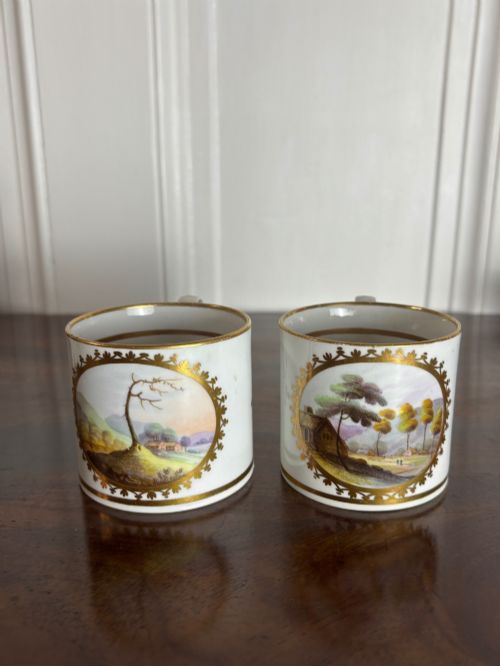


Gilded Coffee Can
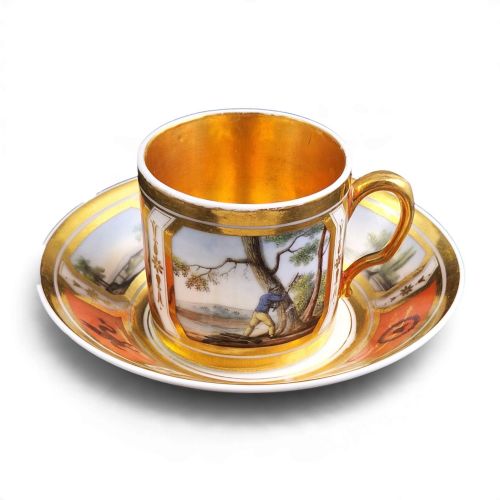
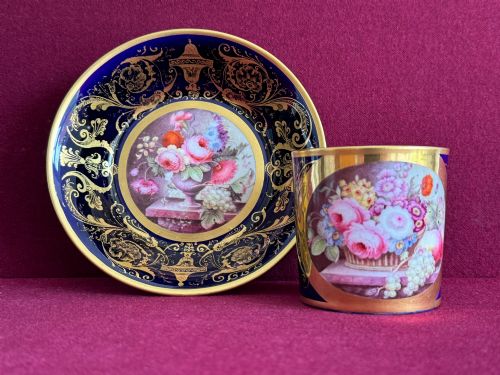
These gilded coffee can pieces bring Regency and Georgian elegance to the table through fine porcelain forms.
Gilded Coffee Can
A gilded coffee can is a cylindrical drinking vessel designed for serving strong coffee during the Georgian and Regency periods, often accompanied by a matching saucer. When you search for a gilded coffee can, you encounter delicate porcelain forms originating from early nineteenth century factories as well as later Edwardian and twentieth century revivals.
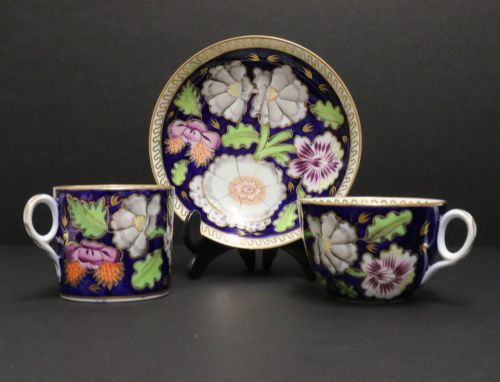
The pieces on this page span several decades, reaching from the early nineteenth century into the twentieth century. Alongside solo cans and saucers, the selection includes cabinet trios and cased sets.
Most examples hail from English potteries, employing traditional ceramic bodies decorated with gold leaf and hand-painted motifs. Collectors find these cylindrical vessels distinct from standard tea bowls due to their straight sides and sturdy handles.
How they were made
Potters shaped these vessels using porcelain and bone china, firing the clay bodies at high temperatures to achieve a hard, white base. Artisans then applied enamel paints and gold leaf by hand before a final kiln fixation.
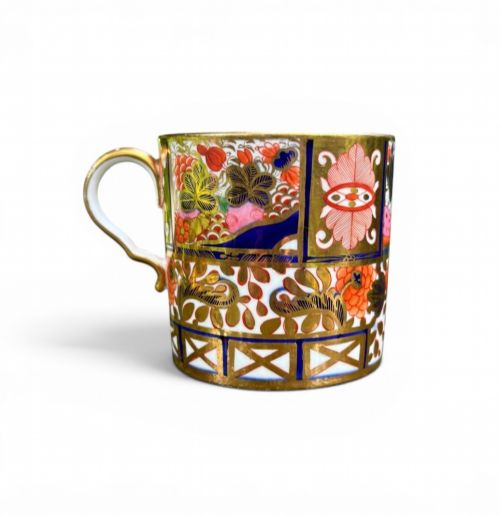
Gilding techniques involved brushing gold gilt or laying gold leaf onto the ceramic surface, often burnished to create a bright shine against painted landscapes or Imari patterns.
Gilded Coffee Can Retail Price Guide 2026
Typical asking prices for gilded coffee can among the pieces listed under this phrase on Sellingantiques today, from the lower quarter to the upper quarter. They describe what is for sale here now, not the wider market.
Early nineteenth-century drinkers apparently possessed wrists of steel to lift these straight-walled cans without spilling a drop of morning brew.
What varies in quality
The refinement of the porcelain body distinguishes standard production from superior pieces, with finer pastes allowing for thinner, more translucent walls. Hand-painted details such as landscape miniatures or intricate Imari patterns show the skill level of the decorator.
The preservation of the gold leaf significantly affects the character of each vessel. Heavier burnishing and intact gilding reflect greater care during initial production and subsequent handling.
Royal Crown Derby·Newhall Porcelain·Flight Barr Worcester·Spode Porcelain·Royal Worcester·Spode Copeland
The Gilded Coffee Can Glossary
- Coffee Can
- A straight-sided cylindrical cup without a foot, made specifically for drinking strong coffee in the Georgian and Regency eras. These vessels lack the curved bowl shape of traditional teacups.
- Imari
- A decorative style inspired by Japanese export wares, typically featuring a palette of cobalt blue, iron red, and abundant gold gilding. This style appeared frequently on early nineteenth century porcelain.
- Bone China
- A type of soft-paste porcelain containing bone ash, developed to increase the strength and whiteness of the ceramic body. It allowed makers to produce thinner walls while retaining durability.
- Cabinet Trio
- A matching set comprising a teacup, a coffee cup or can, and a saucer, intended for display in a cabinet or use in the parlour. These sets demonstrate the coordinated output of factories like New Hall.
- Gilding
- The application of gold leaf or gold paint to the surface of ceramics for decorative effect. This finish catches the light and frames painted scenes.
Gilded Coffee Can: Frequently Asked Questions
What is a gilded coffee can?
A gilded coffee can is a small, straight-sided cylindrical cup decorated with gold leaf or gold paint, made primarily during the Georgian and Regency periods.
Unlike traditional teacups, these vessels were shaped to keep strong coffee warm and often came paired with a matching saucer.
How do I date a gilded coffee can?
Dating relies on the porcelain paste, factory marks on the base, and the decorative style, such as Regency Imari patterns or Edwardian hand-painted motifs.
Early nineteenth century pieces typically feature heavier hand-finishing and distinct paste characteristics compared to twentieth century revivals.
Can I use these coffee cans today?
While these pieces were originally functional tableware, their age and delicate gold leaf mean most owners treat them as decorative display items.
Hand-washing in warm water without harsh detergents helps preserve the enamel paint and gold gilding if handled.
Why do some cans come with saucers?
During the Georgian and Regency eras, coffee cans were produced alongside matching saucers as part of a formal tea and coffee service.
Saucers served both to catch drips and to cool the hot liquid when poured out for drinking.