





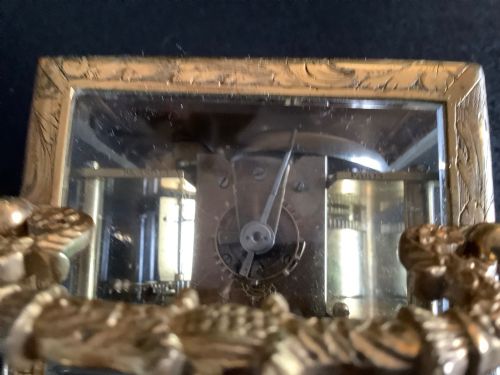

Gilded Clock Dial
A gilded clock dial brings a warm, reflective metallic focus to a room, catching the light across periods from the eighteenth century to the twentieth.
Gilded Clock Dial
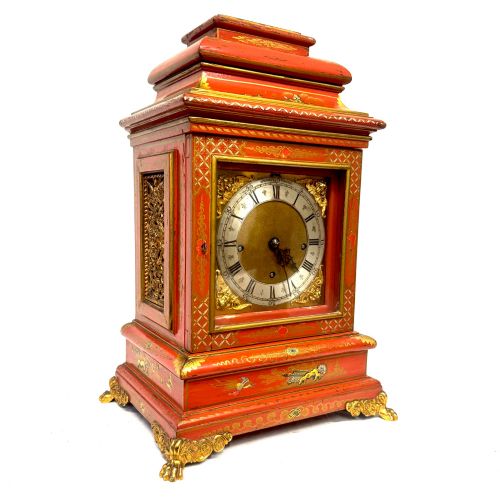
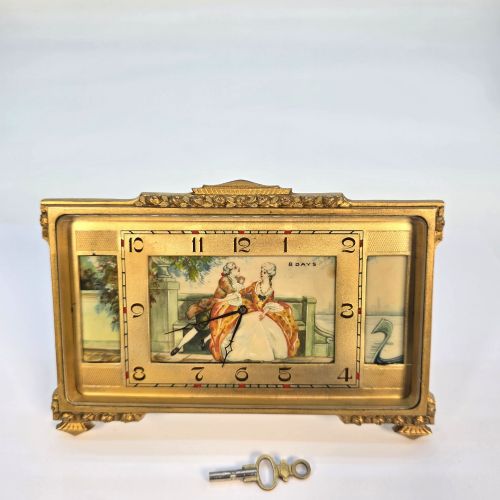
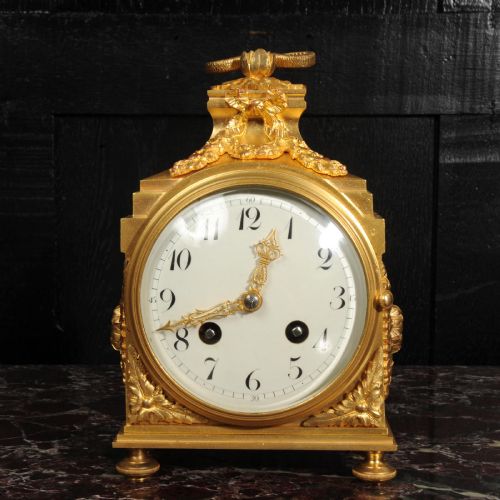
A gilded clock dial is the decorative and functional face of a timepiece, often found set within carriage clocks, mantel clocks, and longcase clocks on this page. These faces range from simple brass plates to elaborate porcelain dials and engraved surfaces housed in French and English clock bodies.
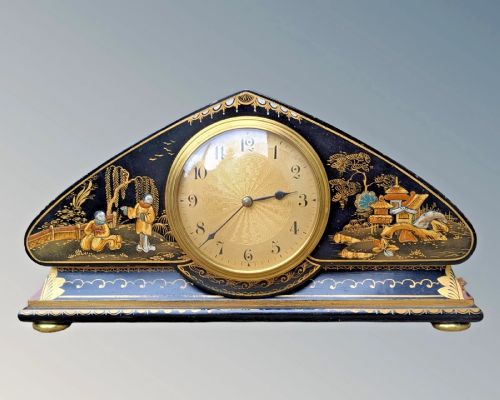
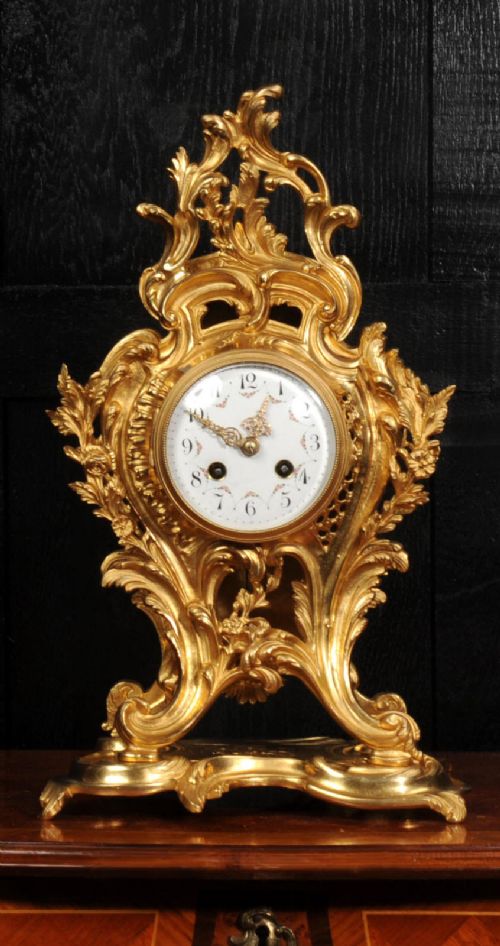
The versions most commonly met here originate from the nineteenth century, including Victorian pieces and French carriage clocks, alongside earlier eighteenth-century examples and later twentieth-century designs. They appear mounted in ormolu, gilt brass, and glass-sided mantel cases, showing influences from French Rococo Revival, Empire, and Chinoiserie styles.
Buyers look for these dials to secure an authentic piece of horological history that combines mechanical precision with decorative metalwork. Whether attached to a bracket clock or a towering longcase, the gilded dial serves as the visual anchor of the entire mechanism.
Materials and construction methods
Makers constructed these dials using solid brass, gilt bronze, or ormolu as a base, applying layers of gold leaf or gilding to create a luminous metallic sheen. Artisans often combined these metal elements with white enamel cartouche numerals and painted porcelain panels to ensure legibility.
Engraving and casting defined the production of these clock faces, with craftsmen incising intricate floral or geometric patterns directly into the metal surface. Glass panels and bevelled crystals were then fitted into bronze or brass frames to protect the delicate dials within carriage and four-glass mantel clocks.
Gilded Clock Dial Retail Price Guide 2026
Typical asking prices for gilded clock dial among the pieces listed under this phrase on Sellingantiques today, from the lower quarter to the upper quarter. They describe what is for sale here now, not the wider market.
The periods represented span from the eighteenth century through the Victorian era up to the Art Deco designs of the 1920s and 1930s.
Distinctions in quality and execution
Quality separates simple production pieces from superior works through the depth of the gilding and the crispness of the engraved details on the dial. Finer examples retain their original fire gilding or gold leaf intact, showing sharp lettering and clean enamel work without chips or restoration.
The reputation of the maker and the complexity of the movement also dictate the standing of the clock face, with signed works by known French and Swiss horologists commanding greater attention. The integration of complications like calendar functions or repeating strikes within the surrounding case elevates the overall standard of the piece.
Henri Jacot·C. Detouche Paris·Margaine Of France·Tiffany·Paul Garnier·Drocourt
The Gilded Clock Dial Glossary
- Ormolu
- A gilded bronze or brass mounting technique popular in French furniture and clockmaking. It provides a rich, matte gold finish that defines many nineteenth-century mantel clocks.
- Carriage clock
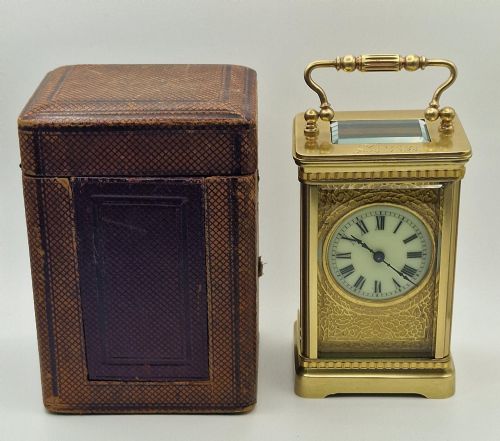
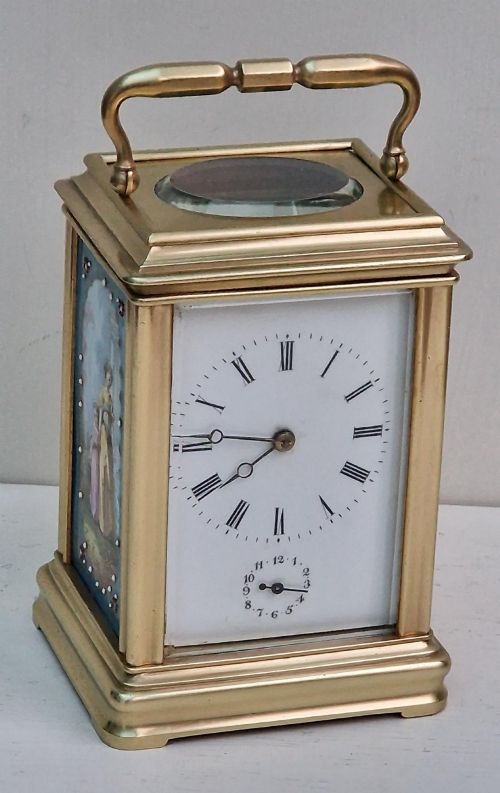
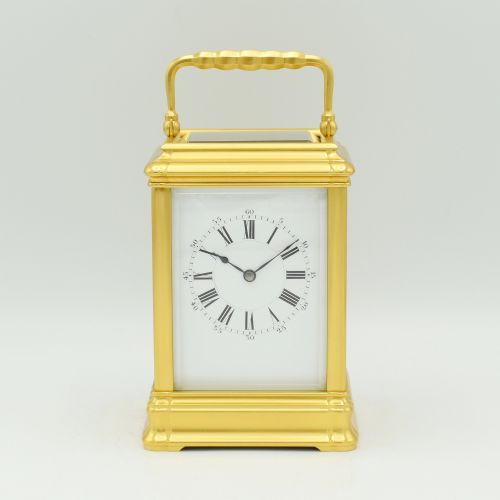
- A portable, spring-driven timekeeper traditionally designed for travel during the nineteenth century. These clocks frequently feature glass panels that reveal the escapement and gilded dial within.
- Cartouche
- A small enamelled plaque or numeral panel applied to the dial face. They are common on carriage and mantel clock dials to display the hours clearly.
- Chinoiserie
- A decorative style reflecting European interpretations of Chinese art and motifs. It appears on lacquered clock cases and dial surrounds from the Georgian and later periods.
- Gorge case
- A distinctive stepped brass casing style commonly utilised on high-grade French carriage clocks. The design frames the gilded dial and glass panels with architectural precision.
Gilded Clock Dial: Frequently Asked Questions
What is a gilded clock dial?
A gilded clock dial is the decorative metallic face of a timepiece, finished with gold leaf, gilding, or ormolu to reflect light and enhance legibility.
These faces appear on various clock types on this page, including carriage clocks, mantel pieces, and larger longcase clocks spanning the eighteenth to the twentieth centuries.
How do I identify a Victorian carriage clock?
Victorian carriage clocks typically feature a brass or gilt-bronze housing with bevelled glass panels that expose the mechanical movement inside. They often include a gilded dial with white enamel chapters for easy reading.
Many examples from this era originated in France before being imported for the British market, frequently bearing the signatures of established makers.
Where were these clocks used?
Carriage clocks were originally built for travellers who required portable timekeeping during transit, resting securely in leather travelling cases. Mantel clocks and bracket clocks remained stationary on interior fireplace mantels and shelves.
Longcase clocks stood in the hallways and principal rooms of grand houses, serving as both timekeepers and prominent architectural furniture.
How do I care for an antique clock dial?
Antique gilded metal and enamel dials require gentle dusting with a soft, dry brush to prevent the accumulation of grime. Avoid using liquid cleaners or chemical polishes, as these substances can strip the original gilding and damage delicate painted numerals.
Professional horologists should handle deeper mechanical maintenance and movement servicing to preserve the integrity of both the clockwork and the dial face.