
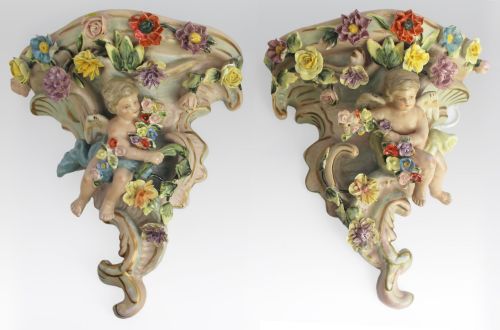
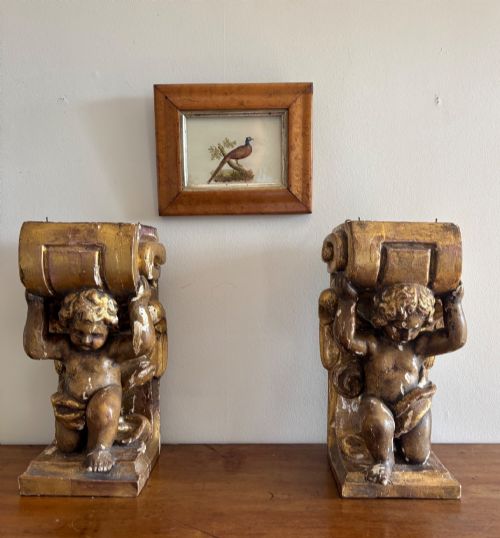
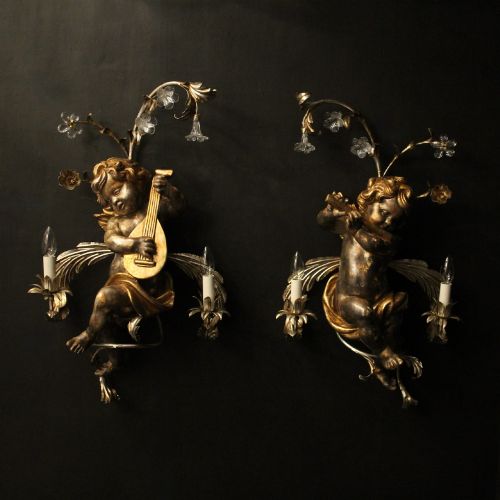
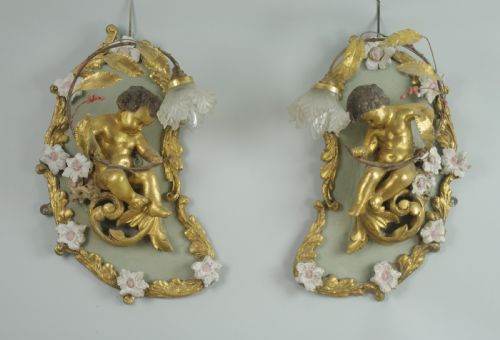



Gilded Cherub Wall Sconces
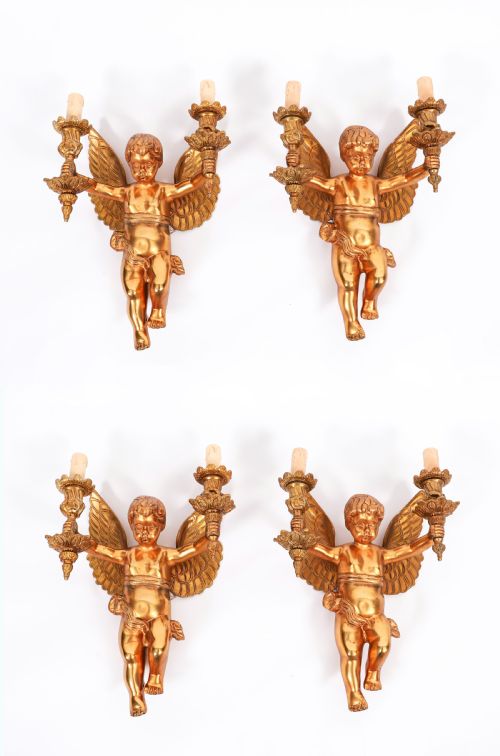
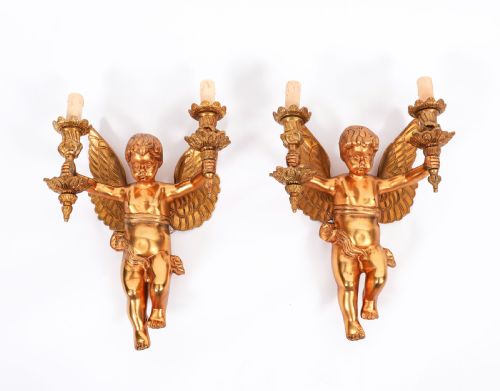
These gilded cherub wall sconces are ornate decorative fixtures that bring dramatic historical charm and warm illumination to any interior.
Gilded Cherub Wall Sconces
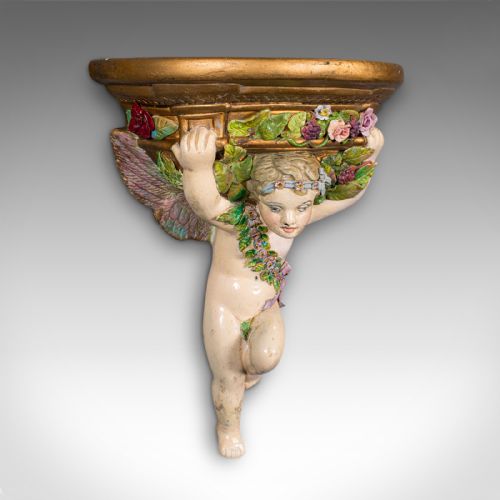
When you search for gilded cherub wall sconces, you encounter decorative lighting and brackets shaped around winged putti figures. These pieces emerge primarily from the nineteenth and early twentieth centuries, drawing heavily on earlier continental design movements.
The most common examples on this page are matched pairs featuring carved wood, giltwood, or ormolu construction. They frequently incorporate multiple candle branches or support small display ledges and mirrors.
Origins stretch across French, Italian, and English workshops, spanning revival styles from Rococo to Louis XIV. Buyers select these wall lights to add sculptural presence and traditional grandeur to reception rooms or halls.
Materials and Construction
The primary surfaces rely on applied gold leaf, gilt, or silver gilt over carved timber, gesso, or cast bronze and ormolu. Artisans shaped these materials into elaborate scrolls and volumetric figures.
Glass elements appear alongside the metal and wood structures, including Murano components and hanging lustre drops. These additions catch and reflect the candle or electric light mounted on the twin branches.
Listings feature items dated across the nineteenth and early twentieth centuries, spanning 1880, 1910, 1920, and 1930.
Factors of Quality
The integrity of the original surface finish dictates desirability. Pieces retaining their early or original gilding without heavy modern overpainting command greater interest among collectors.
The Gilded Cherub Wall Sconces Glossary
- Giltwood
- Timber that has been coated with fine gold leaf or powder over a prepared gesso ground. This technique creates a rich metallic sheen common on nineteenth century wall lights.
- Putto
- A plump, often winged child figure derived from classical art and frequently depicted in baroque and rococo decoration. These figures form the central motif of these sconces.
- Ormolu
- Finely chased and gilt bronze used for decorative mounts and lighting fixtures. The method produces a durable golden finish that resists tarnishing over decades.
- Appliqué
- A wall mounted light fitting or decorative bracket designed to sit flat against panelling or plaster. The term frequently applies to French fixtures of the period.
- Rococo Revival
- A nineteenth century decorative style reviving the asymmetry, scrolls, and naturalistic motifs of the mid eighteenth century. It heavily influences the curves of these brackets.
Gilded Cherub Wall Sconces: Frequently Asked Questions
How were gilded cherub wall sconces used historically?
These fixtures were mounted on drawing room and salon walls to hold candles and bounce flickering light across gilded mirrors and rich wall coverings.
They also served as decorative wall brackets to display small ornamental objects or simply to punctuate wood panelled interiors.
Are these wall sconces wired for electricity?
Many surviving examples originate from eras before domestic electric lighting and were originally designed solely for wax candles.
Some pieces have been adapted for modern electrical wiring by subsequent owners, while others retain their candle sockets.
How do I distinguish Italian from French pieces?
French pieces often display the refined symmetry and crisp neoclassical or rococo detailing associated with Parisian workshops of the nineteenth century.
Italian examples frequently lean towards a more theatrical baroque exuberance with deeply undercut carved giltwood and expressive putti.