

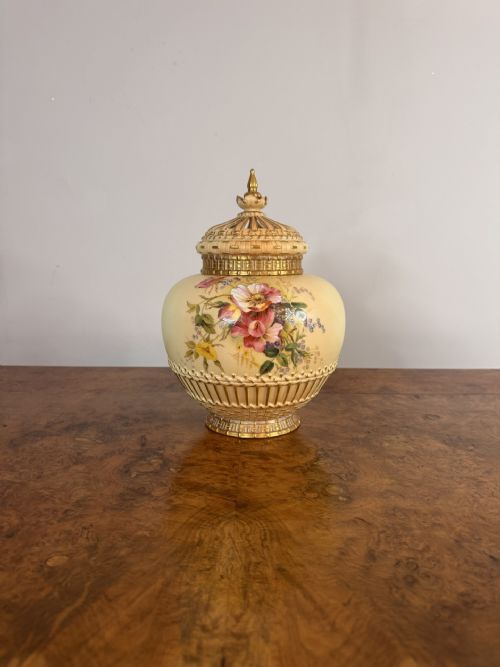
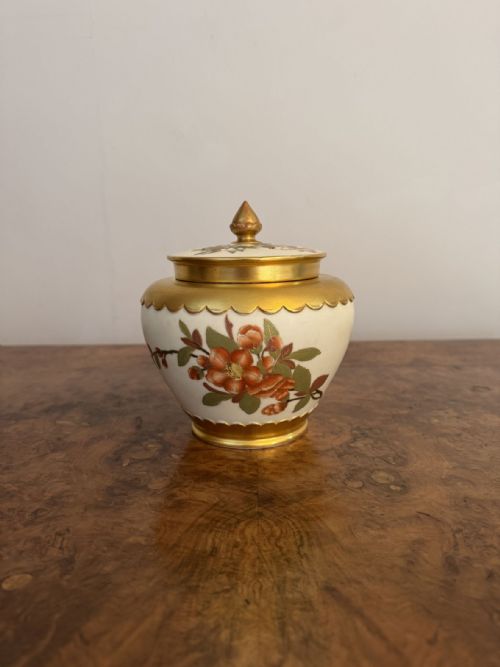


Gilded Ceramic Potpourri
These gilded ceramic potpourri vessels combine scented interiors with elaborate nineteenth-century and eighteenth-century craftsmanship.
Gilded Ceramic Potpourri
When you search for gilded ceramic potpourri, you encounter lidded jars, pommanders, and vases designed to hold fragrant dried botanicals. The forms range from ginger jars to crown-covered urns and bow urn vases.
The pieces you meet most often on this page belong to the nineteenth century, including Victorian creations and earlier Georgian or Regency examples. English porcelain and ironstone dominate the selection, alongside continental porcelain traditions.
Construction and Decoration
These vessels rely on ceramic bodies formed from porcelain or ironstone, shaped into lidded pots and vases with specialised apertures for releasing fragrance. Artisans then applied detailed enamel painting and surface gilding in gold leaf or gilt.
Stylistic influences draw heavily on Rococo Revival curves, Victorian Chinoiserie motifs, and English Imari palettes. The application of gold leaf and enamel transforms utilitarian containers into ornate decorative art.
Gilded Ceramic Potpourri Retail Price Guide 2026
Typical asking prices for gilded ceramic potpourri among the pieces listed under this phrase on Sellingantiques today, from the lower quarter to the upper quarter. They describe what is for sale here now, not the wider market.
Some nineteenth-century jars retain faint traces of dried rose petals and spices hidden inside their crown covers for centuries.
Assessing Quality
Quality rests upon the crispness of the porcelain or ironstone moulding and the precision of the hand-painted enamel work. Finer pieces demonstrate superior control in their gilt application and surface detailing.
The elegance of the form, whether a crown cover or a detailed bow urn, distinguishes standard vessels from exceptional works. Balance in proportion and sophistication in style mark the upper tier of these decorative items.
Royal Worcester·Chamberlain Worcester·Spode·Wolfsohn Dresden·Mason’s Ironstone China
The Gilded Ceramic Potpourri Glossary
- Potpourri jar
- A lidded vessel designed with pierced covers to release the scent of dried flowers and spices. These containers combine utility with ornamental display.
- Ironstone
- A sturdy type of feldspathic stoneware patented in the nineteenth century for durability. It provides a heavy, opaque base for rich enamelling and gilding.
- Gilt
- A thin layer of gold applied to the ceramic surface to create metallic highlights. This technique enhances the decorative appeal of Victorian and Georgian designs.
- Pommanders
- Early spherical or container-like vessels used to hold aromatic substances for scenting rooms. They represent a specialised early form of fragrance jar.
Gilded Ceramic Potpourri: Frequently Asked Questions
How were these pots used?
Owners placed dried flowers, herbs, and spices inside the lidded vessels to fragrance interior spaces. The pierced covers allowed the aroma to circulate naturally.
Over time, they evolved from functional household items into purely decorative mantel and table ornaments.
How do I date a piece?
Dating relies on identifying factory marks, ceramic bodies such as ironstone or soft-paste porcelain, and stylistic periods like Regency or Victorian Rococo Revival. Hand-written or impressed marks often point to specific decades.
Comparing form variations, such as crown covers or blush ivory finishes, helps narrow the production era.
Where were they made?
Production centred primarily in established English ceramic hubs like Worcester and Staffordshire, alongside continental centres such as Dresden. Factories utilised local porcelain and ironstone formulas characteristic of their region.
Export styles and regional tastes heavily influenced the decorative motifs applied to each vessel.