




Gilded Ceramic Lamps
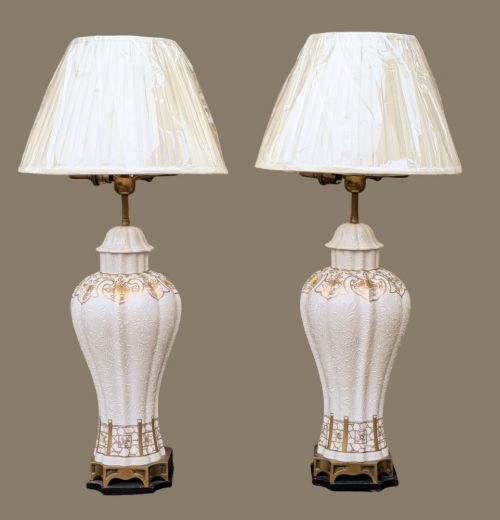
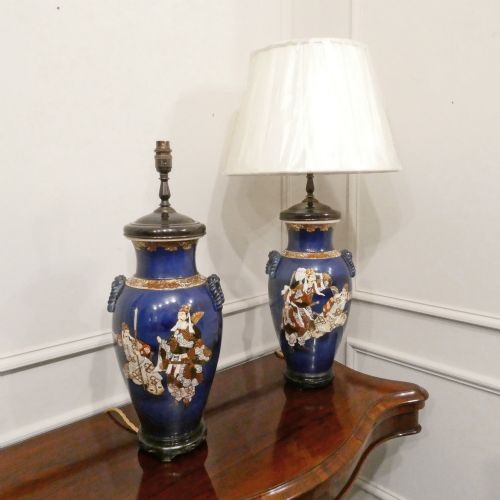
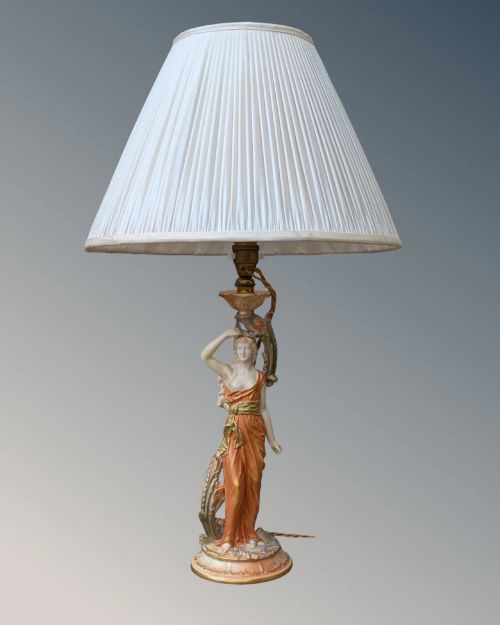
These gilded ceramic lamps bring character and warmth to a room, combining rich porcelain and earthenware bodies with metallic mounts.
Gilded Ceramic Lamps
Gilded ceramic lamps encompass table lamps and converted vases formed from porcelain and earthenware. These pieces bridge decorative arts and practical lighting, often incorporating brass or ormolu mounts alongside fabric or silk shades.
The pieces appearing on this page span the nineteenth century into the twentieth century, reflecting diverse origins from Japanese Satsuma and Kutani wares to Chinese export pieces and European factories like Royal Worcester and Paris porcelain. Japanese Satsuma production forms a significant share of the available selection, alongside Chinese blue and white ginger jars and famille rose vessels.
Makers and decorators adapted traditional vases, jars, and porcelain bodies for illumination during the Victorian era and subsequent decades. This conversion process means many items retain the form and painted detail of their original vessel purpose while serving as functional domestic lighting.
Materials and construction
Makers utilised ceramic bodies including porcelain, earthenware, and glazed pottery as the foundation for these lamps. Artisans applied hand-painted pigments, blue glazes, and famille rose enamels before adding metallic elements such as gilt, brass, or ormolu mounts to secure the structure.
Many examples began life as vases or ginger jars before conversion into lamps during the nineteenth or twentieth centuries. Workshops fitted these ceramic vessels with wiring and hardware, sometimes pairing them with silk or fabric shades to complete the lighting fixture.
Gilded Ceramic Lamps Retail Price Guide 2026
Typical asking prices for gilded ceramic lamps among the pieces listed under this phrase on Sellingantiques today, from the lower quarter to the upper quarter. They describe what is for sale here now, not the wider market.
Listings feature nineteenth-century and early twentieth-century pieces, spanning Satsuma, Kutani, and European porcelain.
Distinctions in craftsmanship
Quality rests in the painting detail upon the ceramic body, the richness of the gilding, and the harmony of the metal mounts. Finer pieces display precise brushwork in scenes or floral motifs, whereas simpler examples show broader, more commercial decoration.
The integration of the hardware matters considerably. Superior conversions respect the integrity of the original vase or jar, using secure brass or ormolu fittings that complement rather than overwhelm the ceramic form.
Royal Worcester·Samson
The Gilded Ceramic Lamps Glossary
- Satsuma
- A type of Japanese earthenware featuring a crackle glaze and ornate polychrome and gilt decoration. These wares often depict traditional figures, landscapes, or floral designs.
- Ormolu
- Gilded bronze mounts used historically to decorate furniture, porcelain, and objects. The technique involves applying a gold amalgam to a bronze base.
- Famille Rose
- A palette of Chinese ceramic enamels dominated by opaque pink or rose colours, introduced during the Qing dynasty. This style appears frequently on export porcelain.
- Kutani
- Japanese porcelain and stoneware produced in Ishikawa prefecture, known for bold colour palettes and detailed pictorial designs. Pieces often incorporate rich gilt highlights.
- Paris Porcelain
- Items manufactured by numerous independent workshops operating in and around Paris during the nineteenth century. These wares are distinguished by fine white paste and bright gilding.
Gilded Ceramic Lamps: Frequently Asked Questions
Are these original vases converted to lamps?
Many items began as nineteenth-century vases or ginger jars that were subsequently adapted for electrical illumination. This practice preserves the decorative artistry of the original ceramic vessel while giving it a practical modern function.
Collectors often find converted pieces where the original form remains entirely intact beneath the added electrical fittings and hardware.
How do I identify Satsuma ware?
Satsuma ceramics are characterised by an ivory-coloured earthenware body covered in a fine, clear crackle glaze. Artisans decorated these surfaces with detailed hand-painted scenes using rich pigments and raised gold.
This distinct combination of crackled glaze and heavy gilding separates Satsuma pieces from standard porcelain or stoneware.
What is the difference between Kutani and Satsuma?
Kutani ware typically uses a porcelain or dense stoneware body with bold palettes dominated by greens, blues, and reds alongside gold. Satsuma relies on a softer earthenware body with a characteristic network of fine glaze cracks.
Both Japanese traditions employ extensive gilding, but their underlying ceramic bodies and painting styles differ distinctly.
How do I care for a ceramic lamp?
Dust the ceramic body and any fabric shades gently with a dry, soft cloth to prevent accumulation. Avoid using harsh chemical cleaners or abrasive materials that might damage the painted surface or delicate gilding.
Inspect the electrical wiring periodically or consult a professional electrician if the fitting requires updating for modern safety standards.