

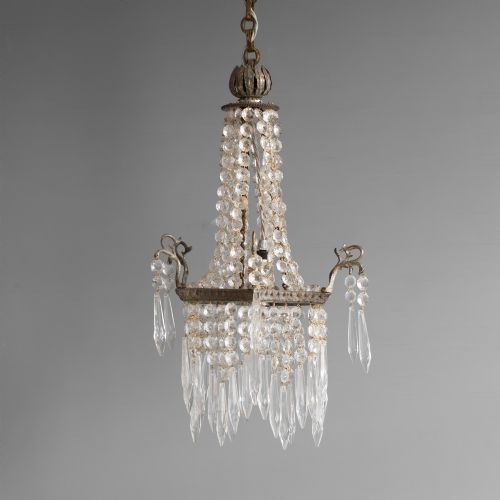


Gilded Ceiling Lamp
A gilded ceiling lamp brings warmth and a sense of occasion to a room through surfaces finished in gold leaf or gilt metal.
Gilded Ceiling Lamp
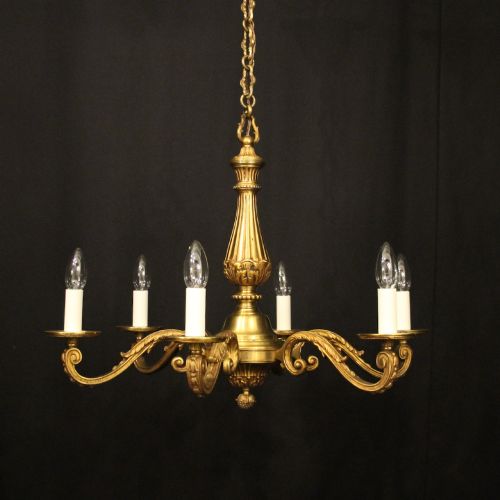
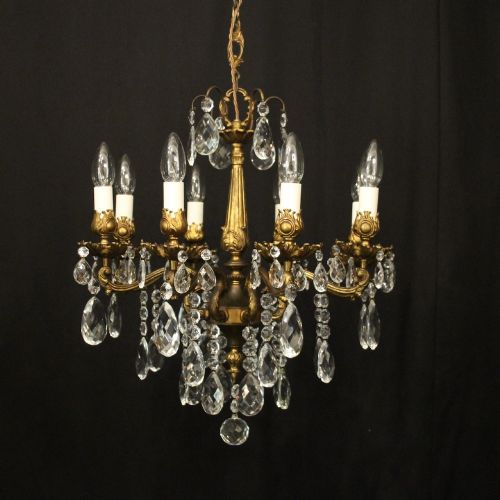
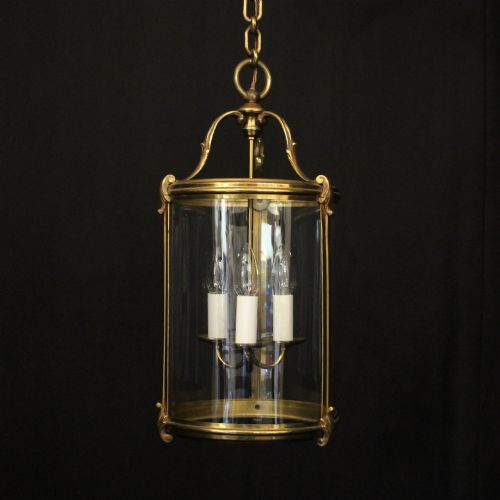
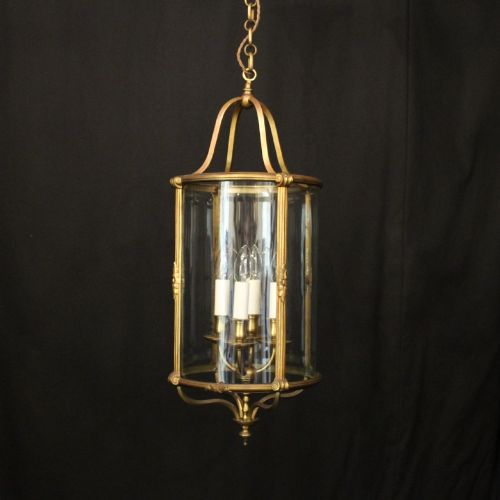
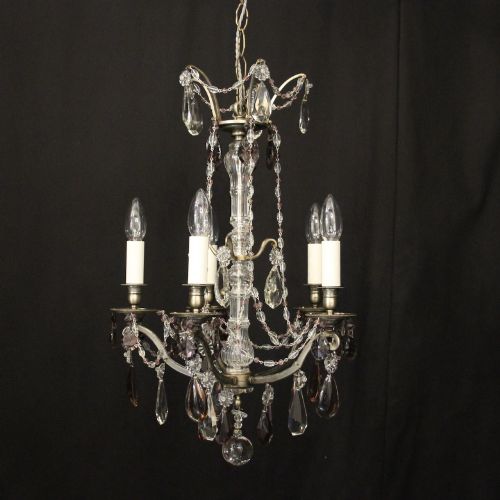
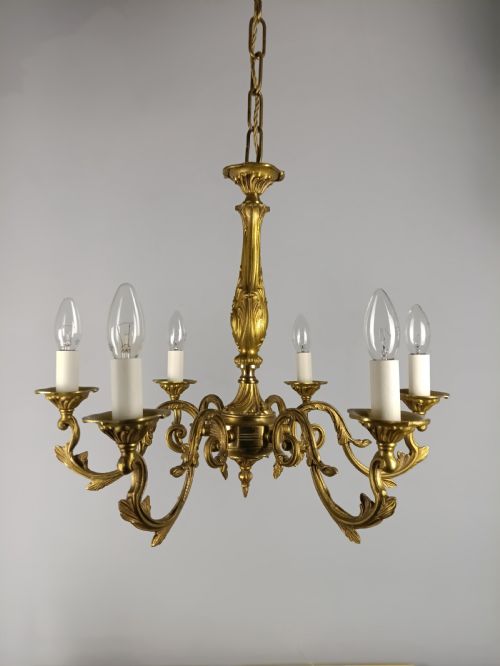
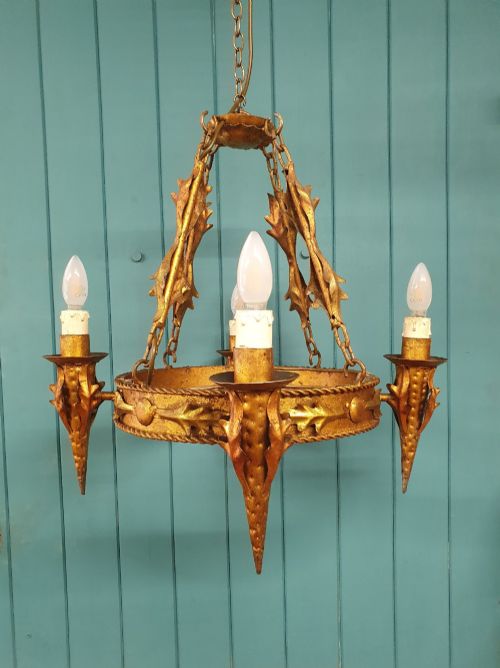
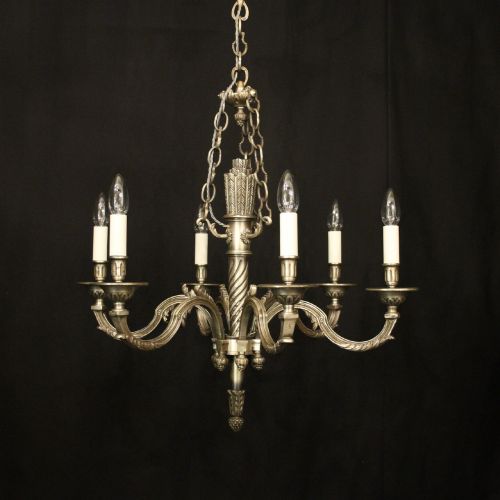
The selections on this page lean heavily towards French designs from the early decades of the twentieth century, alongside nineteenth-century examples. Common forms include multi-arm chandeliers adorned with crystal drops, convex hall lanterns, and coronet fixtures in styles spanning Rococo Revival, Neoclassical, and Gothic Revival. Brass, bronze, and giltwood form the structural foundations for these overhead lights.
How they were made
Makers constructed the frames of these ceiling fixtures using cast bronze, beaten copper, brass, and carved giltwood. Metal elements received gold leaf or chemical gilt treatments to achieve their characteristic metallic lustre, while wooden frames relied on applied gesso and gold leaf. Structural components were assembled through casting, forging, and mechanical fastening.
Glass and crystal elements were integrated into the designs using wire ties, metal pins, or direct bezel settings. Cut glass crystals, tent-and-bag configurations, and glass bunches of grapes were suspended from the main metal frames to refract the light from multiple candles or bulbs.
Certain French chandeliers include moulded glass bunches of grapes hanging among the crystal drops.
What varies in quality
The refinement of the casting and carving dictates the baseline quality of a fixture. Finely chased bronze mounts and deeply carved giltwood display crisp botanical or architectural details, whereas simpler brass and metal frames rely on plain surfaces and minimal ornamentation. The integration of the decorative elements with the structural core determines the visual cohesion of the piece.
The quality of the glass and crystal components creates a distinct tier among these lights. Hand-cut crystals with sharp facets and high clarity scatter light more brilliantly than pressed glass alternatives. Additionally, the integrity of the original gilding - whether gold leaf or gilt bronze - affects the depth and longevity of the surface finish.
The Gilded Ceiling Lamp Glossary
- Giltwood
- Wood that has been treated with gesso and covered with thin sheets of gold leaf. This technique was frequently utilised on Italian and French chandeliers.
- Chandelier
- A branched ornamental light fixture designed to be suspended from the ceiling. These hold multiple bulbs or candles across varying numbers of arms.
- Hall lantern
- An enclosed ceiling-hung light designed specifically for corridors and entrance spaces. They often feature convex glass panels within a metal frame.
- Tent and bag
- A configuration of cut glass crystals arranged in an upper conical tent shape cascading down into a lower bag formation. This style maximises light refraction in formal rooms.
- Gilt bronze
- Bronze metal treated with a gold-coloured finish or mercury gilding, also known as ormolu. It provides a durable and rich metallic surface for decorative mounts.
Gilded Ceiling Lamp: Frequently Asked Questions
What rooms suit a hall lantern?
Convex hall lanterns work best in entranceways, corridors, and high-ceilinged landings where their enclosed glass and metal frames command attention. Their vertical proportions fit narrower spaces while providing direct downward illumination.
These fixtures also suit smaller reception rooms that require a defined overhead light source without the spread of a wide multi-arm chandelier.
How should I clean crystal drops?
Detachable crystal elements benefit from careful hand washing in warm water with a mild, non-abrasive detergent. Dry each piece with a lint-free cloth before reattaching it to the metal frame.
For crystals that remain on the fixture, wipe them gently in place using a diluted cleaning solution on a soft cloth to avoid stressing the antique wire ties.
Are these lamps converted for electricity?
Many surviving fixtures have been adapted from candles or early gas to modern electrical wiring over their lifespan. Listings describe the number of light points currently wired into each frame.
Buyers should inspect the existing internal wiring and consult an electrician to ensure compliance with modern safety standards upon installation.